Antibiotics transformed modern medicine, delivering a cure for infections that were once considered deadly. But the bacteria causing those infections have begun to change, too, leading to a major global healthcare challenge: antibiotic resistance.
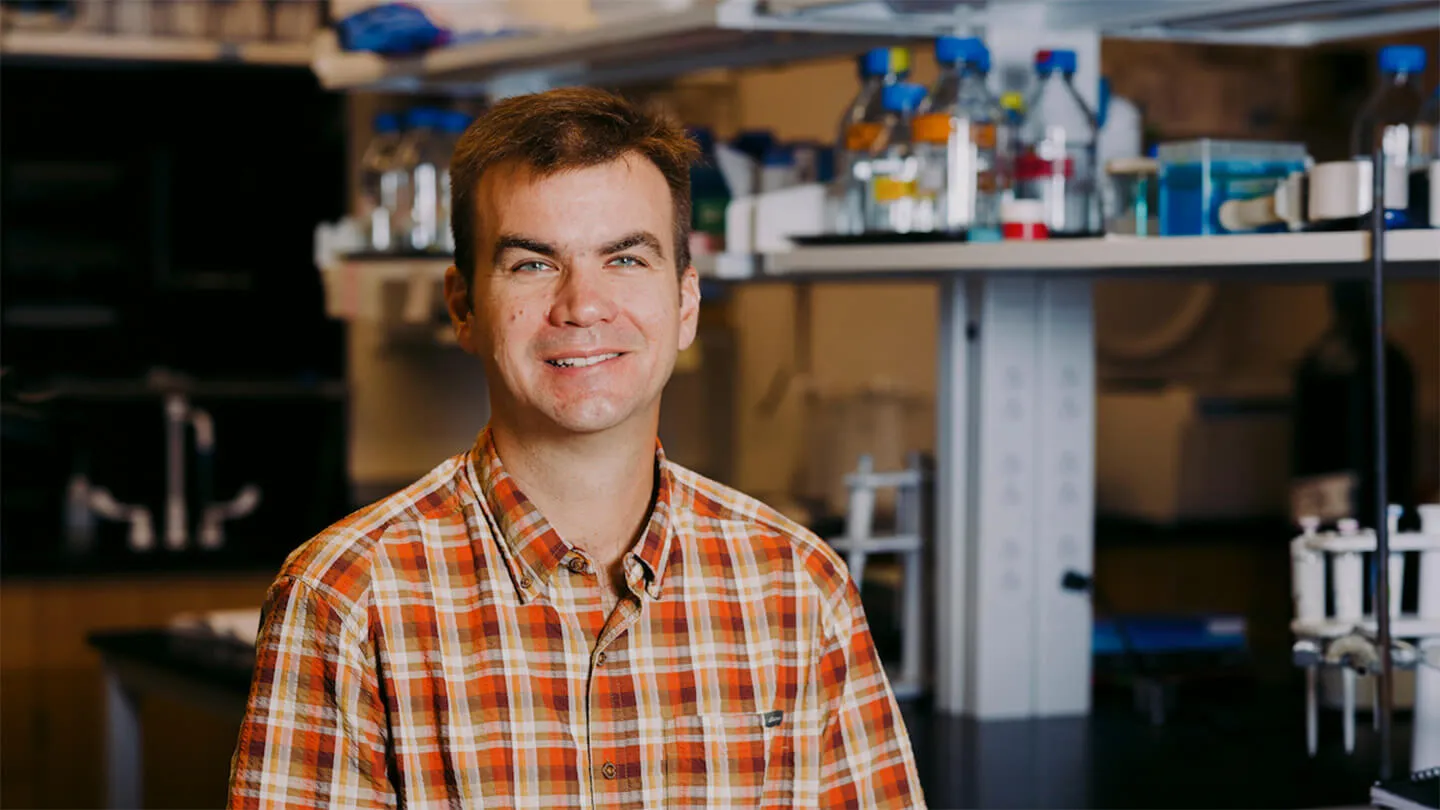
Scientists like Matt Liptak are fighting back. With support from a second five-year grant (R35-GM139516) from the National Institutes of Health, the University of Vermont chemistry professor and his team are investigating the role certain key enzymes play in bacterial infections. Ultimately, they hope their findings will provide the foundation for future antibiotic therapies.
Liptak’s research focuses on heme oxygenases, enzymes that live within cells found throughout our bodies and perform the vital function of recycling the iron in our blood. “When you have an infection, bacteria use these enzymes to harvest the iron they need to survive,” Liptak says. “The question we ask in my group is, how do these enzymes work and how are they different between humans and bacteria?”
The answers to those questions are important because if bacteria can’t get iron, they starve to death and can’t continue to grow and spread—eventually leading to clearing of the infection. “So, we need something that would block the bacteria from acquiring iron without screwing up our own ability to recycle it,” Liptak says. “That’s why we need to understand how, exactly, it all works.”
If his team’s research does eventually lead to the development of new antibiotics, it would be a gamechanger. “Mycobacterium tuberculosis is the number one cause of infectious disease deaths,” Liptak says, “and it’s one of the species we’re looking at.” His team is also studying Staphylococcus aureus, which causes hospital-borne MRSA infections. “Penicillin doesn’t work on MRSA infections, so there’s a clear need for a new drug there,” he says.
“A lot of the focus going to be identifying physical targets on these enzymes that are unique and important compared to the human enzymes,” Liptak says. “I’m not going to claim we’ll have a new drug in the next five years, but I think we can get a little bit closer.”
This content is solely the responsibility of the authors and does not necessarily represent the official views of the National Institutes of Health.