Old Mill, Room 211
94 University Pl
Burlington, VT 05405
United States
- PhD, Geography, University of Colorado
- MA, Geography, University of Colorado
- BA, Sociology, Vassar College
Areas of expertise
Urban social and cultural geography of the US, past, present, and future. Current research focus on historical geographies of childhood informed by social justice critiques. Using, teaching, and writing about qualitative research, ethnography, participatory mapping, archival research, and other methods to learn about the geographic meanings and processes that matter to social, political, and economic justice.
BIO
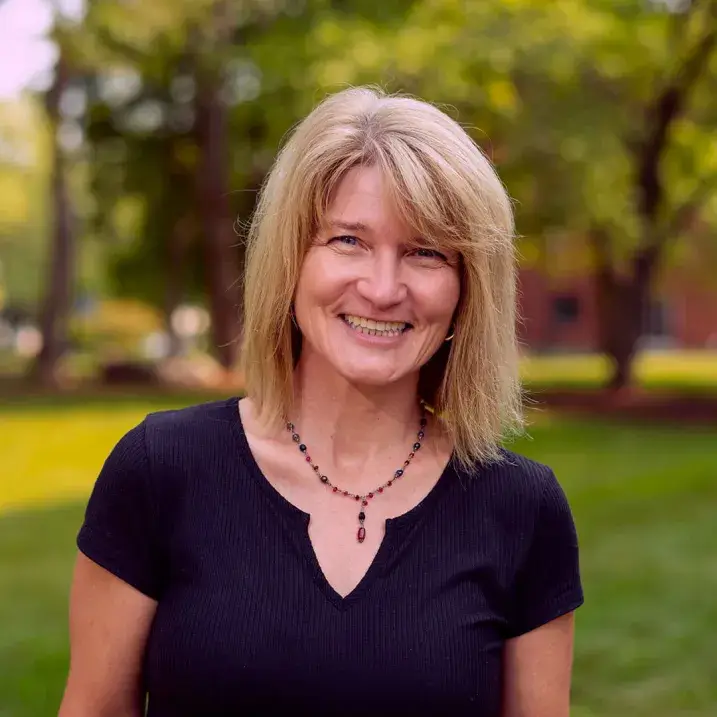
Meghan Cope is an urban social geographer who is interested in the ways that social, economic, political, and environmental processes influence cities and communities, as well as the ways that people's everyday lives create meaningful spaces and places within, or even against, the larger-scale processes operating on them. Her focus has always been on the social/spatial processes of oppression and disempowerment through gender, race/ethnicity, class, and youth. Dr. Cope’s use of these approaches in teaching can be seen in her chapter of Chen & Eaves (2024) How to Foster Diversity, Equity, and Inclusion in Geography, titled
Dr. Cope is currently working on a project called Mapping American Childhoods, focused on the 19th and 20th centuries, which looks at themes of youth mobility and migration, child health and mortality, the cultural production of ‘childhood in place’, and young people’s experiences of place(s) from a ‘critical youth geographies’ perspective. She has recently published work from this project, including a chapter on child labor and compulsory schooling laws of the early 20th c. (Cope, 2023), an article uncovering archival geographies of Burlington’s ‘Home for Destitute Children’ (Cope, 2024), and – in partnership with student/artist, Sadie Holmes – a piece in GeoHumanities using comics to illustrate and build understanding of early 20th c. mothers’ letters to the federal Children’s Bureau (Cope and Holmes, 2026). With co-editors Sarah Mills (UK) and Ann Marie Murnaghan (Canada), she has a volume coming out in 2027, Historical Geographies of Childhood and Youth.
Dr. Cope is a qualitative researcher who uses ethnography, participatory mapping, archival research, and other methods to learn about the geographic meanings and processes that matter to socially and economically marginalized groups. Dr. Cope has written extensively on qualitative research in the field of Geography, from basic ‘how-to’ chapters on coding and analyzing qualitative data (in Hay and Cope, 2021; Clifford, Cope, and Gillespie, 2023) to reflections on broad historical trends in the field (Cope, 2010).
Dr. Cope has long had an interest in mixed methods and critical perspectives on Geographic Information Systems (GIS) and has developed novel analytical approaches such as ‘grounded visualization’ (Knigge & Cope, 2006) and Qualitative GIS (Cope and Elwood, 2009).. More recently, Dr. Cope has been active on the UVM campus in promoting capacity and support for teaching and practicing qualitative research methods.
Courses
GEOG 1780 – SU: SOCIETY, PLACE, AND POWER
Everything happens somewhere… but why there? And how do combinations of events and processes come together to create unique places? How do the actions and decisions of human societies construct meaningful social spaces? And, how can we use a geographic approach to understand human society better? Recognizing and analyzing the ways that human societies create places and in turn live in and through those places is one of the core tasks of this course. Along this path we identify the main tools geographers use to understand the relations between society, place, andpower, with a particular focus on the tension between globalization, sustainability, social justice, and cultural identities in places around the globe. We pay special attention to spatial patterns and discovering the processes that generate them. Geographic concepts we explore include diffusion, mobility and migration, scale, construction of place, and the powerful intersections of economic, political, and social processes with natural environments.
GEOG 2770 – HISTORICAL GEOGRAPHY
The intersection of Geography and History is explored through a critical examination of American childhoods of the late 19th and 20th centuries. We use diverse readings and resources to uncover the conditions of childhood, including everything from child labor to conditions of housing, from childhood diseases to immigrant experiences, and from schooling to the material culture of books, toys, and games. We ask questions such as: How is ‘childhood’ constructed socially and culturally over time and through different places? How are diverse experiences of ‘childhood’ related to broader social, economic, and political contexts? We identify key dimensions of social life as central to understanding past childhoods, and in turn, this allows us to build a better understanding of American culture, places, and histories.
GEOG 2550 – SL: QUALITATIVE RESEARCH METHODS
This is an introductory, hands-on course for social science/humanities students of all disciplines. It is particularly helpful as preparation for internships, thesis work, and advanced methods courses. The class is often designated as 'service-learning'– topics and community partners vary by year. How do geographers and other social scientists make sense of the social world? How do people construct meaningful places, experience social/spatial differences, resist oppression, or simply make everyday life tolerable? What is in the ‘toolbox’ of qualitative research on social and spatial issues? This course takes several approaches to answering these questions.
GEOG2790 – URBAN GEOGRAPHY
Cities are in many ways the engines of change in culture, politics, economic change, and regional identity. In this course we begin with urban historical geographies alongside theories of city planning to discover how cities have connected regions through industrial production, migration, trade, culture, and politics. We then focus on the internal workings of U.S. cities, viewed in contexts of conflict and exploitation, but also potential growth and progress toward social justice and sustainability. In particular, we review processes of 'difference' in cities through cultural identity, communities and neighborhoods, the privatization of public space, gentrification, and segregation. We finish by considering the question: what does it take to produce just, green cities?
Publications
Bio
Meghan Cope is an urban social geographer who is interested in the ways that social, economic, political, and environmental processes influence cities and communities, as well as the ways that people's everyday lives create meaningful spaces and places within, or even against, the larger-scale processes operating on them. Her focus has always been on the social/spatial processes of oppression and disempowerment through gender, race/ethnicity, class, and youth. Dr. Cope’s use of these approaches in teaching can be seen in her chapter of Chen & Eaves (2024) How to Foster Diversity, Equity, and Inclusion in Geography, titled
Dr. Cope is currently working on a project called Mapping American Childhoods, focused on the 19th and 20th centuries, which looks at themes of youth mobility and migration, child health and mortality, the cultural production of ‘childhood in place’, and young people’s experiences of place(s) from a ‘critical youth geographies’ perspective. She has recently published work from this project, including a chapter on child labor and compulsory schooling laws of the early 20th c. (Cope, 2023), an article uncovering archival geographies of Burlington’s ‘Home for Destitute Children’ (Cope, 2024), and – in partnership with student/artist, Sadie Holmes – a piece in GeoHumanities using comics to illustrate and build understanding of early 20th c. mothers’ letters to the federal Children’s Bureau (Cope and Holmes, 2026). With co-editors Sarah Mills (UK) and Ann Marie Murnaghan (Canada), she has a volume coming out in 2027, Historical Geographies of Childhood and Youth.
Dr. Cope is a qualitative researcher who uses ethnography, participatory mapping, archival research, and other methods to learn about the geographic meanings and processes that matter to socially and economically marginalized groups. Dr. Cope has written extensively on qualitative research in the field of Geography, from basic ‘how-to’ chapters on coding and analyzing qualitative data (in Hay and Cope, 2021; Clifford, Cope, and Gillespie, 2023) to reflections on broad historical trends in the field (Cope, 2010).
Dr. Cope has long had an interest in mixed methods and critical perspectives on Geographic Information Systems (GIS) and has developed novel analytical approaches such as ‘grounded visualization’ (Knigge & Cope, 2006) and Qualitative GIS (Cope and Elwood, 2009).. More recently, Dr. Cope has been active on the UVM campus in promoting capacity and support for teaching and practicing qualitative research methods.
Courses
GEOG 1780 – SU: SOCIETY, PLACE, AND POWER
Everything happens somewhere… but why there? And how do combinations of events and processes come together to create unique places? How do the actions and decisions of human societies construct meaningful social spaces? And, how can we use a geographic approach to understand human society better? Recognizing and analyzing the ways that human societies create places and in turn live in and through those places is one of the core tasks of this course. Along this path we identify the main tools geographers use to understand the relations between society, place, andpower, with a particular focus on the tension between globalization, sustainability, social justice, and cultural identities in places around the globe. We pay special attention to spatial patterns and discovering the processes that generate them. Geographic concepts we explore include diffusion, mobility and migration, scale, construction of place, and the powerful intersections of economic, political, and social processes with natural environments.
GEOG 2770 – HISTORICAL GEOGRAPHY
The intersection of Geography and History is explored through a critical examination of American childhoods of the late 19th and 20th centuries. We use diverse readings and resources to uncover the conditions of childhood, including everything from child labor to conditions of housing, from childhood diseases to immigrant experiences, and from schooling to the material culture of books, toys, and games. We ask questions such as: How is ‘childhood’ constructed socially and culturally over time and through different places? How are diverse experiences of ‘childhood’ related to broader social, economic, and political contexts? We identify key dimensions of social life as central to understanding past childhoods, and in turn, this allows us to build a better understanding of American culture, places, and histories.
GEOG 2550 – SL: QUALITATIVE RESEARCH METHODS
This is an introductory, hands-on course for social science/humanities students of all disciplines. It is particularly helpful as preparation for internships, thesis work, and advanced methods courses. The class is often designated as 'service-learning'– topics and community partners vary by year. How do geographers and other social scientists make sense of the social world? How do people construct meaningful places, experience social/spatial differences, resist oppression, or simply make everyday life tolerable? What is in the ‘toolbox’ of qualitative research on social and spatial issues? This course takes several approaches to answering these questions.
GEOG2790 – URBAN GEOGRAPHY
Cities are in many ways the engines of change in culture, politics, economic change, and regional identity. In this course we begin with urban historical geographies alongside theories of city planning to discover how cities have connected regions through industrial production, migration, trade, culture, and politics. We then focus on the internal workings of U.S. cities, viewed in contexts of conflict and exploitation, but also potential growth and progress toward social justice and sustainability. In particular, we review processes of 'difference' in cities through cultural identity, communities and neighborhoods, the privatization of public space, gentrification, and segregation. We finish by considering the question: what does it take to produce just, green cities?
Publications
Office Hours
Please email mcope@uvm.edu for this semester’s office hours.