College of Arts and Sciences

Careers

The liberal arts foundation that all Chinese and Japanese majors receive through our Program in Asian Languages and Literatures, part of UVM’s School of World Languages and Cultures, centers on fostering critical analysis, cultural empathy, and interdisciplinary thinking—skills that transcend borders. By engaging with literary texts, historical contexts, and linguistic features and nuances, you’ll develop a deep understanding of Chinese and Japanese societies, enabling you to navigate global careers with nuance. Whether in international business, diplomacy, education, or cultural advocacy, your ability to bridge linguistic and cultural gaps will make you indispensable in an interconnected world.
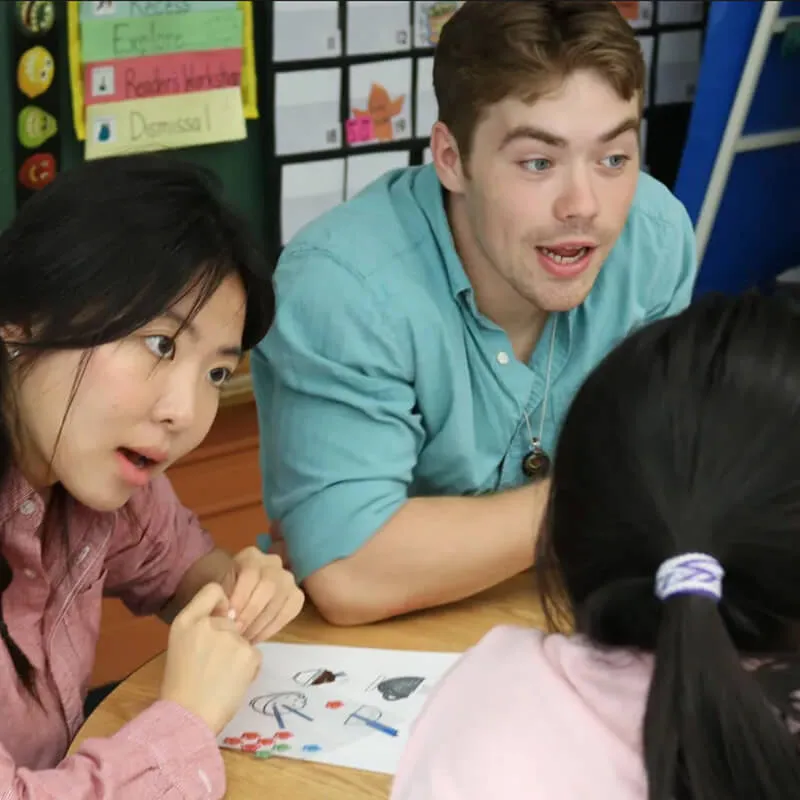

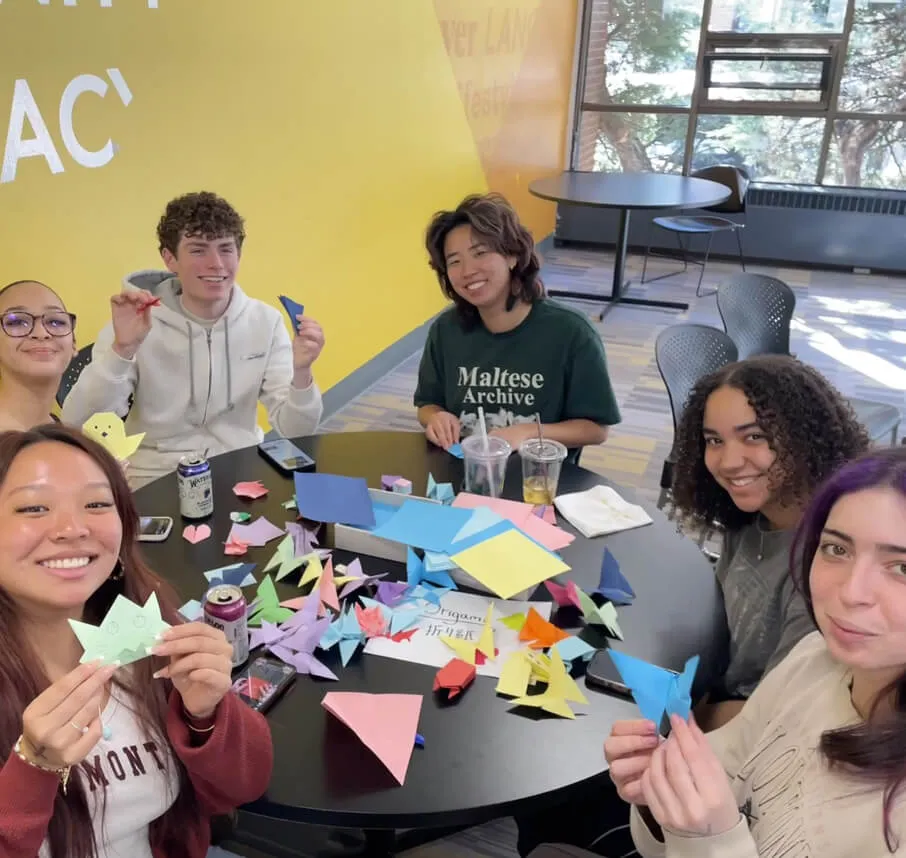
Two adults helping a child practice Mandarin at a classroom table. Colleagues collaborating while looking at a computer screen. Chinese faculty member taking a smiling group selfie with students in a classroom.

What Can You Do with a Liberal Arts Degree with a Major in Chinese or Japanese?

Combining linguistic proficiency, cultural analysis, and historical context, the Program in Asian Languages and Literatures equips students with the skills required for dynamic careers in education, global business, translation, and other fields that value deep intercultural understanding.

Past UVM Chinese and Japanese majors have gone on to work in careers such as:

  • International admissions officer 

  • Interpreter 

  • Language teacher 

  • Brand manager 

  • Product lead 

  • Client manager 

  • Coordinator for international relations 

  • Peace Corps volunteer 

UVM Chinese and Japanese Majors Learn the Top Skills Employers Want

Critical thinking and problem solving

Body

You will analyze layered literary works (e.g., Chinese/Japanese short stories and poems) to unpack societal themes, requiring you to synthesize historical context, linguistic subtleties, and cultural norms to interpret meaning. These are all skills that translate to solving complex, context-dependent problems in professional settings.

Teamwork and collaboration

Body

In group projects, you will co-translate Chinese or Japanese texts (e.g., short stories, song lyrics, poems, news articles) and/or co-curate cultural exhibitions (e.g., a “Chinese Games” or “Traditional Japanese Tea Ceremony” showcase). You must negotiate differing interpretations, divide tasks, and align your work to produce cohesive results, mirroring workplace collaboration.

Written and oral communication skills

Body

Daily language practice (e.g., composing passages and essays in Chinese/Japanese, delivering presentations about China/Japan in both the target language and English) hones precision in expression. As an advanced student, you will also practice simultaneous translation in mock business scenarios.

Professionalism and a strong work ethic

Body

Mastery of tonal languages (Chinese) or honorific systems (Japanese) demands daily drills and strict attention to detail, and our students meet rigorous deadlines for translation assignments and oral exams. You will also engage with Chinese or Japanese students, attend guest lectures by scholars and diplomats, and practice professional etiquette in cross-cultural interactions. 

Initiative

Body

You will have the opportunity to take ownership of learning through independent projects such as researching niche topics (e.g., meme culture and linguistic innovation, manga for aging populations) or organizing campus events (e.g., a Chinese New Year festival or Japanese anime and society workshop). You can also pursue self-directed language immersion via study abroad or internships in Asian communities.

Alumni Spotlights: How the Liberal Arts Shaped Their Careers
Auden Gall ’25

Body
Smiling person taking a selfie in front of an temple.

Lives in: Tainan, Taiwan 

Majors: Chinese and economics 

Why Chinese? “After Thursday half-days in elementary school, my mother would take me to Chinatown. In the low-lit stores, ignoring the Chinese characters and rapid-fire Mandarin, she would smile and point to our favorite pork-floss buns to communicate. Borne on boats fleeing Shanghai, my grandparents came to Boston after Mao’s rise to power. Eager to assimilate, they raised my mother to only speak English, fearing that Mandarin would make her stick out. Amidst the rows of baked goods in that Chinatown shop, I saw what their desire to assimilate had enabled as well as erased. Studying Chinese at UVM became my way of reclaiming what had been lost to my mother.”  

Current position: Fulbright Taiwan English Teaching Assistant 

What work looks like: “I co-teach cultural exchange classes with local teachers at a public junior high school in Tainan, Taiwan. We design interactive lesson plans with the goal of helping students build confidence speaking English. Beyond the classroom, I coach the school choir on English pronunciation as they prepare for competitions, and I wrote a series of short, proverb-like English sentences that were posted along the school staircases to help with daily language exposure.” 

What he loves about it: “On September 28th, Teacher’s Appreciation Day in Taiwan, every Jhongsiao Junior High homeroom teacher passed out a bingo sheet. Within each square was a thoughtful prompt, blurbs like “the teacher whose class you would miss the most during a typhoon day,” “the teacher who always encourages you,” and “the teacher who makes learning fun.” Students were instructed to find the teacher who matched the prompt most to them, ask them to sign the square, and then finally hand over a small snack to show their appreciation. I had been teaching for less than a month, and I assumed that few students, if any, would seek out the new foreign teacher whose name they were still struggling to pronounce. So, when Kevin, one of my students in Class 109, approached me shyly and asked me to sign the “typhoon day” square, it came as a pleasant surprise. A few minutes later, Max from Class 202 handed me a sweet rice cracker after I wrote my name in the “teacher who makes learning fun” box. By the end of the day, my pockets were filled with small snacks, tokens of my students’ appreciation. Moments like these are what I love about my job; when my students show me that I have made a meaningful impact in their lives.” 

What he gained from a liberal arts education: “My liberal arts education at UVM helped me build a wide range of skills, from critical thinking to creative writing. The skill that has mattered to me most, though, is communication. It has helped me write clear, concise applications, and I utilize it every day in my classroom. As a teacher, part of my job is to take a concept and strip it down to its simplest form so that a sixth grader (whose first language isn't English) can understand it. If I can't communicate effectively, my students will let me know very quickly through their blank stares and the sudden disappearance of all volunteers.” 

Mallory McFarland ’21

Body
Person smiling in front of Tower Bridge in London on a cloudy day.

Lives in: South Burlington, VT 

Major: Chinese 

Why Chinese? “I was interested in learning Chinese to broaden my knowledge and appreciation for other cultures as well as to explore my heritage. I have always been fascinated with linguistics, and studying Chinese was a perfect way to deeply commit to learning a language, get out of my comfort zone, and build connections through communication. I also was able to study abroad in China the summer of 2019, which was a highlight of my time in college.” 

Current position: Account Director for Morahan Arts and Media  

What work looks like: “I work in PR and marketing for the performing arts, managing publicity and digital marketing campaigns for organizations and individual artists across the U.S. My company supports regional theaters, record labels, classical music series, choirs, and more, promoting their programming and initiatives and working to make the arts accessible to a wider audience.” 

What she loves about it: “I love the variety of programming I get to work on. The arts are so colorful and deeply influenced by different cultures, and the array of performances across disciplines that I help promote keeps things interesting and fast-paced. My colleagues are also stellar humans, and we have a lot of trust in one another, which elevates our work and creates a really positive environment.” 

What she gained from a liberal arts education: “I learned a lot about collaboration and how to work with people who approach a shared goal in different way. In addition, my communication skills, both written and verbal, improved as I navigated relationships with classmates, faculty, staff, and community members. Being able to communicate confidently and clearly is hugely important in the workplace, and I believe it has given me more opportunities in terms of taking on leadership roles and being entrusted with new responsibilities. What’s more, the liberal arts taught me to problem-solve and think outside the box, adapt to the dynamic environments around me, and find ways to be creative and resourceful.

“A well-rounded education has been monumental in shaping me as an individual and member of my community. At UVM, I was challenged to think critically, question regularly, and engage with the constantly changing world. While in the moment I may have huffed and puffed and struggled to understand why certain courses were relevant, in hindsight, those particular classes and professors impacted my attitude toward how I now view situations, interact with others, and think about my place in society. I’m grateful for the education I received at UVM, which exposed me to new ideas and new interests, and was the place where I met some of my best friends to this day.” 

Alisa Holm ’15

Body
Person seated indoors beside a wooden display case with framed photographs on the wall behind them.
Photo by Kei Kanemoto Photography

Lives in: Niigata, Japan 

Majors: Japanese, studio art 

Why Japanese and studio art? “I’ve loved drawing since childhood, and I always dreamed of studying art. Japanese captivated me for different reasons—I liked the intellectual puzzle of the language itself and was drawn to the beauty of the country's culture and landscape. Pursuing both felt like the perfect blend of my creative and academic interests.” 

Current position: Coordinator for International Relations for the Sado City Tourism Department and Sado Tourism Association  

What work looks like: “My role is varied. I promote inbound tourism by designing content for print, web, and social media—my art background is invaluable here. I also serve as an interpreter for events, meetings, and media tours, translate tourism materials from Japanese to English, and assist future visitors by resolving their travel inquiries online and in person.” 

What she loves about it: “The most rewarding part is when travelers return at the end of their trip to share how a local tip or insight I provided became a highlight of their experience in Japan. Helping people connect more deeply with the place I love is incredibly fulfilling.” 

What she gained from a liberal arts education: “A translation course in UVM's Japanese Department gave me a foundational toolkit in translation and localization—skills I use and build upon every single day. Beyond specific translation techniques, my education fostered adaptability, cross-cultural communication, and the ability to synthesize ideas from different disciplines—like blending artistic design with tourism promotion. 

 
“UVM offered an environment for growth, both in and out of the lecture hall. I was able to pursue a double major, snowboard with the Ski & Snowboard Club, and live in a language-learning dorm. My time volunteering with refugee children through the Volunteers in Action ESL Club sparked a passion for service that later led me to the Peace Corps in Nepal, an experience that completely broadened my worldview. I'm deeply grateful for the freedom UVM provided to explore beyond a single track, as venturing outside our main disciplines is where we often find purpose and perspective.”

Where UVM Chinese and Japanese Majors Go to Grad School

  • Harvard University 

  • Georgetown University 

  • New York University 

  • University of Wisconsin at Madison 

  • University of Massachusetts at Amherst 

  • State University of New York at Buffalo 

  • University of Vermont

Some Notable Companies that Hire UVM Asian Languages and Literatures Graduates
Harvard University logo
Harvard University
REI logo
REI
Peace Corps logo
Peace Corps
JET Program logo
JET Program
Numio logo
Numio
Netflix logo
Netflix

Ready to Turn Interest Into Action?

Inquire for details or begin your application today.