The American Fern Society estimates that there are around 11,000 known fern species. Ferns can exist in most climates yet quickly evolve unique and distinct characteristics in each new ecological environment. They are the second-most ecologically diverse vascular plants, outnumbered only by flowering plants, and among the oldest living species on the planet, even older than dinosaurs.
Given the challenges of studying ferns, Sarah K. Morris seems to have been very lucky in the discovery of an investigative home. Morris is a PhD student at the University of Vermont in the Department of Plant Biology and is surrounded by multiple fern specialists, as well as the Pringle Herbarium, which has more than 300 specimens of the specific fern group she focuses on, the genus Pleopeltis, commonly known as the resurrection ferns.
Morris’ fern research was recognized this month with the José Cuatrecasas Award from the US Smithsonian National Museum of Natural History. This award is part of a very prestigious and competitive program that allows researchers to visit the Smithsonian and work in its botany collection for six weeks, in collaboration with a curator at that institution. The Cuatrecasas Award honors researchers studying tropical plants. Sarah will be working with Smithsonian fern curator Eric Schuettpelz on a study of ferns in the genus Pleopeltis from the Andes during her six-week research visit this summer.
The road to this high point in her research career has been a long one (though graced by the soft leaves of ferns along her entire journey). Morris grew up in St. Petersburg, Florida, where she enjoyed a childhood that she describes as “puttering about year-round in the backyard, poking at lizards,” but she notes also that she was “very lucky to be next to a mangrove forest, an ecosystem that is so unique”.
Her undergraduate degree was in wildlife ecology. “I was very focused on mammals, and all the charismatic things they were doing.” After she graduated, she worked as a field biologist for several big research projects, collecting data. One focused on kangaroo rats in California, and the other on rodent diversity in southern Africa. But much of the data she was collecting for these studies focused on what the animals were eating, so it was always about identifying the plants to inform about the mammal’s behavior.
One day, Morris had a sudden insight about what she most enjoyed in her work: “I was spending all this time looking at plants, and one day I was like, ‘Why don't I just commit to studying the plants for themselves?’ But because I didn't have a background in botany, I was like, ‘Oh, how do I, you know, accommodate for this?’ So, I got a job at the Atlanta Botanical Garden, where I got to work in their plant records, which helped me learn a lot about all the different tropical plants out there.”
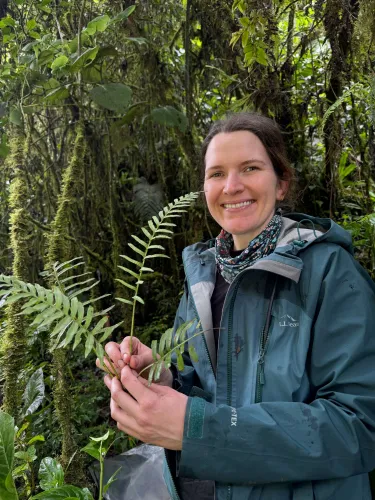
Her next step led her to complete a Master’s in London at the Royal Botanic Gardens, Kew, where she focused on the plants of the Andes, specifically in Colombia. Then, while presenting that work at a conference, she met UVM fern researchers Weston Testo and Michael Sundue. They invited her to stay in touch since they all shared research interests. The conversations about fern taxonomy that followed led Morris to move to Vermont in 2020 in the midst of the pandemic to begin her PhD program.
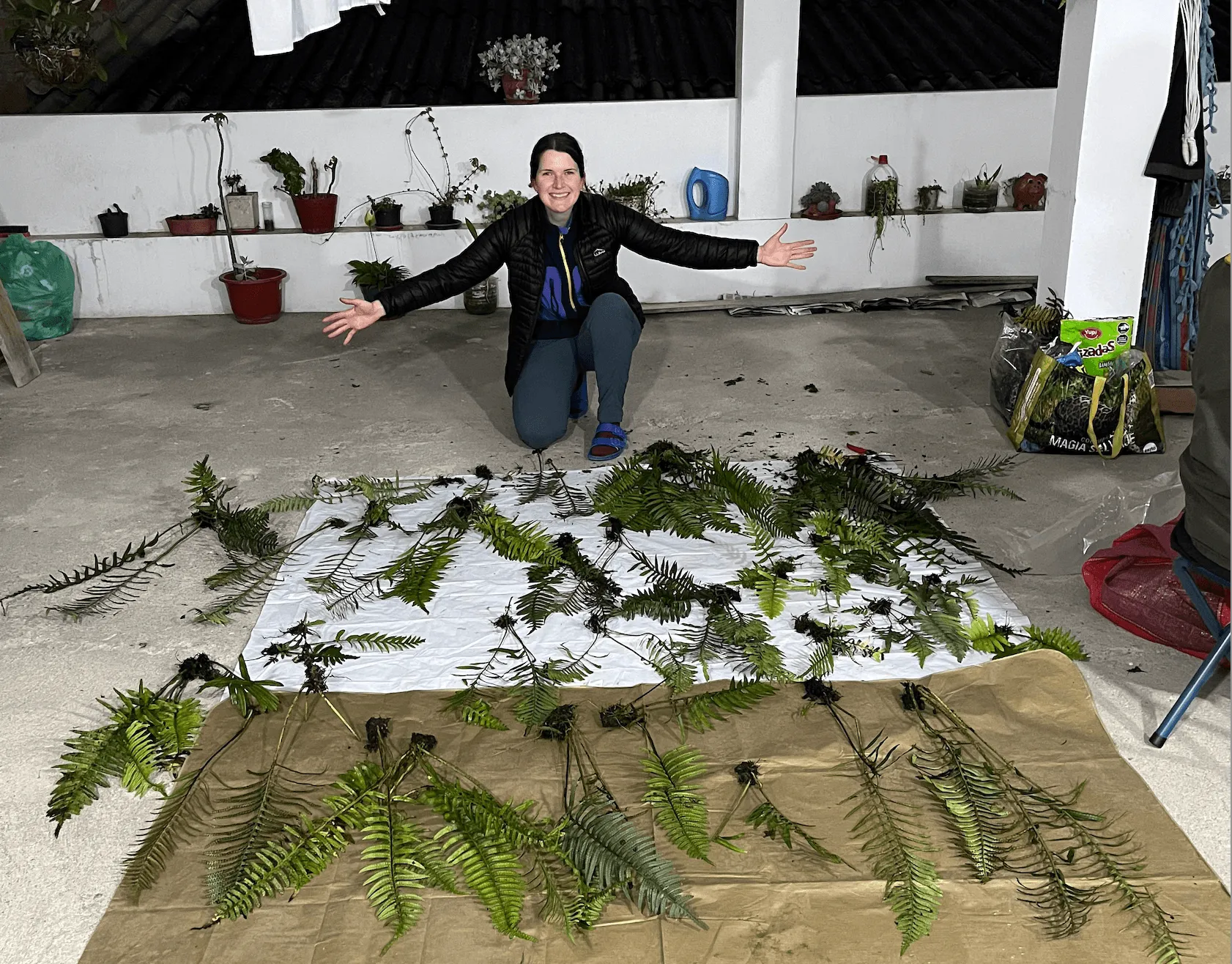
Morris is ebullient when she describes all the mentorship and opportunities that her decision to attend UVM has given her, “I'm co-advised by Weston Testo and Michael Sundue, who's now based at the Edinburgh Botanic Garden in Edinburgh, Scotland. But he flies back and forth, and we get to work together wherever the team goes in the world, which is nice. The NSF-funded Ferns of Colombia project is led by Weston Testo, Michael Sundue, and Alejandra Vasco at the Botanical Research Institute of Texas, and these three have mentored me throughout my time as a graduate student; I would not have been able to do this work without their support. They taught me how to collect ferns in the tropics, and they taught me everything I know about ferns, more or less. I'm incredibly grateful to them. And then, through them, I've been really lucky to meet a lot of other great folks who have taught me a lot as well, one of
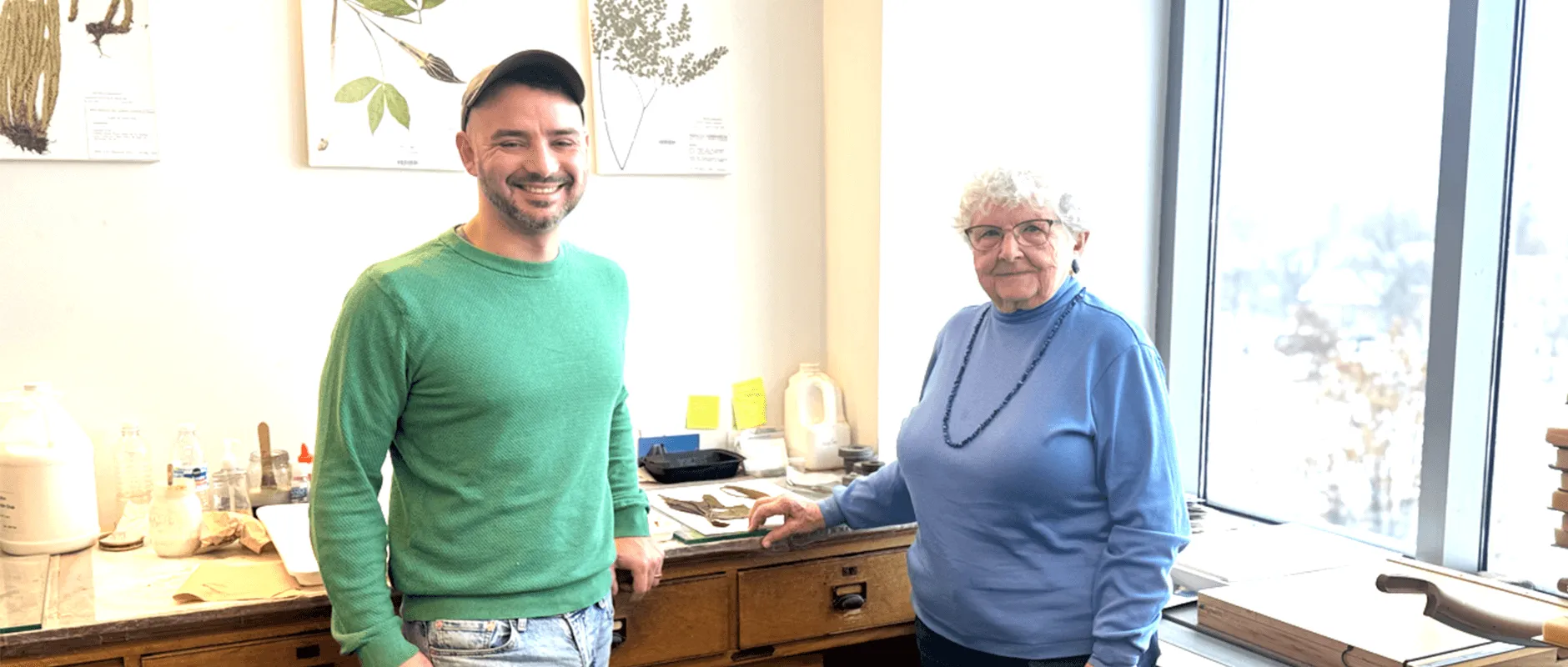
whom was Robbin Moran, curator emeritus of the New York Botanic Garden and PhD advisor to Michael Sundue and Alejandra Vasco. He retired to Saint Louis and helps curate the fern collections at the Missouri Botanical Garden, and we got to work together for a bit. Robbin Moran’s book, A Natural History of Ferns, was why I wanted to study ferns in the first place, and it was this incredible moment to know that I picked up his book randomly and read it and then got completely hooked on it, and now I'm working with the guy who wrote it! It just blew my mind. We are also super lucky at the Pringle Herbarium to have Art Gilman in our sphere. He is an associate of the herbarium, and he wrote the New Flora of Vermont. He knows every plant in the state. He has an incredible, incredible memory for all of the plants. And he's been such a great resource for me and incredibly supportive of my work. And of course, David Barrington, the retired plant biology chair, has taught me a lot and been super supportive of my work as well. I'm just super blessed to have a lot of people in my corner. I think there are a lot of different ways of looking at my graduate experience. In some ways, it was really chaotic starting my doctorate during the pandemic. But in another sense, I've had some really incredible opportunities, and I've gotten to meet some awesome people who have had a major impact on my work and hopefully my future career. I consider myself super lucky.”
As a whole, her dissertation is centered around Pleopeltis, and she has a chapter looking at adaptive traits in the group.
“There are a lot of really interesting adaptations that they have, like these scales on their leaf surface that absorb water directly, which is really unique among plants. That is what allows them to rapidly rehydrate after they've desiccated, appearing to resurrect, hence the common name. I'm investigating that in an evolutionary context to see if these adaptations allowed for the evolution of species in the genus into novel habitats.”
Her work at the national herbarium at the Smithsonian, she hopes, will form an important chapter of her dissertation in which she will attempt to disentangle a species complex found in the Andes mountains.
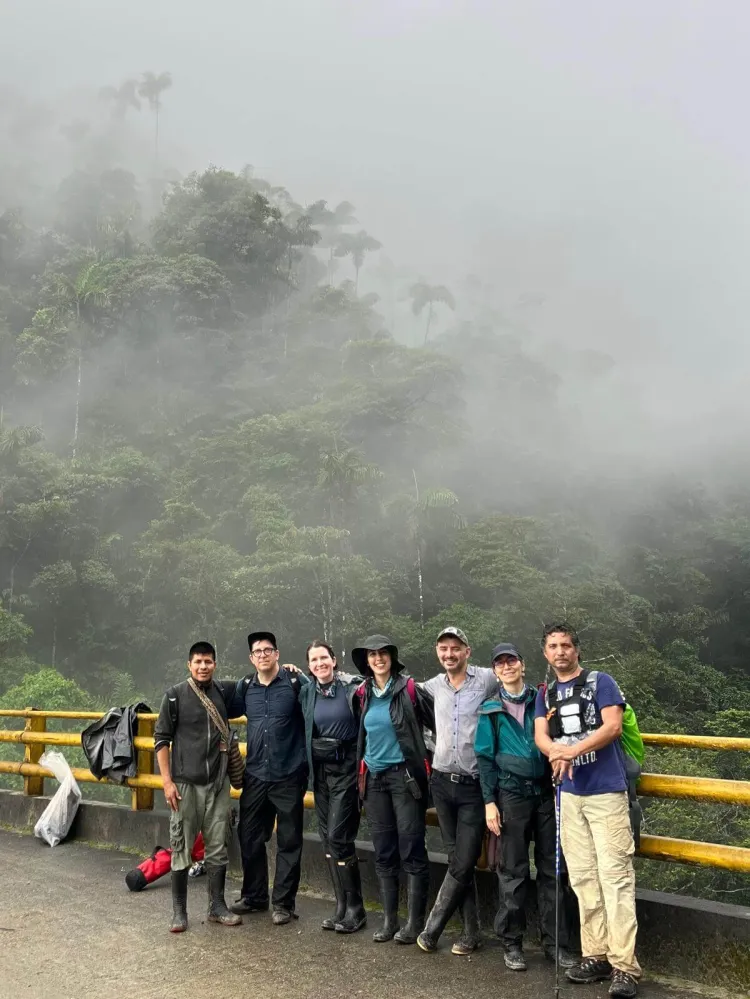
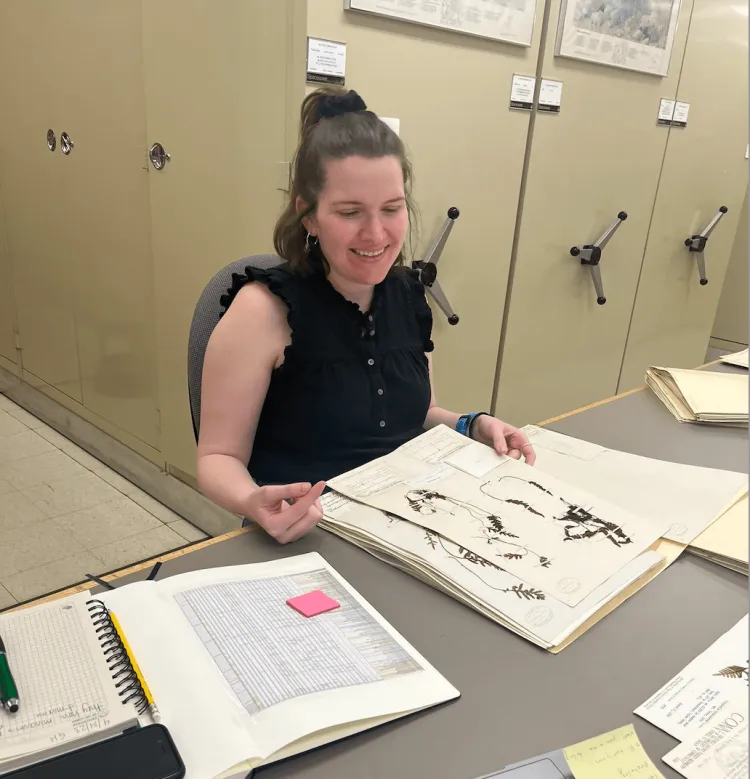
“On one of our Ferns of Colombia team trips, we came upon this one site with a ton of this one particular species, or what we think of as one particular species, called Pleopeltis remota. And it was just overrun with this species, and there were so many different morphologies. It just sort of blew my mind. I was like, what is happening here with these plants that I've been studying the specimens of for years and years now? And I just couldn't get it out of my mind. And when I got back to Vermont after that trip, I pulled out all those specimens, and I was just pouring over them, trying to make sense of it. And eventually, after many hours of just me kind of throwing up my hands and being like, I don't know what to do with this group, they're just so morphologically all over the place. I can't quite make sense of it. And then, with the help of Micahel Sundue, a light bulb went off, and we were able to preliminarily group things into different discrete groups.”
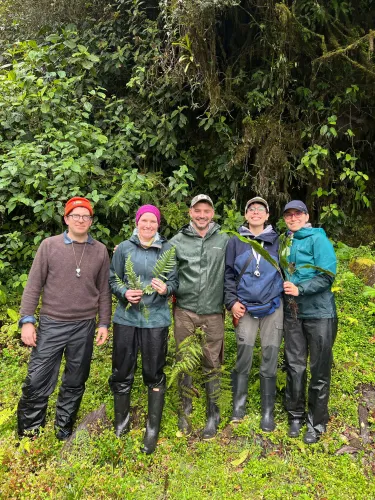
“Then I started diving into the taxonomy. The history of the names of plants, and which name applies to which morphology. It gets really tricky in nomenclature. It's almost like the tax code. There are all these rules set out. And each name that gets published is tied to a specific plant called the “type specimen”, and that morphology dictates what plant should have that name applied to it, if they match that morphology. So I started looking into the names, and which name should I put on all these little piles that I had made, like literal piles of specimens all over the room.”
“Nowadays, we can get nice, digitized pictures of typed specimens online, which is super helpful. But for a lot of the work that we do as taxonomists, you really need to get to a microscopic level. You need to be able to see the minute details that can be about one micrometer long, like the scales, or the hairs, or other tiny little features to really understand type specimens.”
“I realized as I was going through this process that a lot of these types are at the US National Natural History Herbarium in DC. Which makes a lot of sense because the US National Herbarium has a really long history in this country. It's one of the oldest herbaria, and it's one of the largest collections in the country and in the world. We have about 300 Pleopeltis specimens here at the Pringle Herbarium. They have 5000. So, just astronomically more specimens to look at than we have here. And then, of the type specimens that are so important for nomenclature and the application of names, they have about 68 type specimens of the ferns I am studying. So that's going to make a huge difference in my work.”
“Being able to work with the world-class collections of this genus at the Smithsonian is a dream come true for any pleopeltologist! Which should be the Merriam-Webster 2026 Word of the Year!” says Jeanne Harris, chair of the Department of Plant Biology
Morris’ mentor, Wes Testo, Director of the UVM Pringle Herbarium, summarizes the opportunity that awaits, “At the US National Museum of Natural History herbarium, Sarah will be able to review thousands of specimens that are relevant to her Ph.D. studies and walk in the literal footsteps of some of the leading figures in botanical research. Opportunities to visit institutions like this are incredibly inspiring and motivating for scientists at all career stages, but especially so for students. We are all excited to see what exciting new finds Sarah brings back with her from this visit.”