Her work focuses on some of society's most pressing challenges, from climate change and sustainability to community resilience and economic development. Each unique approach she implements is a way to connect knowledge with action, and she is always looking for ways to put that knowledge directly into the hands of the people who need it most.
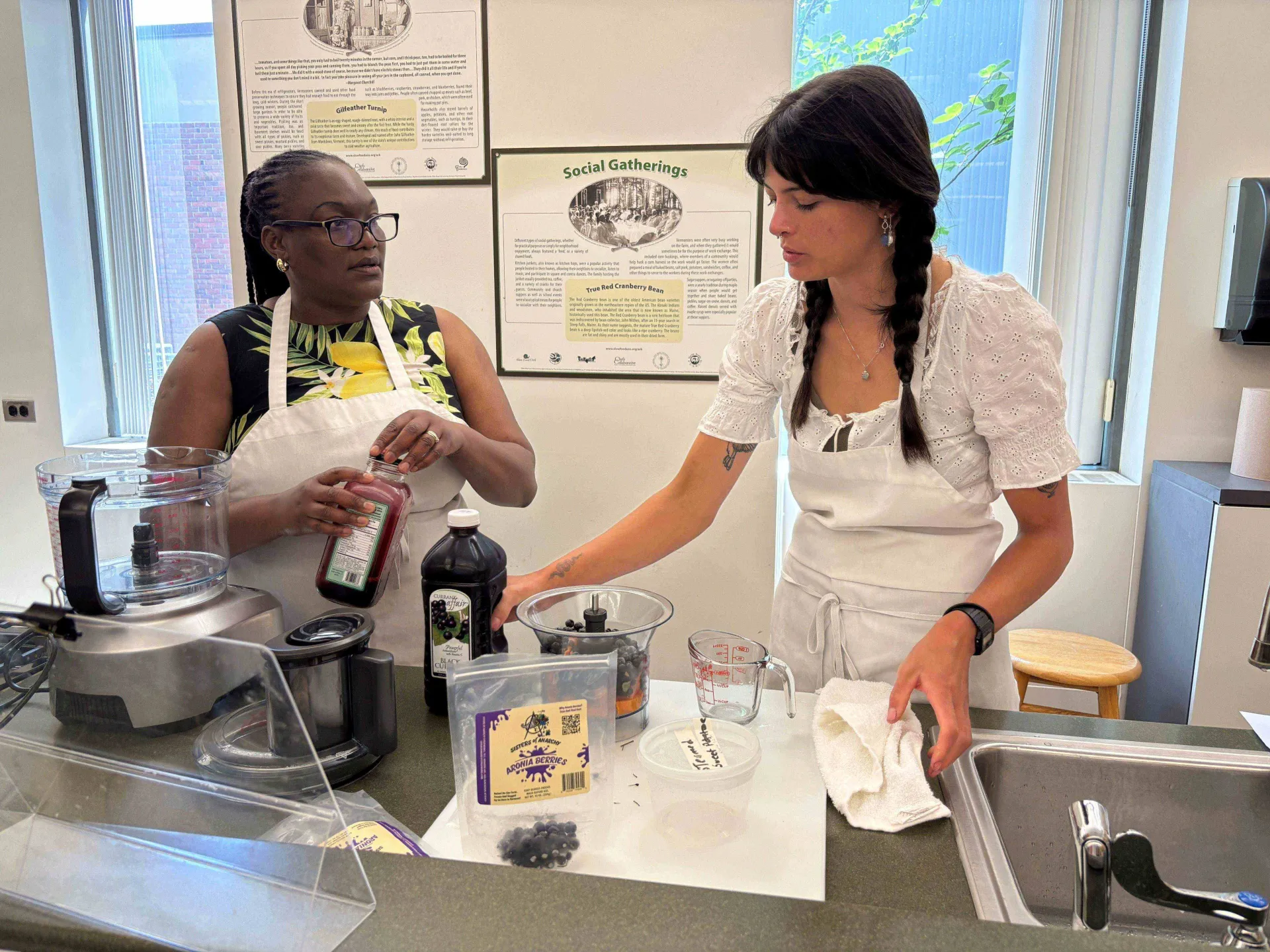
To that end, one of her current projects is the Climate Kitchen, an interdisciplinary initiative funded by UVM’s Food Systems Research Institute, which is designed to explore the connections between nutrition and food science research, food systems, sustainability, innovation, and community engagement. What began as an experimental idea has quickly gained momentum, attracting students, faculty, researchers, and community partners eager to collaborate on real-world food system challenges.
"What we're really interested in the Climate Kitchen is how people learn, how they apply it creatively and practically, and how that learning continues," said Amy Trubek. "That cycle of design, learning, iteration, and inquiry is something we really believe in."
The Climate Kitchen emerged from a simple but powerful observation: students increasingly want to understand food in the context of climate change resilience, sustainability, and the circular economy. Rather than approaching those questions solely through lectures or research papers, Trubek envisioned a space where curiosity could drive discovery.
"We created the Climate Kitchen because we felt we needed a space for curiosity about what matters,” she said. "We designed an approach that gives people the resources and opportunity to pursue research projects that can translate into products, collaborations, and solutions."
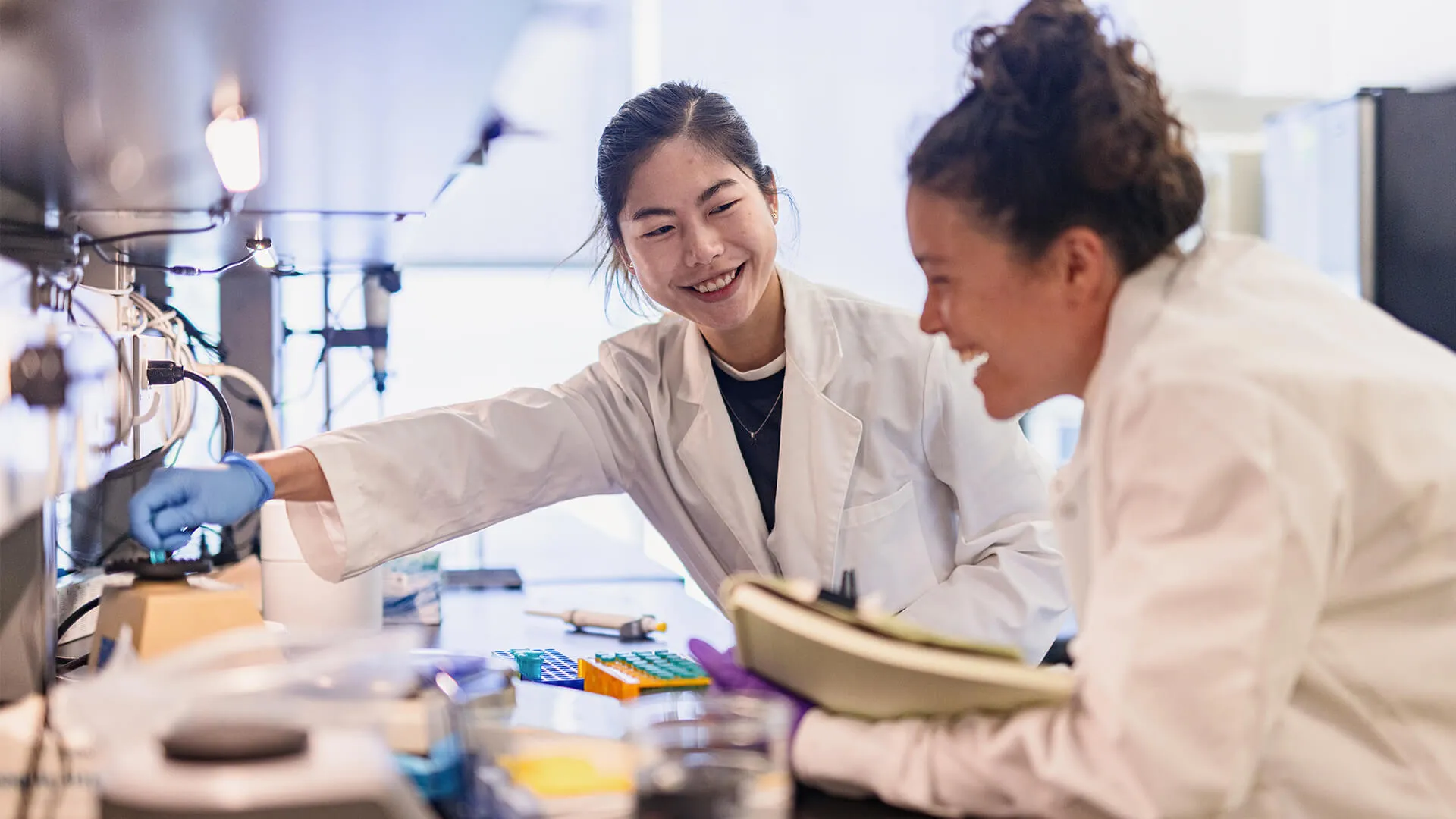
That approach recently received a significant boost through UVM's participation in a major National Science Foundation-supported 6 million dollar initiative focused on research translation and innovation. The Climate Kitchen serves as one of the university's innovation hubs that this NSF grant will support, helping graduate students move promising ideas beyond the laboratory and into communities where they can create impact.
For students, the experience introduces design thinking and translational research, encouraging them to consider how their work can address real-world needs.
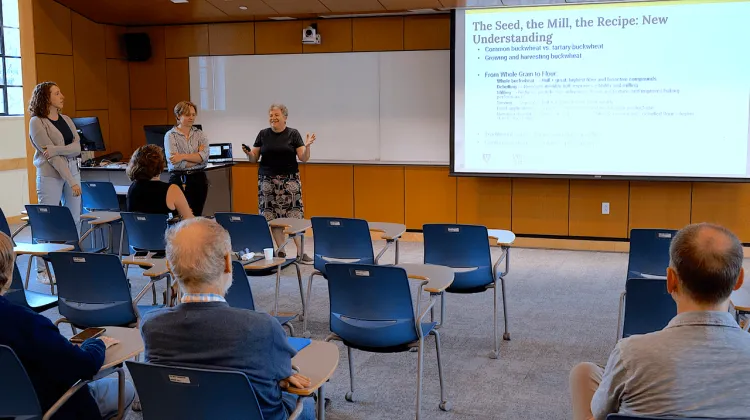
"Our food systems graduate students want to do research, but they also want to see that research put into action," Trubek said. "This program provides the curriculum, resources, and support to learn that whole translational process."
Building Practical Skills for Sustainable Food Systems
Another way that Trubek aims to get knowledge into the hands of those who most need it is an innovative curriculum that helps learners translate good nutritional intentions into everyday practices. She has spent years refining this curriculum in her course and her current plan is to share this long-tested curriculum through an open-access digital textbook, developed with colleagues Emily Barbour and Amy Finley. Scheduled for publication through University of Vermont Press, this resource will provide evidence-based modules focused on food agency, cooking skills, and sustainable food practices. The curriculum is designed primarily for SNAP educators, Food Is Medicine practitioners, and other community educators, though it will also be accessible to home cooks.
"We've spent years developing and testing approaches that help people build the confidence to enact their aspirations, whether for personal nutritional health or sustainability," Trubek said. "The goal is a curriculum that translates important principles into consistent action."
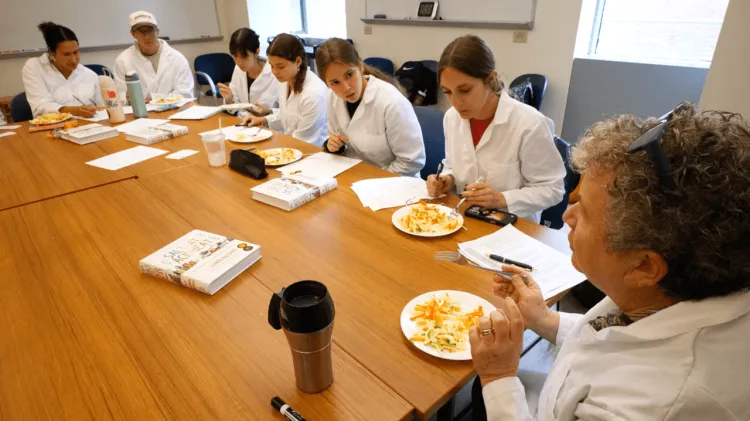
The digital resource combines text, video, and other multimedia elements. Five chapters focus on the practical skills involved in planning and preparing meals, while two chapters specifically address sustainability principles and how they can be incorporated into daily food choices.
At the same time, Trubek and her colleagues have been studying the impact of another innovative course offering, NSF 2195 and NFS 2196, Foods for Planetary Health and Foods for Planetary Health Lab. This innovative class examines sustainability through four interconnected lenses: environmental, economic, social, and health outcomes. Interviews with former students reveal that the course continues to shape their decision-making long after graduation.
The Kitchen as a Learning Laboratory
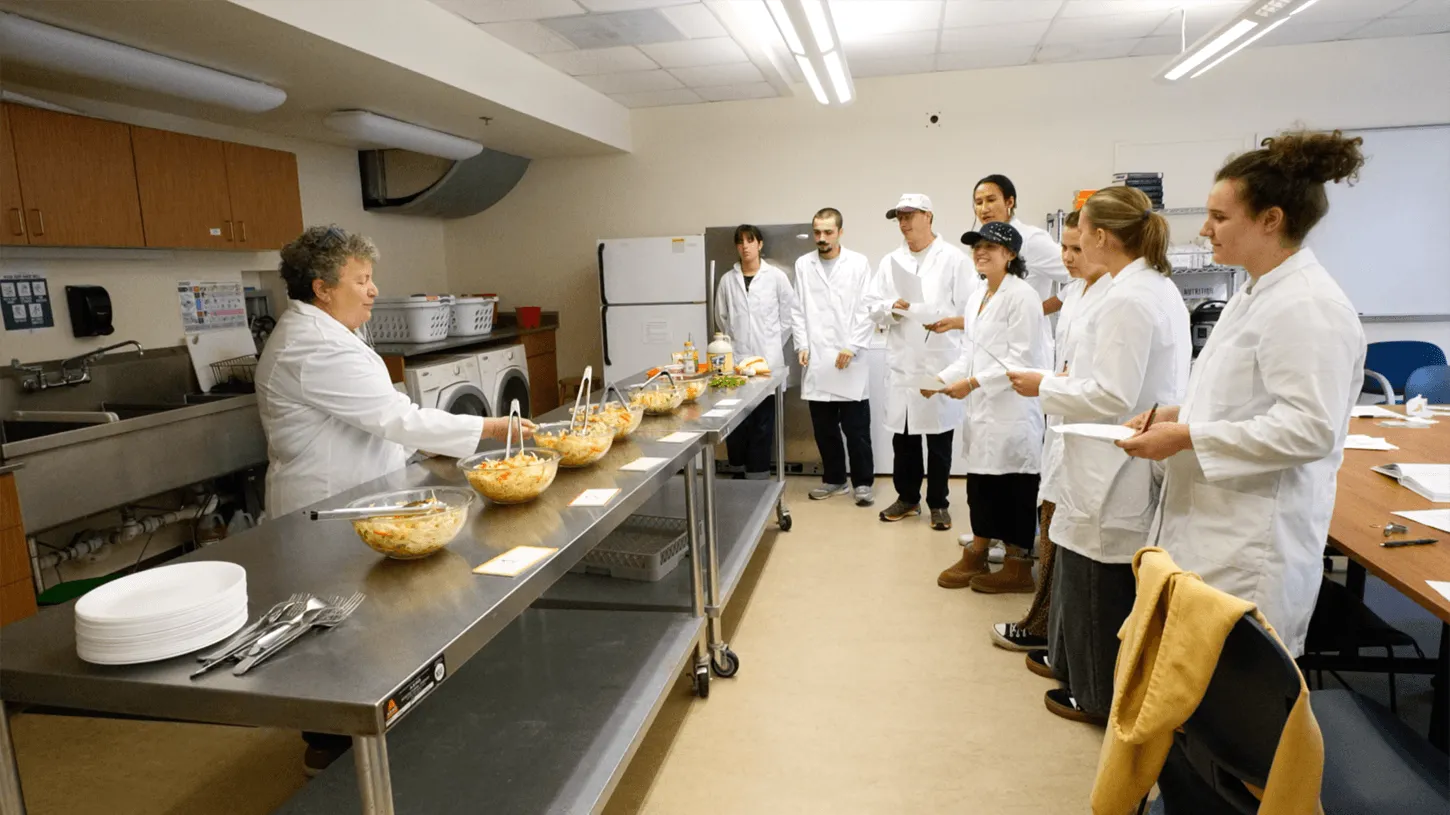
While many people think of cooking as a practical skill, Trubek sees the kitchen as something much larger, "I love the kitchen as a space of inquiry," she said. "People think of teaching in a kitchen or foods lab means I am teaching a cooking class, but to me it's really a place where we're asking questions, exploring ideas, experimenting, and understanding how everything connects."
That perspective has resonated with students across disciplines. Some arrive interested in nutrition, others in food science, sustainability, agriculture, or public health. In the kitchen, they begin to see how those fields intersect.
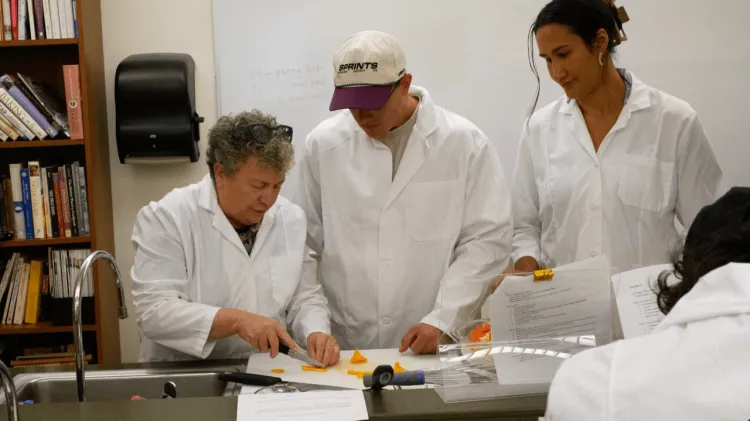
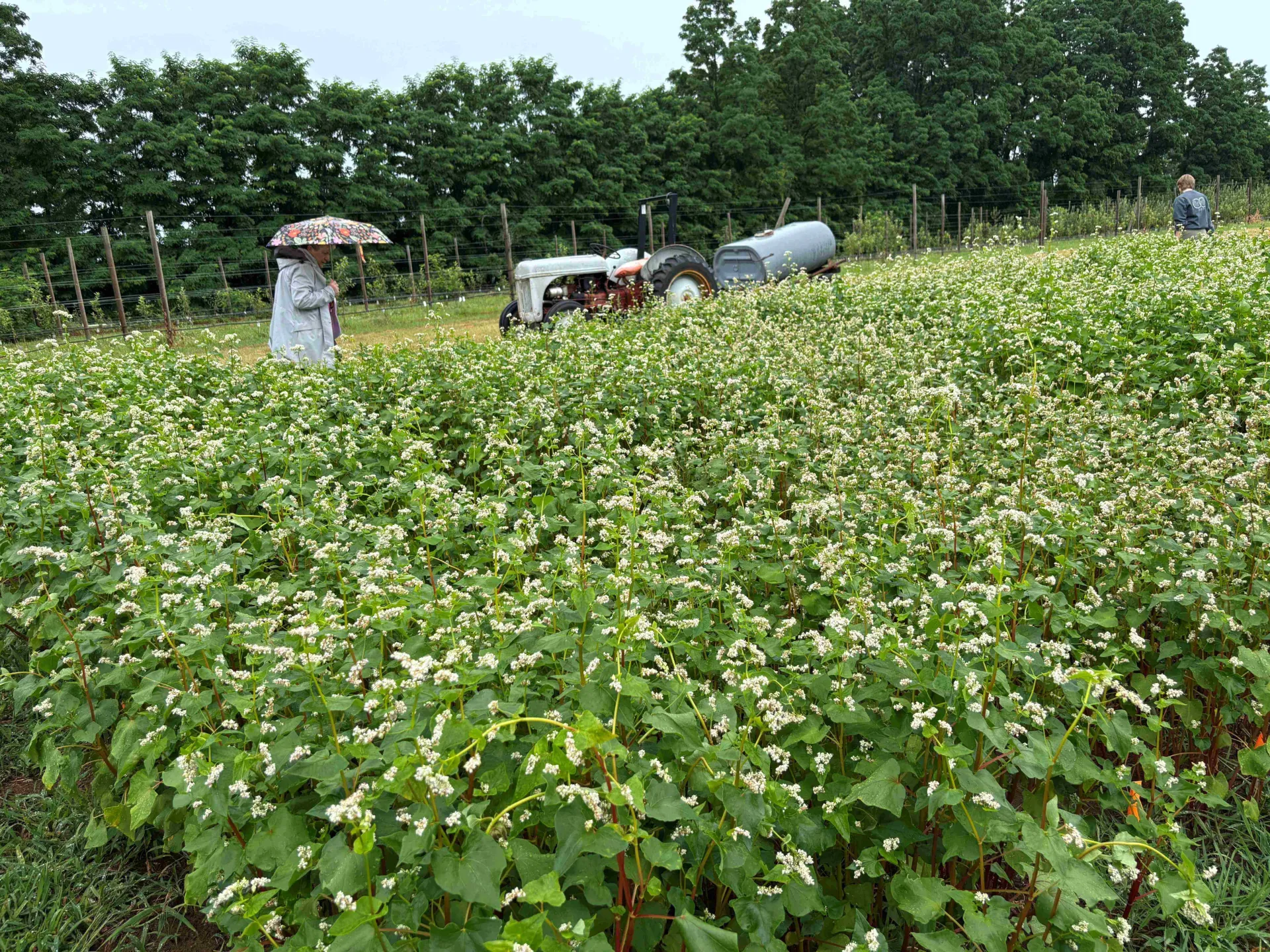
According to Trubek, the kitchen provides a uniquely effective environment for connecting theory with practice. Just as agricultural students interested in research still learn by working in fields, nutrition and food science students learn by engaging directly with ingredients, processes, and questions about where food comes from and where it might go next.
As one dietetics major enrolled in Trubek’s Basic Concepts of Food course this semester offered as a reason why she took in the course, “How can I in good faith tell my future clients that they should prepare their food from scratch because it's more nutritious, if I don’t know what cooking from scratch even entails?”
"You can get students to realize how it's all connected," Trubek said. "Where food comes from, how it's grown, how it's transformed, its nutritional functions, its sensory qualities, and the possibilities for innovation. Bringing those things together in the kitchen creates a powerful learning experience."
That hands-on approach has inspired students to reshape career paths and discover new passions. Some have entered courses focused on nutrition and left fascinated by food development, product innovation, and sustainability. Others have found ways to connect scientific research with practical solutions for communities and industries.
Optimism Through Collaboration
Today, the Climate Kitchen's growing reputation is attracting partners from across Vermont and beyond. Entrepreneurs, food producers, researchers, and nonprofit organizations are increasingly approaching the program with challenges and ideas that could benefit from collaborative problem-solving.
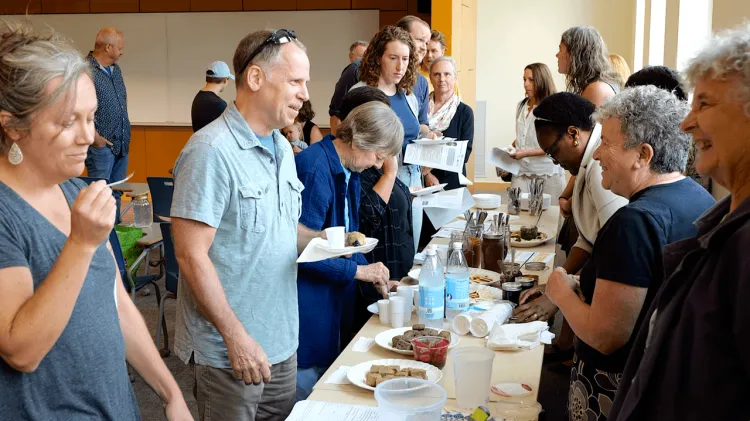
For Trubek those collaborations are a source of hope, "I'm optimistic because I see so much creative energy going toward trying to figure these problems out," she said. "Every one of these efforts can help move things forward."
She believes universities have a critical role to play in helping transform ideas into meaningful action, "It's never the ideas that are the problem. It's implementation," she said. "What we need is creativity and people working together toward implementation. That's what the Climate Kitchen can help with. It can help us move from ideas and hopes about a better future to actually making that future possible."
As food systems face increasing pressures from climate change, resource constraints, and public health challenges, Amy Trubek's work offers a model for how higher education can bridge disciplines, inspire innovation, and prepare students to turn knowledge into impact. In the Climate Kitchen, the next generation isn't just learning about food systems. They're learning how to mix disciplines and passions in ways that can truly result in something both nutritious and sustainable.