Professor Amy Trubek in France: Culinary Tradition, Sustainability, and UVM’s Climate Kitchen
Professor Amy Trubek, a cultural anthropologist and trained chef, has spent her career examining the cultural, historical, and social dimensions of food. In addition to serving as a professor in the Nutrition and Food Sciences department at the University of Vermont (UVM), she is the founding Faculty Director of the UVM Food Systems graduate program and currently serves as Director of the UVM Climate Kitchen.
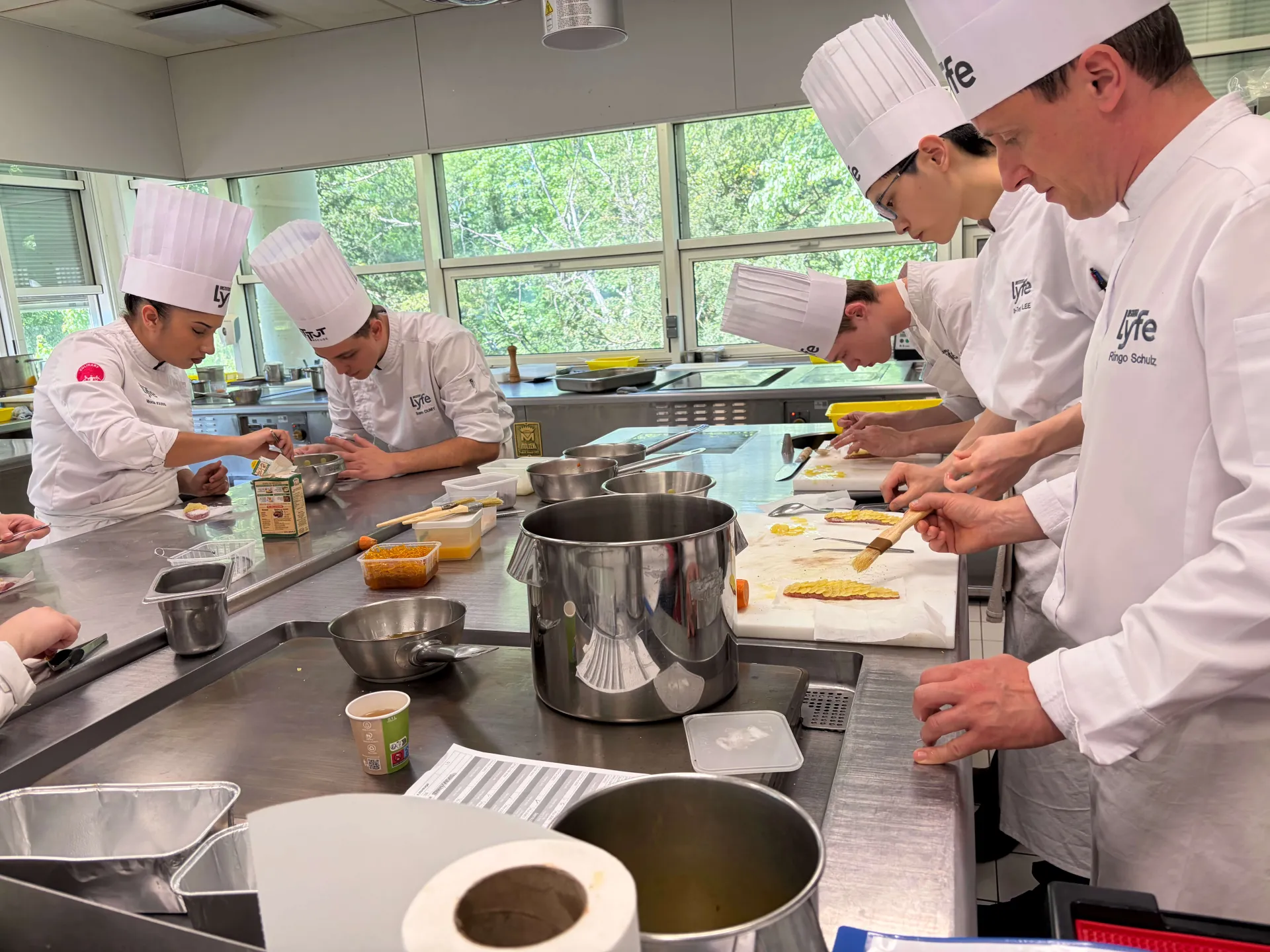
In her role as director of the Climate Kitchen, Trubek recently completed a short residency at Institut Lyfe in France (formerly the Institut Paul Bocuse), a renowned hospitality school in Southeastern France. Just outside Lyon, its campus pairs two historic châteaux with modern, high-tech facilities and offers programs in the culinary and hospitality fields ranging from bachelor’s and master’s degrees to co-supervised doctoral research. Her experience highlighted the evolving relationship between culinary tradition and sustainability, offering a glimpse into how this historic institute is working to incorporate more sustainable practices into its curricula.
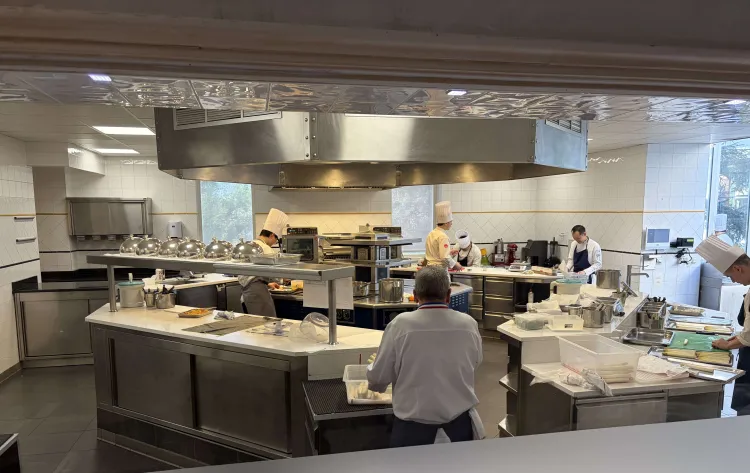
Moving from theory to practice can be challenging, however, and Trubek observed a slight tension between methods shaped by modern sustainability work and those that underpin France’s culinary traditions in the kitchen. How do you address future environmental concerns within a culture so committed to culinary heritage? Despite the inherent challenges, Institut Lyfe strives to embrace the future without abandoning the past. It remains firmly rooted in the legacy of French haute cuisine while working to integrate other cuisines, emerging technologies, and sustainability practices. In the kitchen, students continue to master classical techniques and produce highly refined dishes that reflect French culinary heritage, while attempting to adapt to a rapidly changing global food landscape and shifting consumer expectations.
Compared to UVM’s Climate Kitchen, Trubek observed that some concepts at Institut Lyfe remain less fully developed, particularly the application of research focused on food and climate adaptation to practical applications in the food and hospitality sectors. Everyone at Institut Lyfe acknowledged that such a collaboration is useful, but how to do it? The Climate Kitchen’s deep commitment to inquiry and systems thinking might provide some inspiration. By connecting questions of production, consumption, and behavior, it offers a more holistic view of how food choices shape environmental outcomes, all while keeping taste and pleasure at the center. This approach, Trubek believes, is what sets the Climate Kitchen apart. While institutions like Institut Lyfe benefit from dedicated facilities and longstanding culinary traditions, UVM’s Climate Kitchen model emphasizes asking the right questions and connecting seemingly disparate components of the food system. It seeks to bridge the gap between producers, chefs, researchers, and consumers, making the kitchen a critical site for experimentation and problem-solving.
Ultimately, Trubek’s experience at Institut Lyfe reinforced a central conviction of hers: meaningful change in food systems will depend on what happens at the point of preparation. Whether in professional kitchens, institutional dining halls, or home kitchens, cooking remains a crucial link between global challenges and everyday practice. As she sees it, the path toward a more sustainable future will not be defined solely by new technologies or policies, but by how people actually cook, eat, and think about food.
The Climate Kitchen is supported by The Food Systems Research Center (FSRC) at the University of Vermont (UVM) which funds collaborative research that puts people and the planet first, unites disciplines and communities, and answers complex questions about food systems.