But two UVM doctoral candidates are already taking leadership roles in guiding the international conversation about sustainable development reform.
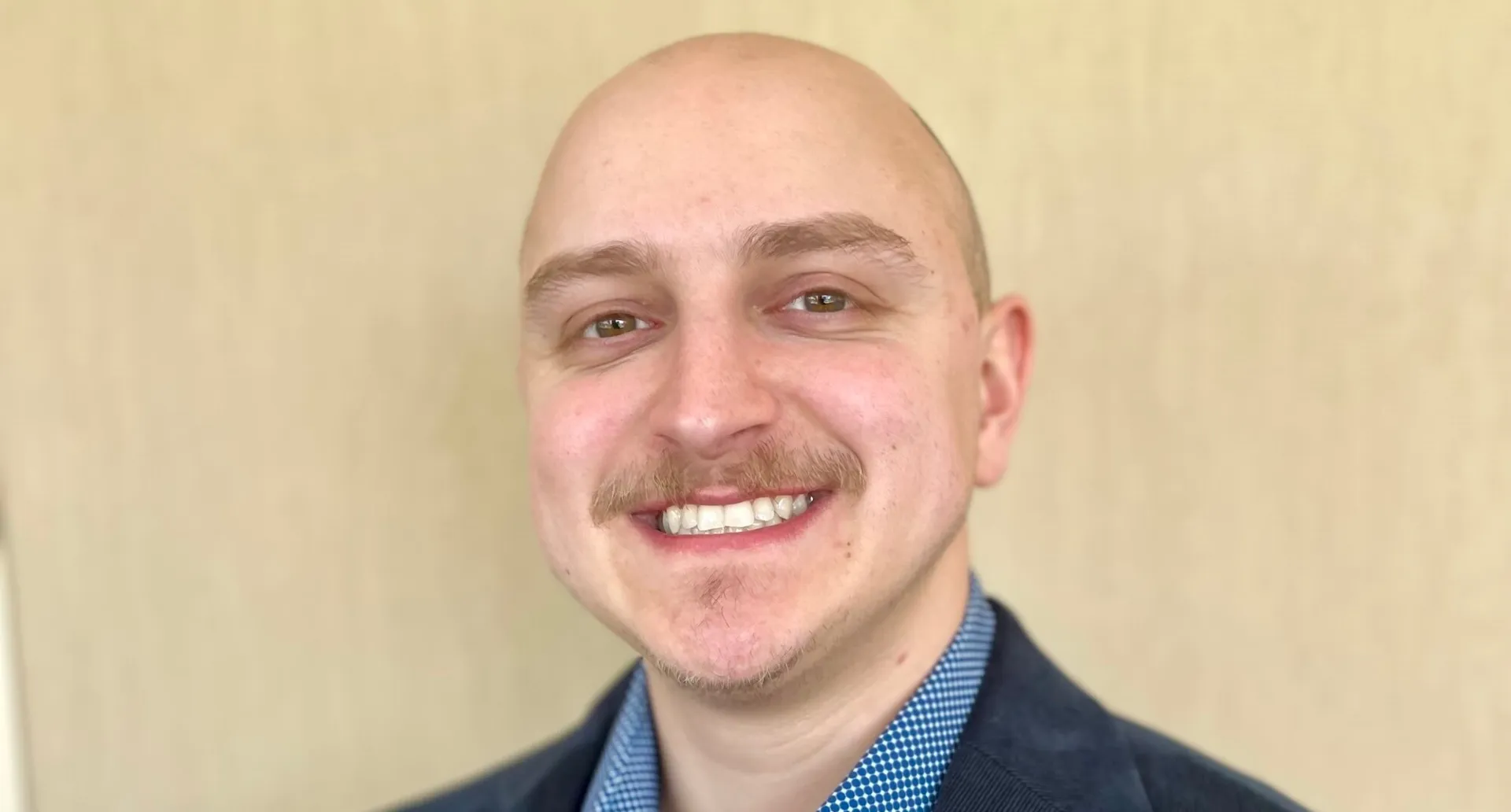
Naomi Parekh and Lizah Makombore are both PhD candidates in UVM's Sustainable Development Policy, Economics and Governance (SDPEG) program and have recently brought their research to some of the world's most influential policy venues, demonstrating how rigorous scholarship can help shape conversations about sustainability, food systems, development, and social justice on a global scale.
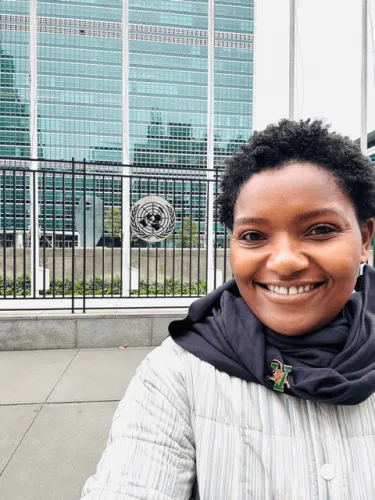
For Naomi Parekh, that stage was the United Nations Headquarters in New York. For Lizah Makombore, it was the World Bank’s 2025 and 2026 Annual Spring Meetings in Washington, D.C., followed by recognition as a recipient of the 2026 Emerging Policy Scholar Award from the Policy Studies Organization, a Washington, D.C.-based policy organization.
Though their research addresses different challenges, both scholars are working toward a common goal: creating systems that are more equitable, resilient, and sustainable.

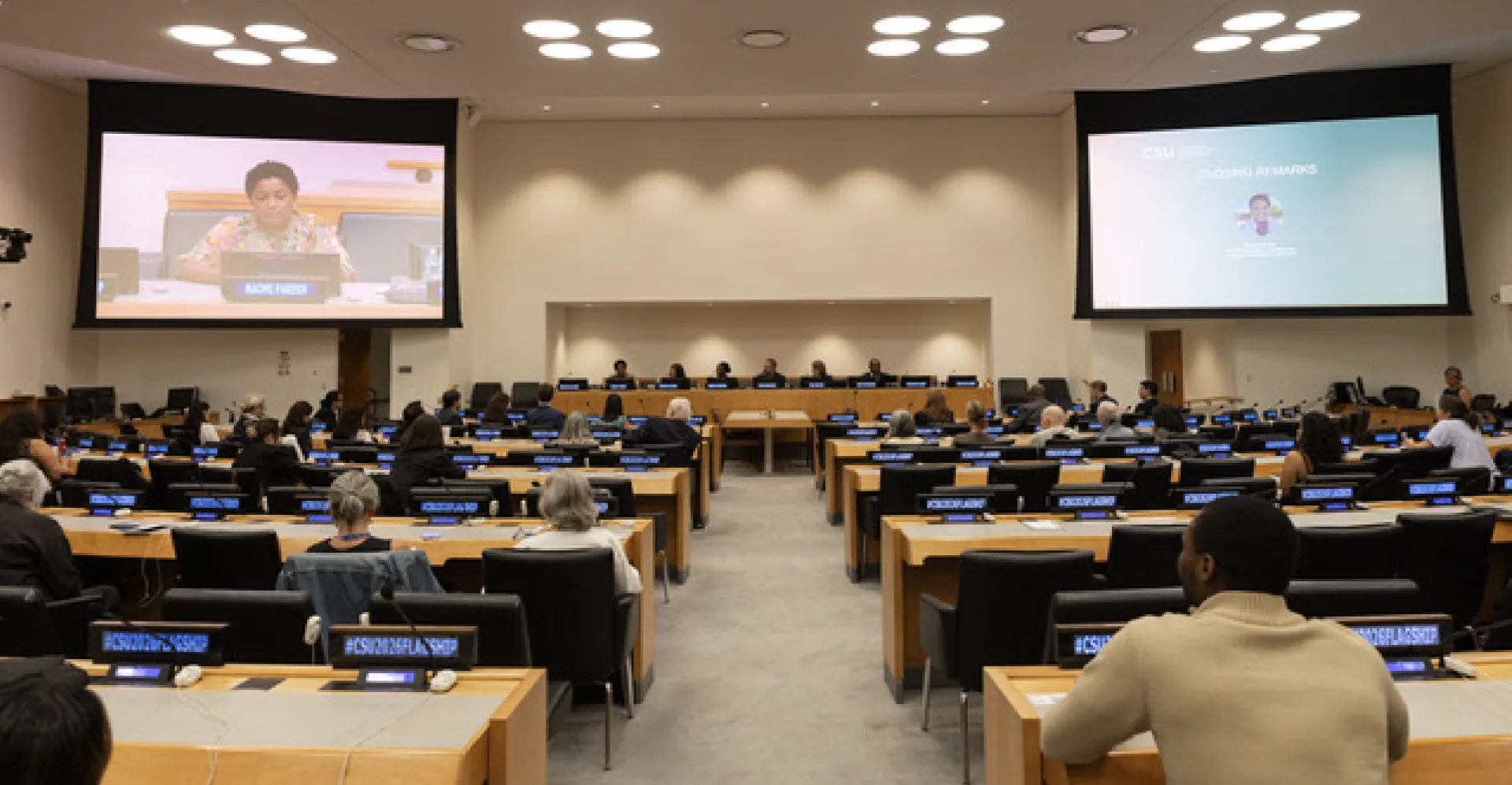
At the Regenerative Communities Summit at UN Headquarters, where Parekh delivered closing remarks, she underscored the role of stakeholder convenings in advancing the New Urban Agenda. The event brought together diplomats, architects, planners, educators, scientists, and community leaders to explore how regenerative approaches can help communities thrive in the face of environmental and social challenges.
Parekh represented both UVM and the Consortium for Sustainable Urbanization, for which she serves on the board. Having previously spent nearly a decade working within the United Nations system, the experience of being back at the UN carried special significance.
"It really felt like I was returning home," Parekh said, reflecting on returning to the organization where she previously worked in roles advancing global initiatives around water, sanitation, hygiene, sustainable urban development, and the UN's Sustainable Development Goals.
Her doctoral research examines sustainability tools used by ski areas across the United States and explores how exchange visitors working at ski areas contribute to sustainable development. Through that work, she has become increasingly interested in resilience, stewardship, and the connections between environmental sustainability and community identity.

Parekh's research bridges theory and practice. She examines how communication, governance, and collaboration can advance these sustainability goals across sectors and communities. Her ability to move between academic research and international policy conversations reflects a career spent connecting new ideas with actionable results. One of the summit’s central themes was shifting from actions taken with the lens of “sustainability” toward actions that might be possible within a broader frame of “regeneration”.
"Instead of simply causing less harm, regeneration asks how we can work together to improve and restore communities for the next generation, Parekh said. How do we become stewards rather than passive observers?"
Lizah Makombore’s doctoral research examines how public development banks, including institutions such as the World Bank, can support agroecological approaches to agriculture and food system transformation. She recently presented a policy brief at the World Bank's annual Spring Meetings and participated in discussions with World Bank representatives and civil society organizations about financing pathways that better support smallholder farmers and sustainable agricultural systems.
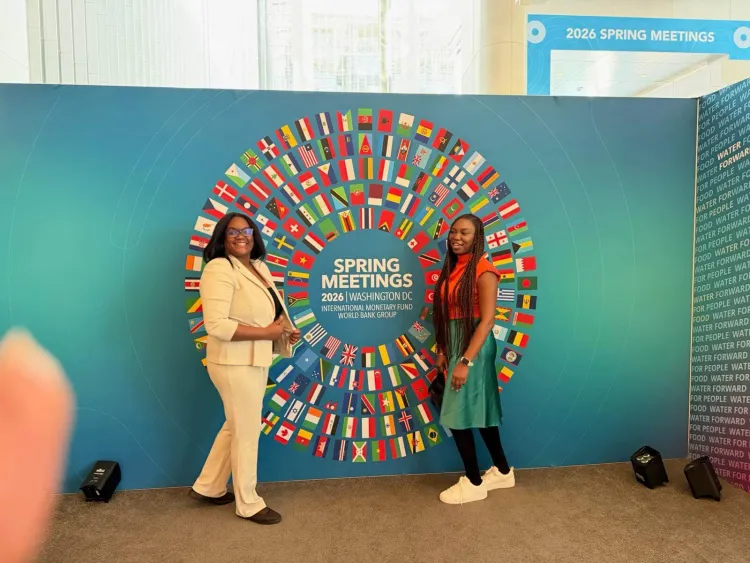
"I look at how public development banks can begin to shift financing mandates, policies and incentives toward more sustainable agriculture," said Makombore. "How do we finance systems that work with nature and for people while also supporting food security, food sovereignty, equity and resilience?"
Born in Zimbabwe and educated in South Africa before coming to UVM, Makombore's work is deeply informed by the African philosophy of Ubuntu, often expressed as "I am because we are." That perspective drives her research into transforming food systems and public institutions, so they better serve communities and ecosystems alike.

At UVM, she found an intellectual home where ecological economics, food systems research, and sustainability policy converge. Working with a broad coalition of stakeholders: development bank personnel, civil society organizers, social movements such as the Stop Financing Factory Farming Coalition and Friends of the Earth, as well as her UVM faculty, academic peers, and partners at UVM’s Institute for Agroecology, Leadership for the Ecozoic, and the UVM's GUND Institute for the Environment -- she has connected academic inquiry directly to global interdisciplinary policy issues.
"Our food systems face enormous social and ecological challenges," Makombore states, describing herself as a scholar-practitioner-activist. "The question is how institutions and financing systems can support more equitable and sustainable pathways forward."
Both students exemplify a hallmark of the SDPEG program: research that extends beyond academic journals and into communities, organizations, and policymaking institutions. The program focuses on creating academic knowledge that has immediate practical real-world value.
Makombore's work focuses on understanding how development banks can institutionalize agroecological principles and ethics and therefore use their soft power to provide more financial support for farmers taking an agroecological approach, a framework that integrates ecological principles, farmer well-being, and long-term sustainability. She believes transforming food systems requires transforming the institutions that finance them.
"They have the resources, they have the influence, and they have the mandate to support development," Makombore said of public development banks. "They can be leaders in the transition toward more sustainable agriculture."
The success of both students illustrates the distinctive nature of UVM's SDPEG doctoral program, which encourages interdisciplinary approaches to some of humanity's most pressing challenges.
"The SDPEG program allows us to fully engage in local and international discourse and practice- whether at the World Bank or the United Nations, at a community-based organization in Costa Rica, or at a Vermont ski area. We work closely with farmers around the world, make data more accessible, and study climate-induced migration, all in the same program," said Parekh. "We find connections between policy, economics and sustainability in everything we do.”
For Makombore, the decision to pursue a doctorate at UVM was driven by the opportunity to work with ecological economist Joshua Farley, and join a community of scholars committed to systems-level transformation. Equally important was the opportunity to engage in scholarship grounded in an ethic of care for the entire community of life—human and non-human, across past, present, and future generations—embodying the African philosophy of Ubuntu: “I am because we are.”
Her academic journey began in Zimbabwe and South Africa, where she also taught and worked in development finance and international development before questioning whether existing institutions were adequately serving communities and ecosystems. Those questions ultimately led her to Vermont.
"I am because we are," she said, describing the African philosophy of Ubuntu that guides both her scholarship and her life. "We center community well-being before individual well-being.”
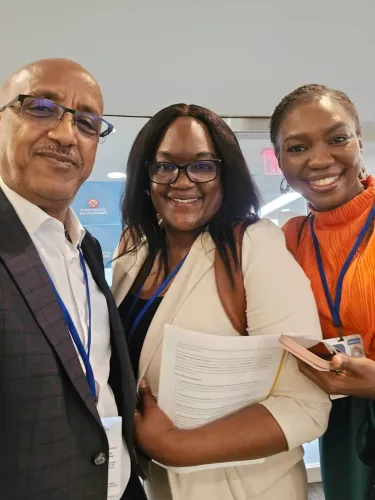
That emphasis on collaboration, community, and systems thinking is echoed throughout the SDPEG program, which draws students from diverse professional and cultural backgrounds and empowers them to engage with challenges that extend far beyond campus.
Although their research journeys differ, Parekh and Makombore share a commitment to using scholarship as a tool for public good. Their experiences at the United Nations, the World Bank, and the Policy Studies Organization demonstrate that solutions to global challenges can emerge from classrooms, research centers, and doctoral studies in Vermont.
As food systems and the environment face increasing pressures from climate change, biodiversity loss, economic inequality, and rapid urbanization, the next generation of scholar-practitioners may play an increasingly important role in shaping everyone’s future. And for these two SDPEG doctoral candidates, that future is already taking shape as they stand on the world stage, sharing their research, their passion for progress, and their hope for positive change.