Bradshaw enrolled at UVM as an undergrad to escape the life he knew: the long hours, economic struggle, and hard work of living on a Vermont dairy farm.
More than three decades later, the research horticulturist, Extension specialist, and Chair of the Department of Agriculture, Landscape, and Environment has earned one of UVM's top teaching honors, the Joseph E. Carrigan Award for Excellence in Teaching and Undergraduate Education.
Bradshaw is an affable faculty member who is well liked by his students. He now routinely receives high ratings on his formal course evaluations. A review of his teaching on the website Rate My Professor describes him as “Inspirational, Hilarious, Caring”. Yet, Bradshaw describes winning the Carrigan teaching award as especially meaningful because his first attempt at teaching was, by his own assessment, a disaster: "I was the worst teacher anyone ever had," he recalls with characteristic self-deprecating humor.
During his first summer course in 2010, he stood in front of students for hours, clicking through slides and barely leaving the classroom. No orchard visits. No hands-on learning. No engagement. "Everybody hated it, including me."
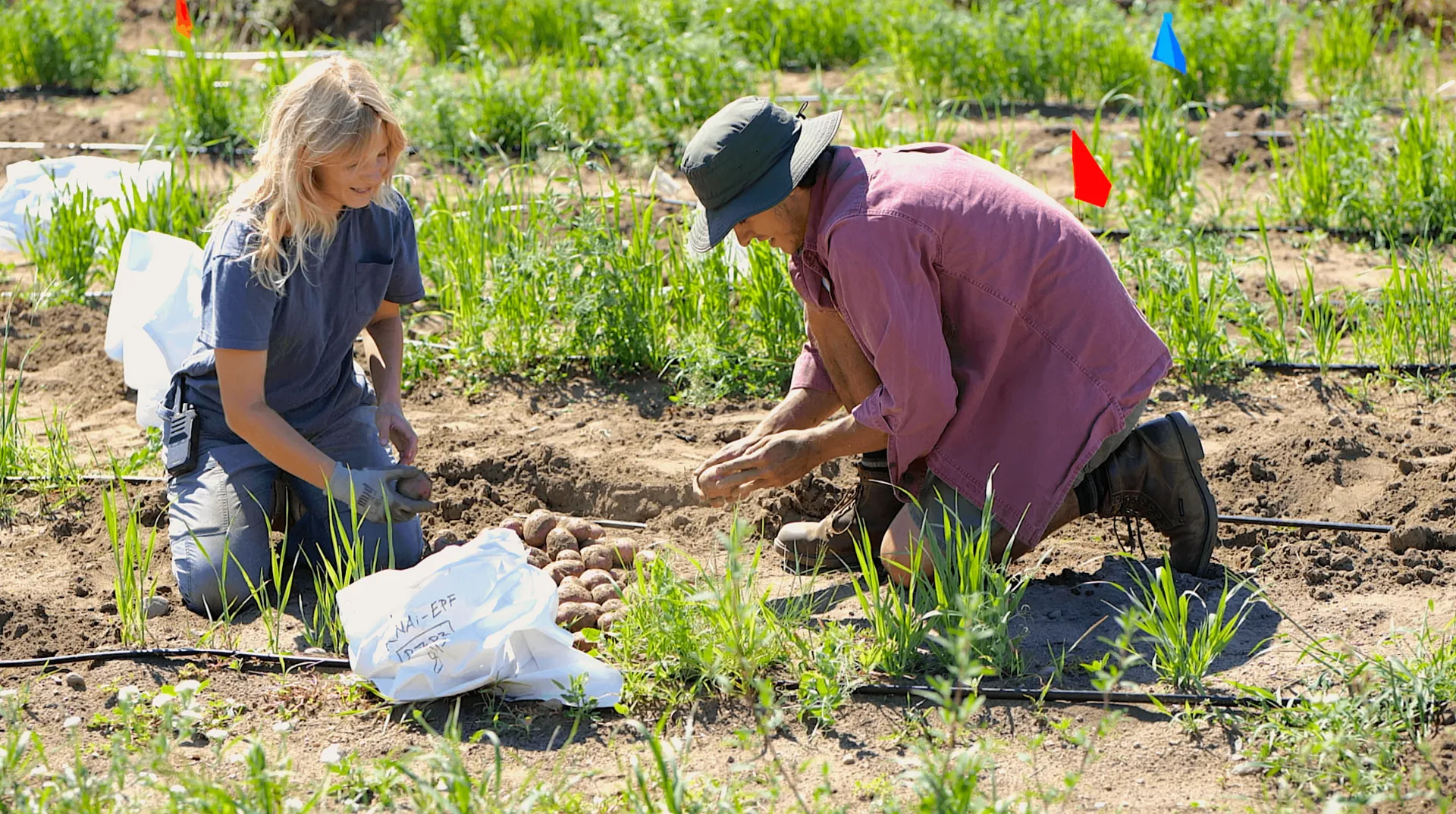
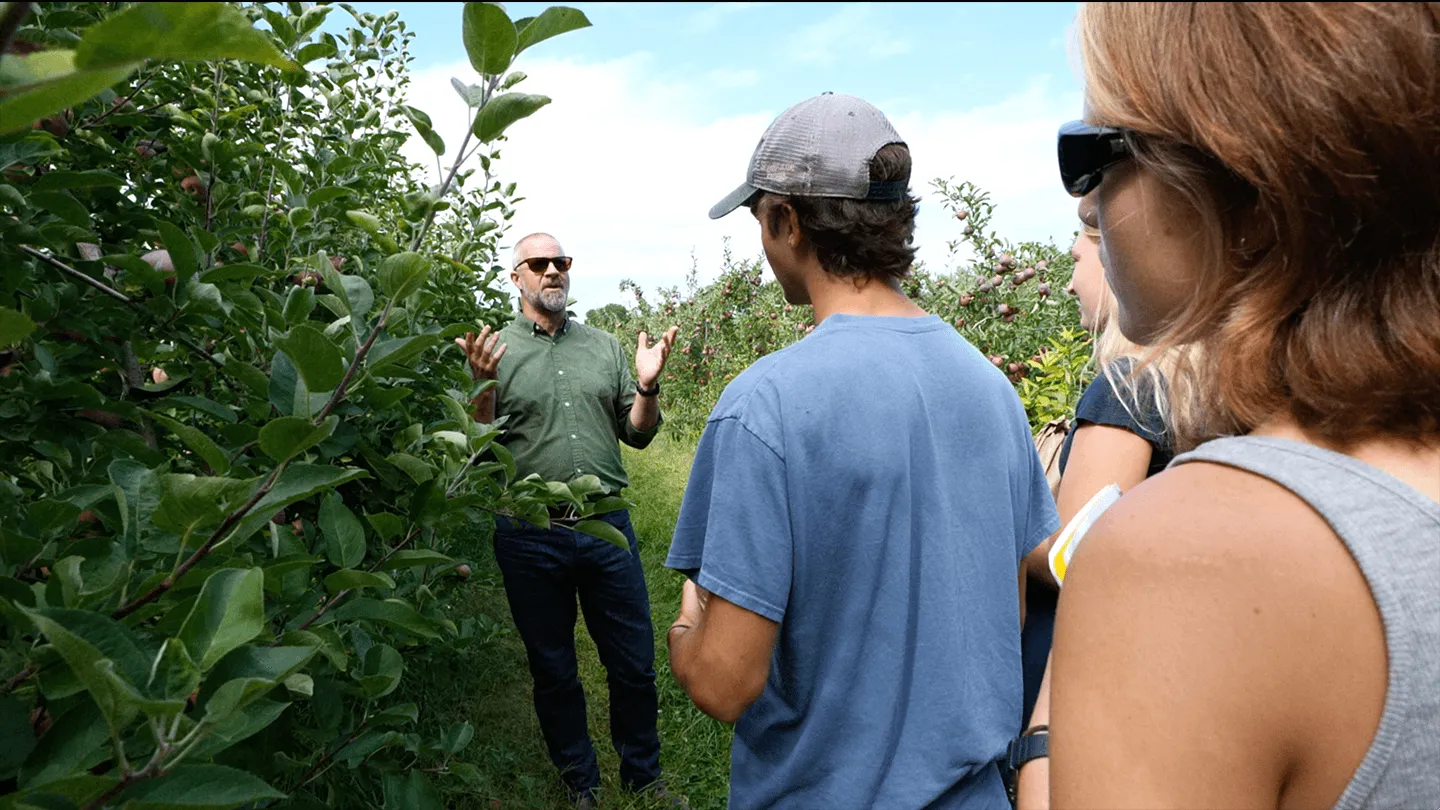
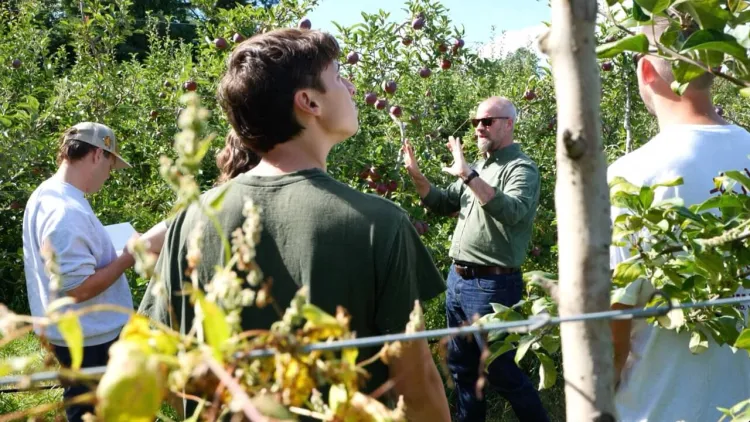
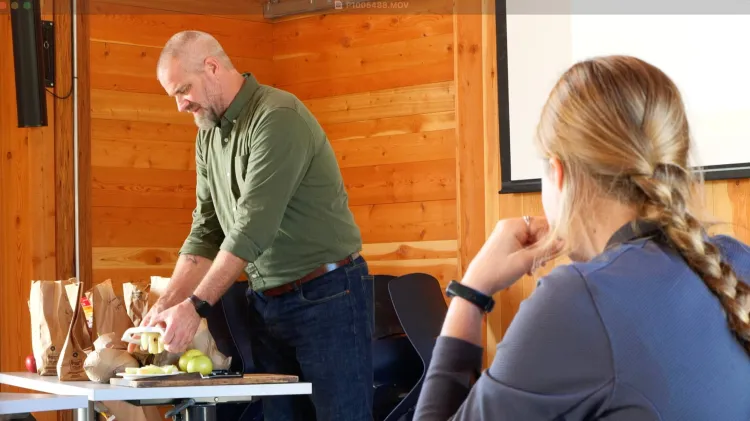
Fortunately, Bradshaw believed that just as science could be used to improve farming, his teaching could be improved through ongoing experimentation. Over the next several years, classrooms became less lecture hall and more laboratory. Students climbed aboard tractors, visited farms and vineyards, debated agricultural policy, met migrant farmworkers, connected directly with growers, and sometimes even taught the class themselves. In one memorable instance, a student passionate about western water policy developed and delivered the entire day’s lecture. Today, Bradshaw still uses some of her material to teach other students.
If there's a secret to his success, it may be that Bradshaw refuses to pretend he has all the answers.
One of his guiding principles came from the late UVM professor Alan Gotlieb, who advised him never to give an answer he wasn't sure about. If Bradshaw doesn't know something, he'll say so, then come back with the right answer next class. He believes this transparency helps build trust with his students.
Another turning point came in 2017 when a beloved mentor, the late agricultural economist Bob Parsons, asked Bradshaw to take over his Agricultural Policy course while battling an illness. Bradshaw protested that he wasn't qualified. Parsons disagreed.
"There's no one in this university these students need to hear from more than you," Bradshaw remembers Parsons telling him.
His desire to live up to the potential his mentor saw in him changed his entire approach. Suddenly teaching wasn't a side project. It became a calling. To improve his teaching, Bradshaw immersed himself in workshops through UVM's Center for Teaching and Learning. He learned about pedagogy, course design, and student engagement. With that support, he was able to build Agricultural Policy into what would become one of his signature courses.
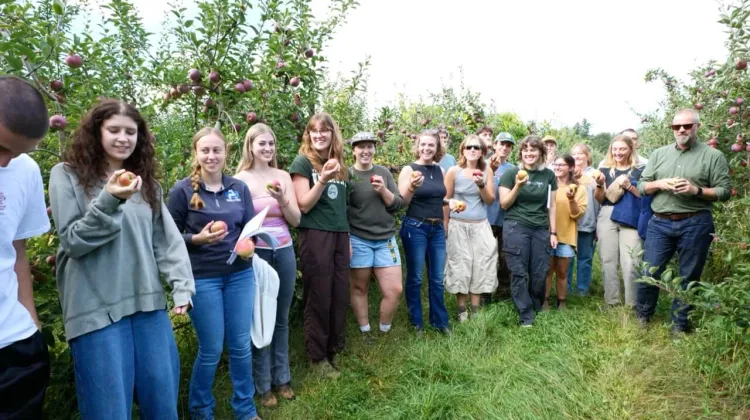
Today, he even has his students help shape the curriculum. Early in the semester, they identify topics they want to explore. Bradshaw then builds portions of the course around their interests. Water quality, labor, social justice, agricultural economics, or emerging policy debates can all find their way onto the syllabus.
Bradshaw's philosophy is simple: students learn best when they're active participants in the conversation. The result is a classroom that feels alive, responsive, and deeply connected to the real world and to the concerns of the students he is teaching.
Bradshaw's Extension work strengthens that real-world connection, giving him decades-long relationships with growers all across Vermont. His students don't just learn about orchards from PowerPoint slides. They visit them. They talk with farmers. They hear directly from seasonal Jamaican farm workers who harvest Vermont apples, and from Iowa corn and soy growers who explain via remote video the economics behind large-scale agriculture, along with many other ag industry professionals. Each voice he invites into his classroom brings additional textbook concepts to life.
Perhaps what stands out most is his enduring optimism about both agriculture and the students entering it. Contrary to stereotypes about younger generations, Bradshaw sees students who are practical, motivated, thoughtful, and eager to solve problems. He also sees results.
Many of the farm plans developed in his upper-level courses have gone on to become fully realized businesses. Former students now manage farms, operate vineyards, run agricultural enterprises, and contribute to the food system across the region and across the world.
For Bradshaw, that's the ultimate reward: "I really love off-boarding them," he jokes, referring to the moment when seniors pull together everything they've learned and prepare to launch their careers.
Bradshaw is also the Director of the Horticulture Research and Education Center, UVM’s 98- acre working farm that includes educational, research, and commercial components. It’s also the site of Community Supported Agriculture shares and a weekly farm stand sold to the community. It’s where many of the College of Agriculture and Life Sciences’ Department of Agriculture, Landscape and Environment’s hands-on courses are held.
The significance of receiving a teaching award is not lost on him. He still remembers interviewing for an Extension position more than a decade ago and telling the search committee, sincerely, that he wasn't a very good teacher. Now, after years of learning, adapting, and growing alongside his students, he has received official confirmation that he has overcome that negative assessment.
"To tell a group of people, 'I'm not a good teacher,' and really mean it," Bradshaw reflects, "and then to turn around and now be told, 'You're a good teacher'... that means a lot."
For the kid who came to UVM hoping to just avoid dairy farming, it's been quite a fruitful harvest. In what feels like a wry wink from the universe, in the same week his teaching award was announced, Bradshaw was also named Interim Chair of the Department of Animal Science, which oversees CREAM, the UVM dairy program. Bradshaw just smiles, acknowledging the irony: “This will give me a chance to relive some of my dairy-farm childhood, and also help those students who really want to choose that path.”
The Carrigan Award is the most prestigious faculty teaching award in the College of Agriculture and Life Sciences. It recognizes outstanding effort and achievement in undergraduate teaching, student advising, and undergraduate education. Recipients of this annual award have their names engraved on a commemorative plaque and receive a personal cash award of $2,000, plus an additional $500 to support continued improvement and innovation in teaching. The award is presented, and the recipient is formally recognized each year at the CALS Annual Retreat.