Predicting how climate change will affect biodiversity is a major challenge. As lakes and other freshwater systems warm, changes in temperature can influence which species are present, how abundant they are, and when they appear throughout the year.
A new study by University of Vermont researchers examines how tiny aquatic organisms called copepods respond to changing temperatures in Lake Champlain. By tracking their thermal limits throughout an entire year, the researchers established a more detailed picture of how freshwater communities may respond to a warming climate.
Copepods are small, planktonic crustaceans found throughout freshwater and marine environments. They play an important role in aquatic food webs, feeding on microalgae and other microscopic organisms, while also acting as prey for fish and other animals.
Since copepods are widespread, diverse, and abundant throughout the year in many freshwater systems, they act as a useful model for studying variation in thermal limits and acclimation capacity.
“Understanding how they respond to changes in temperature, whether that's across seasons or across years, gives us insight to whether or not communities are going to change in the future,” explains Melissa Pespeni, a professor in UVM’s Department of Biology.
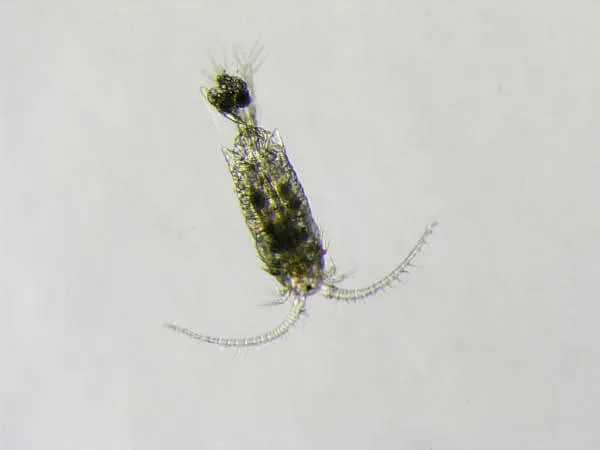
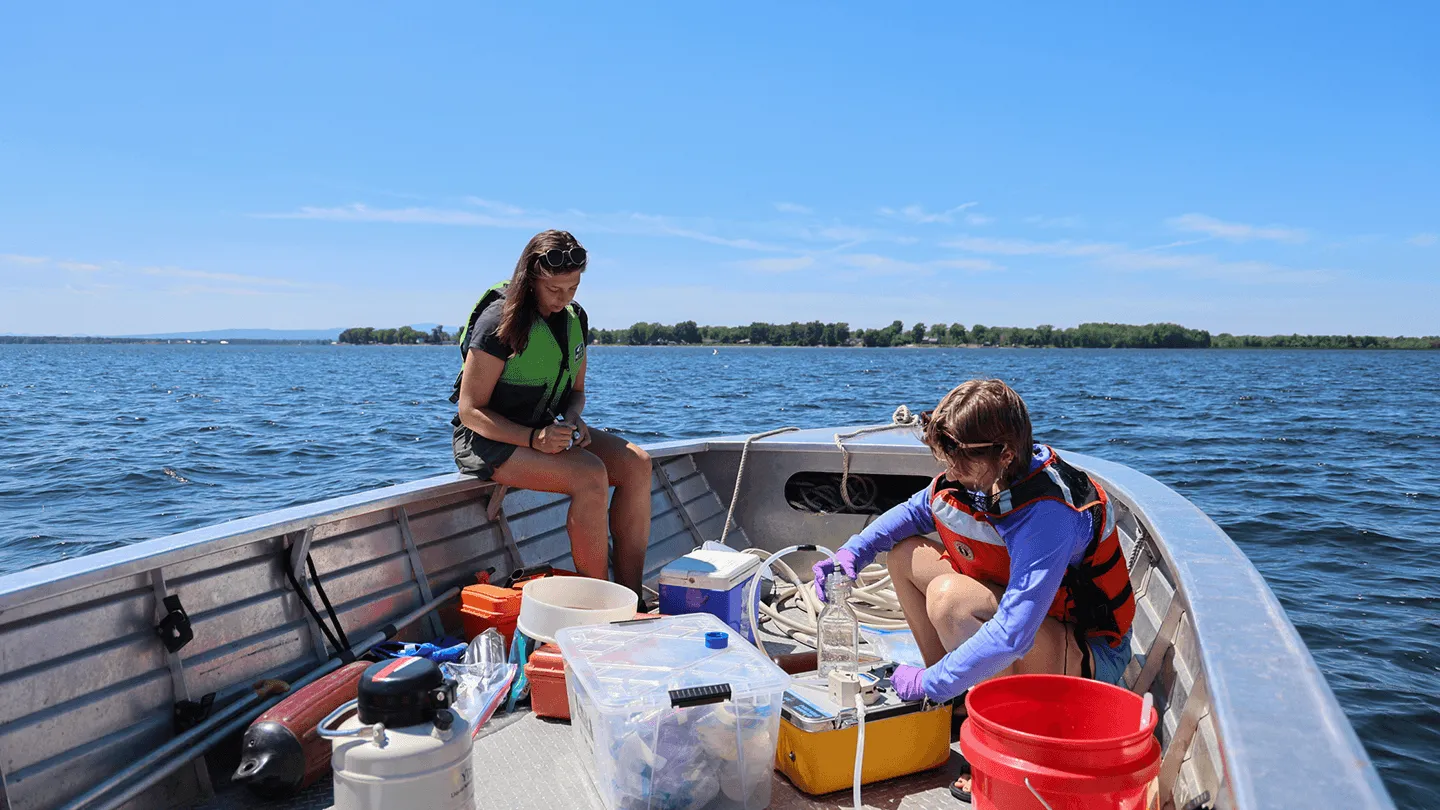
To understand those responses, the research team in Pespeni’s lab collected calanoid copepods from Lake Champlain approximately every week for a year. A group of undergraduate students led by Matthew Sasaki, former postdoctoral researcher at UVM and now Assistant Professor at UMass Lowell, sorted the animals by species and measured their critical thermal maximum, the temperature at which an individual can no longer move or respond to a stimulus. The copepods bounce back, so it is a nonlethal measurement of temperature tolerance.
Repeating the experiment throughout the year allowed the researchers to track how thermal tolerance changes, both across seasons and among copepod species.
More than 1,000 individual measurements were collected, creating the single largest collection of copepod thermal limits, and the only year-long, high-resolution physiological time series of its kind.
This high-resolution approach was important, as changes in an organism's physiology can happen over relatively short periods. Rather than looking only at broad geographic patterns or collecting measurements once a month, the team was able to capture changing dynamics occurring on a day-to-day basis.
“One of the big takeaways from this study was that species level differences are super important to consider because they strongly affect our predictions for how the lake ecosystem might change over the next 50 to 100 years,” explains Sasaki, the study's lead author. “Specifically, we expect that any species that is unable to acclimate to changes in temperature is going to be particularly vulnerable to climate change.”
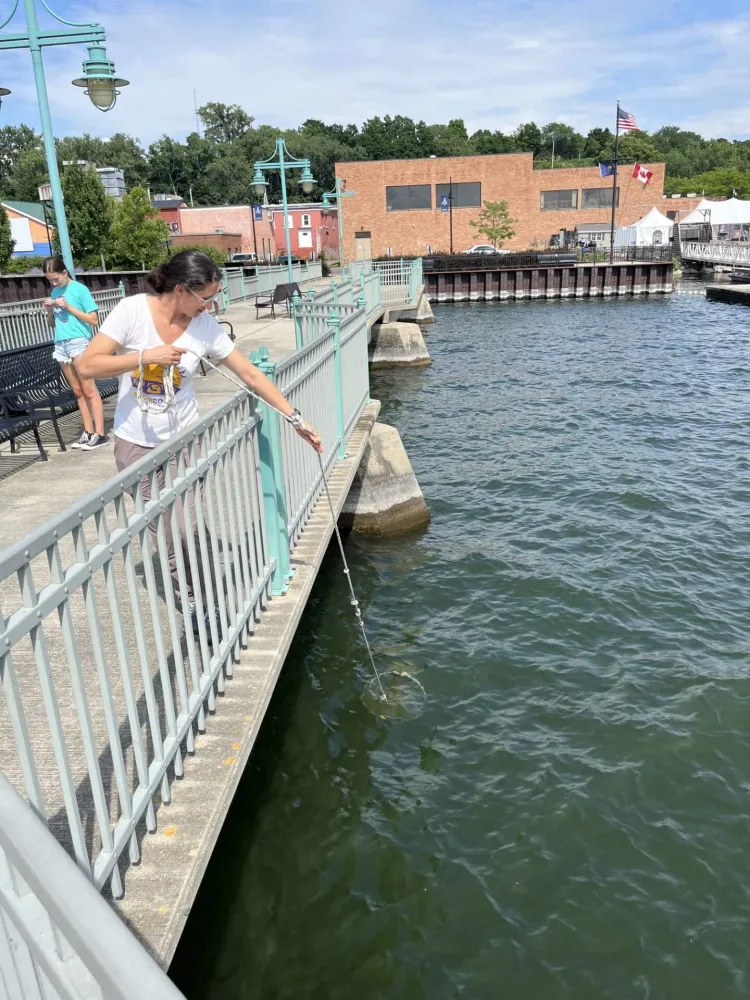
The researchers found substantial differences in thermal limits among Lake Champlain's copepod species. Winter-dominant species generally had lower upper thermal limits than summer-dominant species.
However, the researchers found that the ability to acclimate to changing temperatures varied among species. There was not a simple pattern in which all summer or all winter species were better able to respond to warming. Instead, acclimation capacity varied, with both winter and summer species showing different abilities to adjust their thermal limits.
Sasaki suggests that these differences may be tied to the intrinsic biology of individual species.
Some copepods adjusted their thermal limits very quickly. For two Leptodiaptomus species, the researchers found evidence that temperature changes over a few hours could influence their thermal limits. Other species showed relationships between their thermal limits and environmental temperatures over periods ranging from less than a day to about 30 days.
These differences could influence how the copepod community changes as the climate warms. Species that are less able to adjust to changing temperatures may decline in abundance, potentially altering the composition of the broader aquatic food web.
Since copepods connect microscopic organisms to larger animals, changes in their populations can affect the flow of energy and nutrients through aquatic ecosystems. They graze on phytoplankton and microzooplankton, while serving as prey for other organisms, meaning changes in copepod communities could have effects that extend throughout the food web.
The study suggests that climate change will not affect every copepod species in Lake Champlain in the same way. Differences in thermal limits and the ability to acclimate may determine which species remain at risk, how their seasonal patterns change, and how the broader aquatic community is impacted.
The researchers’ work not only painted a picture of thermal resilience and vulnerability; it also demonstrated a commitment to a systemic and collaborative science approach. The year-long sampling effort required a substantial team, including five undergraduate students who helped collect copepods and conduct experiments throughout the study.
“The undergraduate students were the ones that were really driving this project forward, collecting the animals, and then bringing them back to the lab,” remarks Sasaki. “It was a marathon of people running experiments back-to-back to get the data collected and the sheer amount of work that went into this project would not have been possible without the undergrads.”