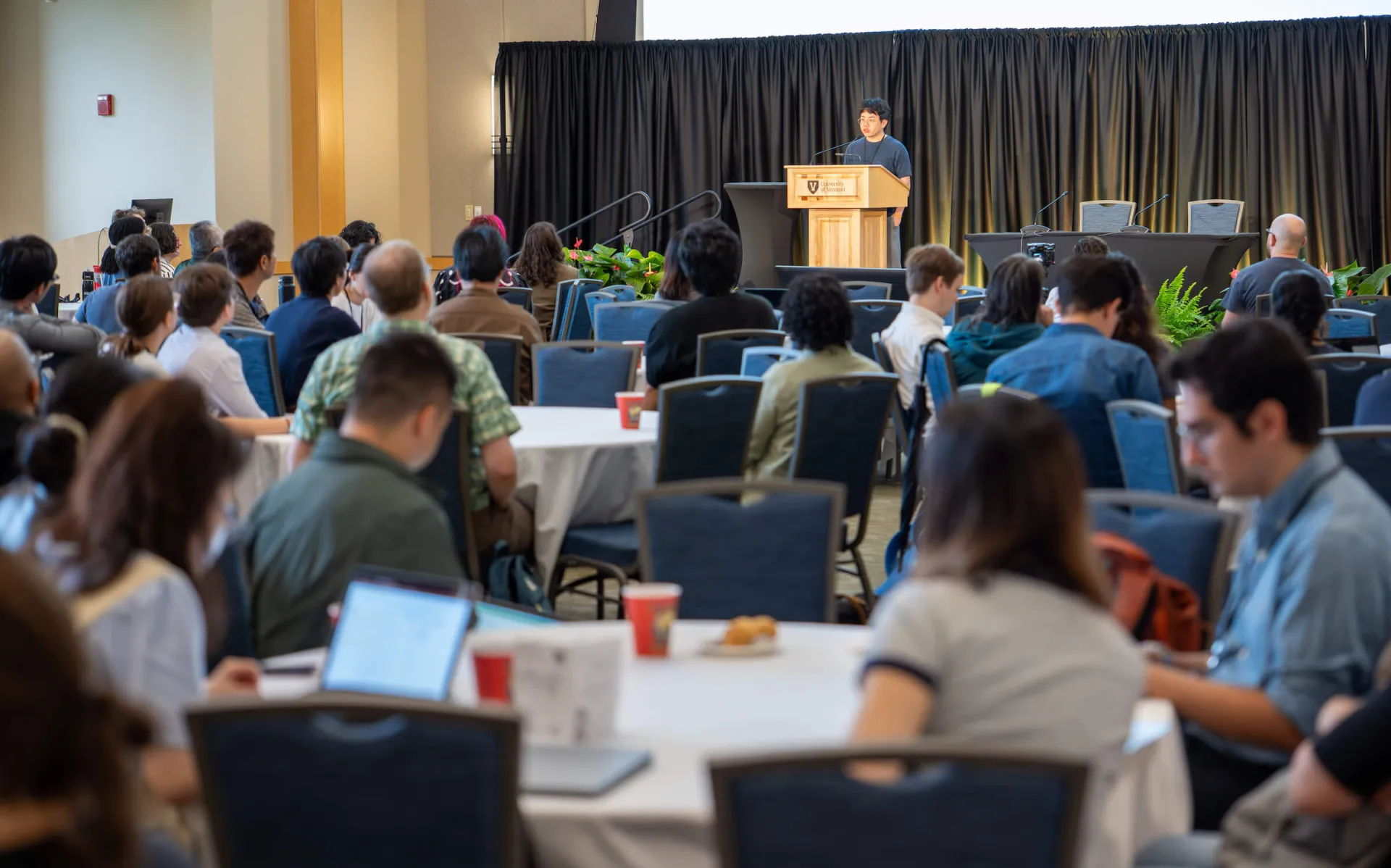
The Vermont Complex Systems Institute (VCSI) at the University of Vermont recently hosted the 12th International Conference on Computational Social Science (IC2S2), bringing hundreds of researchers, students and practitioners from around the world to Burlington to explore how computational and data-intensive approaches can help us better understand—and address—the complexities of human society.
Held July 28–31 at the University of Vermont, IC2S2 brought together researchers from sociology, economics, political science, psychology, cognitive science, computer science, statistics, complexity science and other disciplines. The conference is the annual meeting of the International Society for Computational Social Science and has become a leading international forum for research at the intersection of computation and the social sciences.
“At a time when society is changing so much and our democracies are being shaped by digital influence, the effect of AI on information and whether that information is accurate. These are the things that we study. What we do is so important to this moment.
—Alexa Woodward, Executive Director at VCSI.
The conference featured a full day of tutorials and workshops followed by three days of research presentations, keynote talks, lightning talks, poster sessions and interdisciplinary discussion. Topics ranged from artificial intelligence and large language models to political polarization, digital media, health and wellbeing, education, governance, machine learning, network science and the ethical use of computational methods to study human behavior.
For VCSI, hosting IC2S2 provided an opportunity to showcase the University of Vermont’s distinctive approach to understanding complex systems. The Institute brings together researchers and students across traditional academic disciplines, using computational modeling, data science, network science and other methods to investigate some of society’s most challenging problems.
The conference also provided UVM students with direct access to an international community of researchers and emerging ideas in computational social science. Tutorials were specifically designed to support early-career scholars, while students participated in research presentations, poster sessions and discussions throughout the conference.
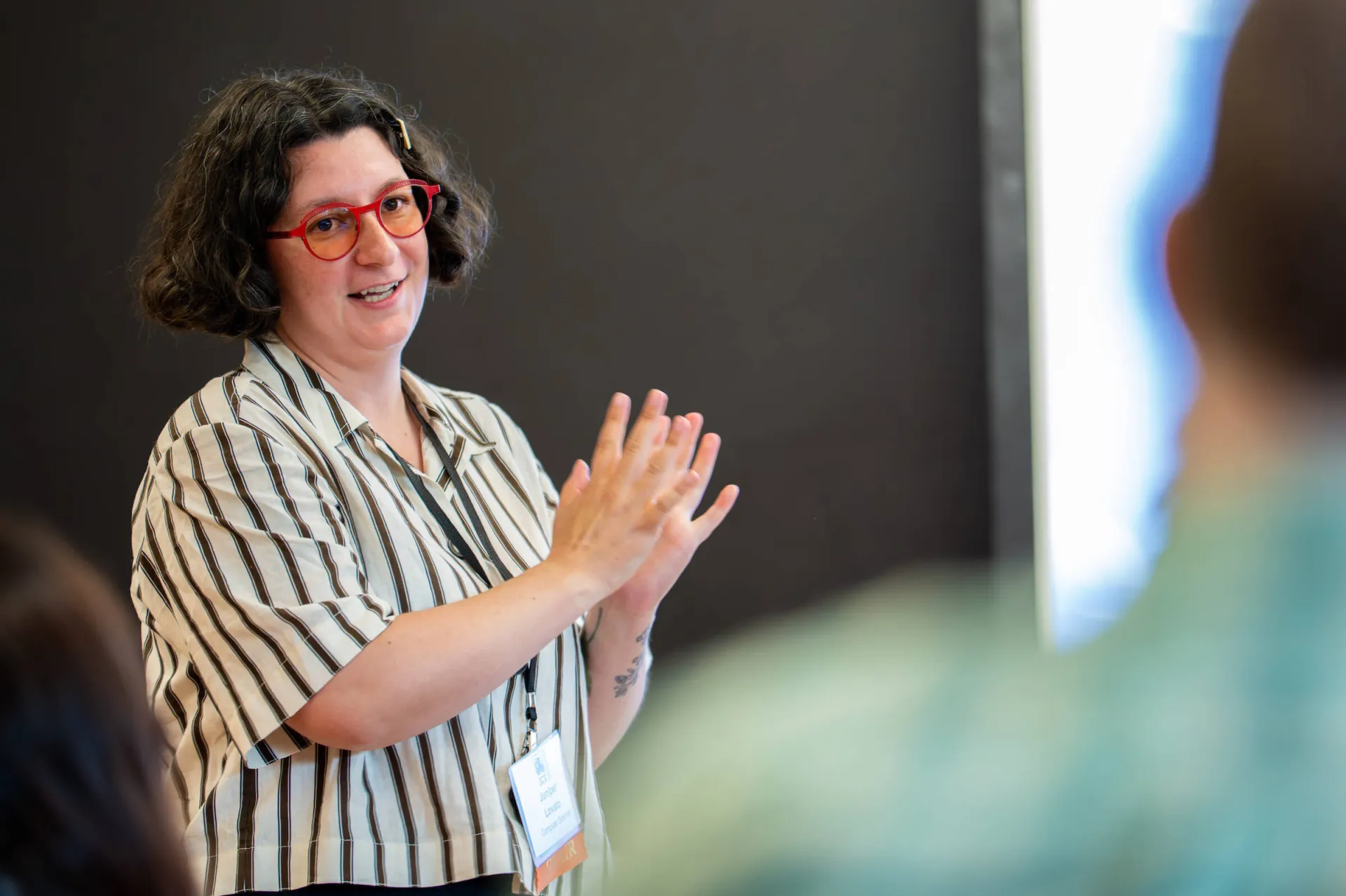
“Hosting IC2S2 at UVM is a really big testament to our leadership in this space,” said Professor Juniper Lovato, Professor in VCSI. “At a time when society is changing so much and our democracies are being shaped by digital influence, the effect of AI on information and whether that information is accurate. These are the things that we study. What we do is so important to this moment,” said Alexa Woodward, Executive Director at VCSI.
The conference was led by an international organizing team that included VCSI faculty Peter Sheridan Dodds and local chairs Juniper Lovato, Christopher Danforth and Alexa Woodward, along with researchers from institutions including the Complexity Science Hub Vienna, UC Berkeley and Northeastern University.
As IC2S2 concluded, the conference left behind more than four days of presentations and discussion. It strengthened connections among researchers, introduced students to new areas of inquiry and reinforced UVM’s leading role in the international community of computational and complexity science.
About the Vermont Complex Systems Institute
The Vermont Complex Systems Institute at the University of Vermont brings together researchers, students and collaborators from across disciplines to understand complex systems and address real-world challenges. VCSI's work spans computational social science, network science, data science and other approaches that help researchers understand how individuals, organizations and societies interact and evolve.