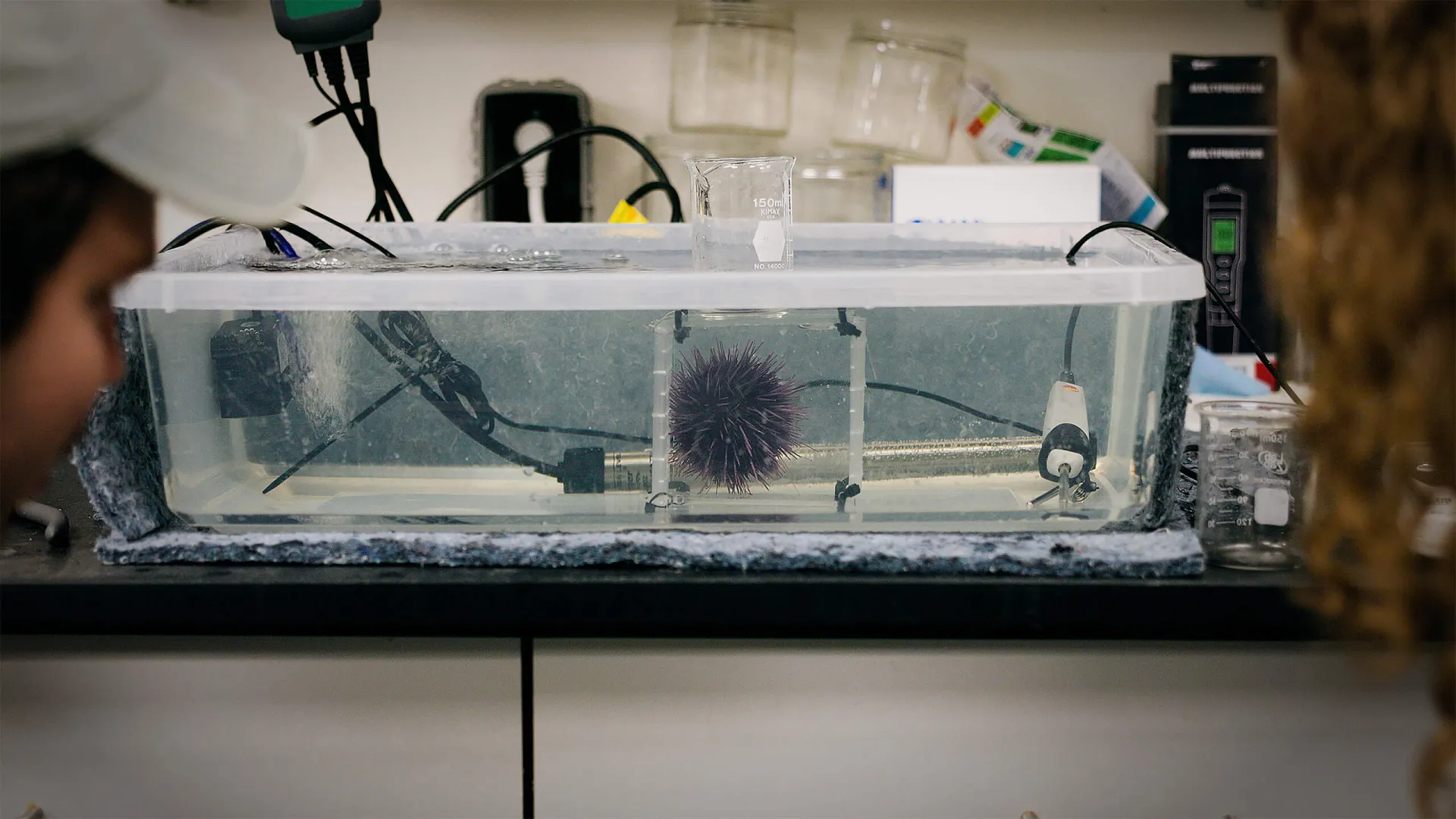
Along the Pacific coast, lush kelp forests are increasingly giving way to "urchin barrens," underwater landscapes stripped bare by exploding populations of purple sea urchins. Understanding why these animals are thriving has become an important question for marine scientists.
Daniel Sadler, a postdoctoral fellow in the University of Vermont's Pespeni Lab, studies how climate change affects marine organisms and ecosystems. His research suggests that purple sea urchins are unusually resilient to many of the environmental stresses associated with a warming ocean, including higher temperatures and changing ocean chemistry.
That resilience comes at a time when some of the urchins' natural predators have declined. The loss of sea otters and disease-related die-offs among sea stars have reduced important checks on urchin populations, contributing to dramatic changes in kelp forest ecosystems along parts of the California and Oregon coasts.
By combining laboratory experiments with ecological modeling, Sadler hopes to better predict how marine ecosystems will respond to climate change in the decades ahead. His work could help inform conservation strategies and identify species and habitats most at risk in a rapidly changing ocean.