What comes to mind when you hear “plant‑based diet”? Environmental responsibility? Better health? Or do you think of going without?
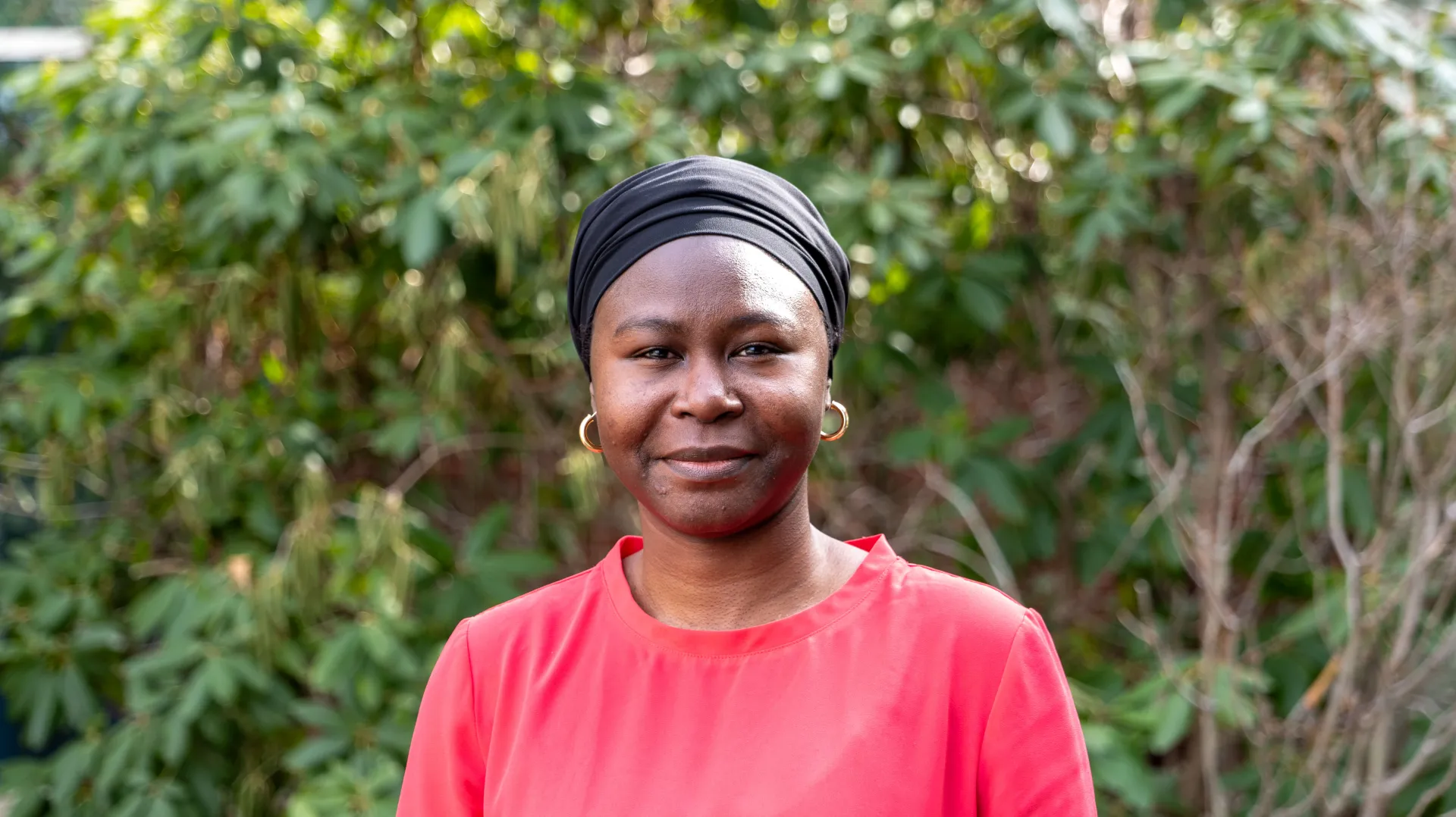
A recent study by Saadatu Abdul‑Rahaman, a Food Systems PhD candidate at the University of Vermont, challenges common assumptions about plant‑based eating. In her paper, “Plant-based diets: Not always a free choice for rural adults” published in Appetite, Abdul‑Rahaman explores how structural inequalities shape dietary patterns in the United States. Her research highlights that for many socially disadvantaged people, plant‑based eating may not reflect preference or principle, but constraint. In fact, the findings suggest that if these individuals had greater financial resources, their consumption of meat would likely increase.
Plant‑based diets are often framed as a lifestyle choice for ethical, environmental or health reasons, but Abdul‑Rahaman’s work shows that food choices are shaped by much more than personal preference. Income, food prices, access to grocery stores, cultural traditions, and social expectations all play a role in what people eat.
“Most of the time, plant-based diet is framed as if it’s a choice and something that everybody can do,” said Abdul-Rahaman, a Food Systems Research Institute PhD Fellow and a Graduate Fellow at the Gund Institute for Environment. “But it hasn’t been looked at through the lens of intersectionality.” She says that while there is research that considers some social identities, this paper – co-authored by Meredith Niles, Teresa Mares, Pablo Bose, and Emily Belarmino – highlights how those identities intersect to create a fuller understanding of behavior and intentions towards plant-based diets.
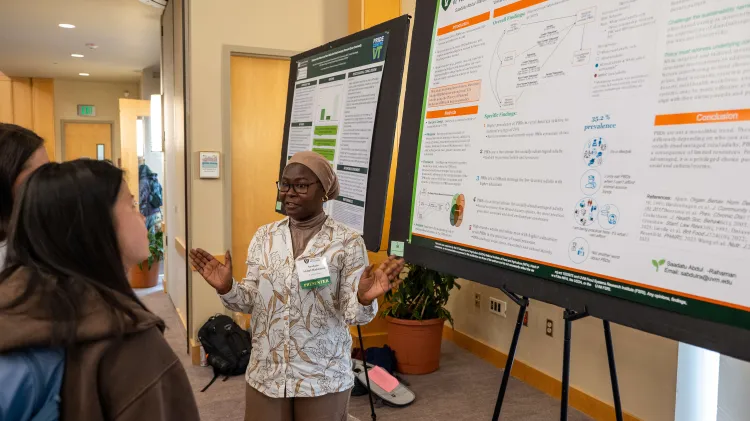
This is important for policy decisions or marketing that promotes plant-based diets because if those efforts don’t consider the different intentions towards low-meat or meat-free meals then they will be ineffective. “For us to be able to make a change in terms of changing consumption patterns, we need to first address the inequalities that are in society,” she says. “We have food insecurity issues. We have income issues. There are people who live in food deserts. With all these inequalities in place, it makes it difficult for people to align their values with their dietary patterns.”
Abdul-Rahaman's research sits at the intersection of psychology and social science to demonstrate that dietary choices do not exist in isolation. Gender, income, education, race, geography, and culture intersect to shape not only access to food, but the meanings attached to it. For instance, she studies plant-based diets in African immigrant communities in Vermont. In many African cultures, she notes, a meal without meat does not signal environmental consciousness or wellness, it can signal financial hardship. Meat is closely tied to hospitality, respect, and social status, and serving a meatless meal to a guest can be considered rude. In these contexts, plant‑based diets carry meanings that are nearly opposite of how they are understood in much of the U.S.
Beyond Vermont, her research extends to rural populations across the United States. Rural food cultures are often deeply connected to hunting, farming, and livestock production, resulting in meat‑centered diets and norms that can make plant‑based eating feel abnormal. Abdul‑Rahaman studies how people in these communities perceive plant‑based diets and what social, environmental, economic and systemic considerations influence their choices.
At the core of her work is an interdisciplinary approach that combines the Theory of Planned Behavior with the social science framework of intersectionality. The Theory of Planned Behavior focuses on how people make decisions, examining attitudes toward behavior, perceived social norms, agency, and access to necessary resources. In the context of food, this means asking someone’s own attitudes about plant-based diets, whether their social circles support such choices, and whether they have the financial means, access, and skills to eat that way.
Intersectionality places the individual within larger systems of inequality. People make food decisions within social contexts shaped by class, race, gender, geography, and infrastructure. Access to grocery stores, availability and affordability of fresh produce, affordability of animal-source foods, and even time to cook are unevenly distributed.
Initiatives like “Meatless Mondays” or “vote with your fork,” Abdul‑Rahaman argues, tend to assume choice where constraint exists. They miss the diversity of values and circumstances across populations and fail to acknowledge that many people already eat plant‑based diets without the privilege of doing so by choice.
Abdul‑Rahaman’s work states a need for a more intersectional understanding of the food system. To create meaningful change, she argues, we must move beyond one‑size‑fits‑all messaging and start by understanding people’s values, identities, and constraints. Only then can conversations about plant‑based diets reflect the complexity of real lives. She says, “It's not possible to actually achieve environmental sustainability without considering social sustainability.”
About the Food Systems Research Institute:
The Food Systems Research Institute (FSRI) at the University of Vermont (UVM) funds collaborative research that puts people and the planet first, unites disciplines and communities, and answers complex questions about food systems.
The FSRI gives researchers the freedom, resources, and time to engage community stakeholders, including decision-makers, farmers, and food systems actors, about issues and opportunities across our food system. This results in relevant, widely disseminated research that informs policies, practices, and programs locally and regionally for a more resilient and accessible food future for all.