As a herd of cattle grazes at the newly opened Food Systems Research Station (FSRS), their movements are quietly revealing new insights about the future of Northeast agriculture. Outfitted with GPS collars as part of a "Cow Choice" study, the animals are helping USDA Agricultural Research Service (USDA ARS) and University of Vermont scientists understand which forage species cattle prefer, how those choices affect nutrition and growth, and how grazing systems can be improved for farmers.
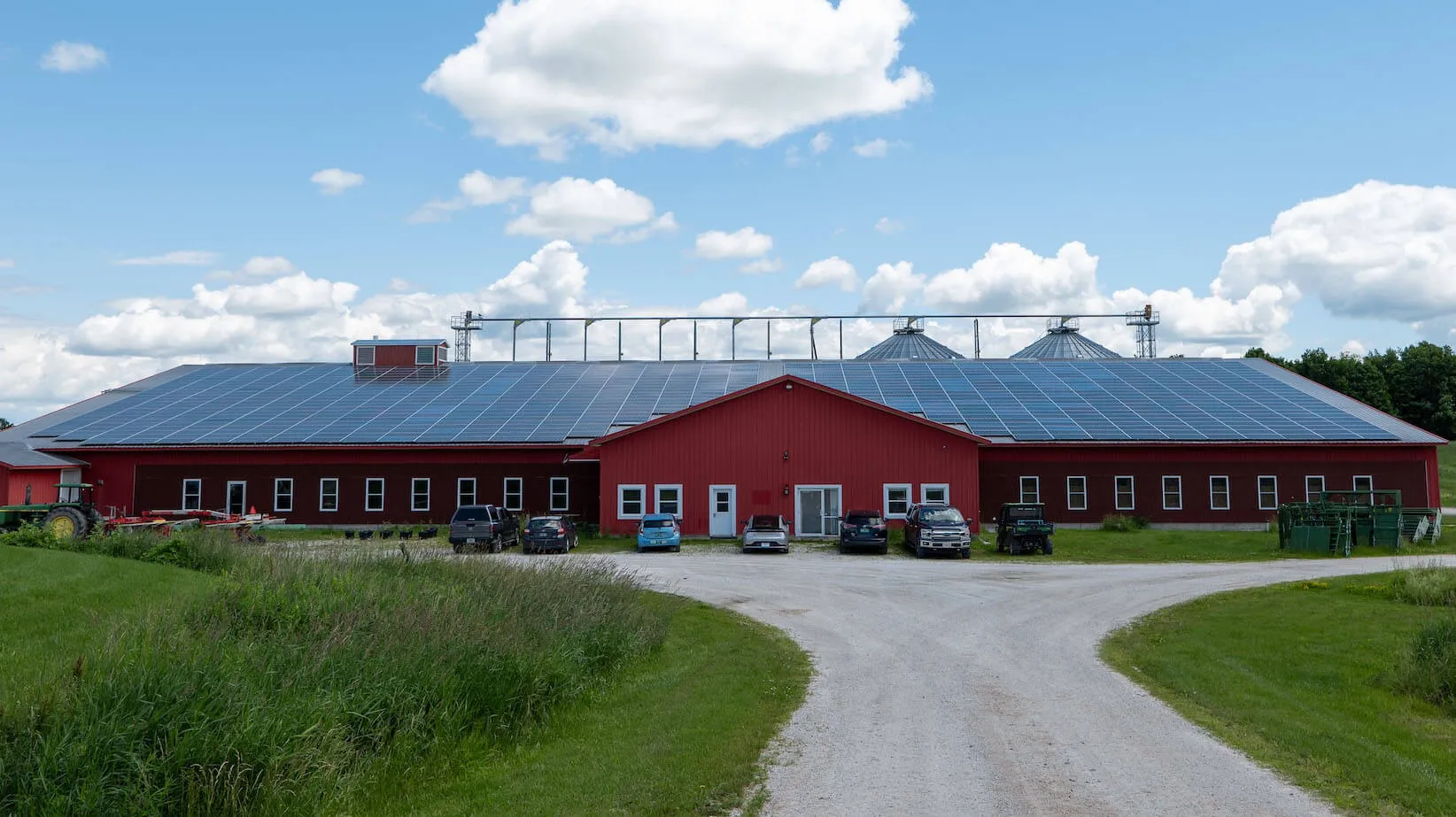
The research is one of several projects underway at the FSRS, a partnership between the UVM Food Systems Research Institute (FSRI) and USDA ARS. Located on approximately 400 acres of farmland in Charlotte, the station provides a shared resource for scientists studying crops, forages, livestock, and food system challenges facing the Northeast.
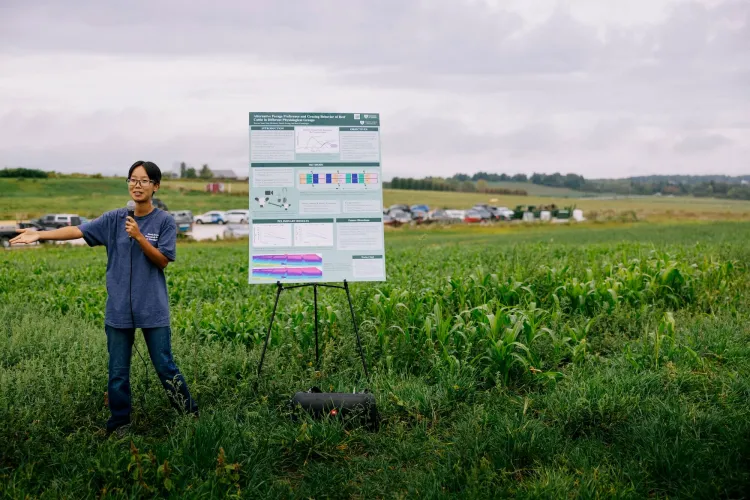
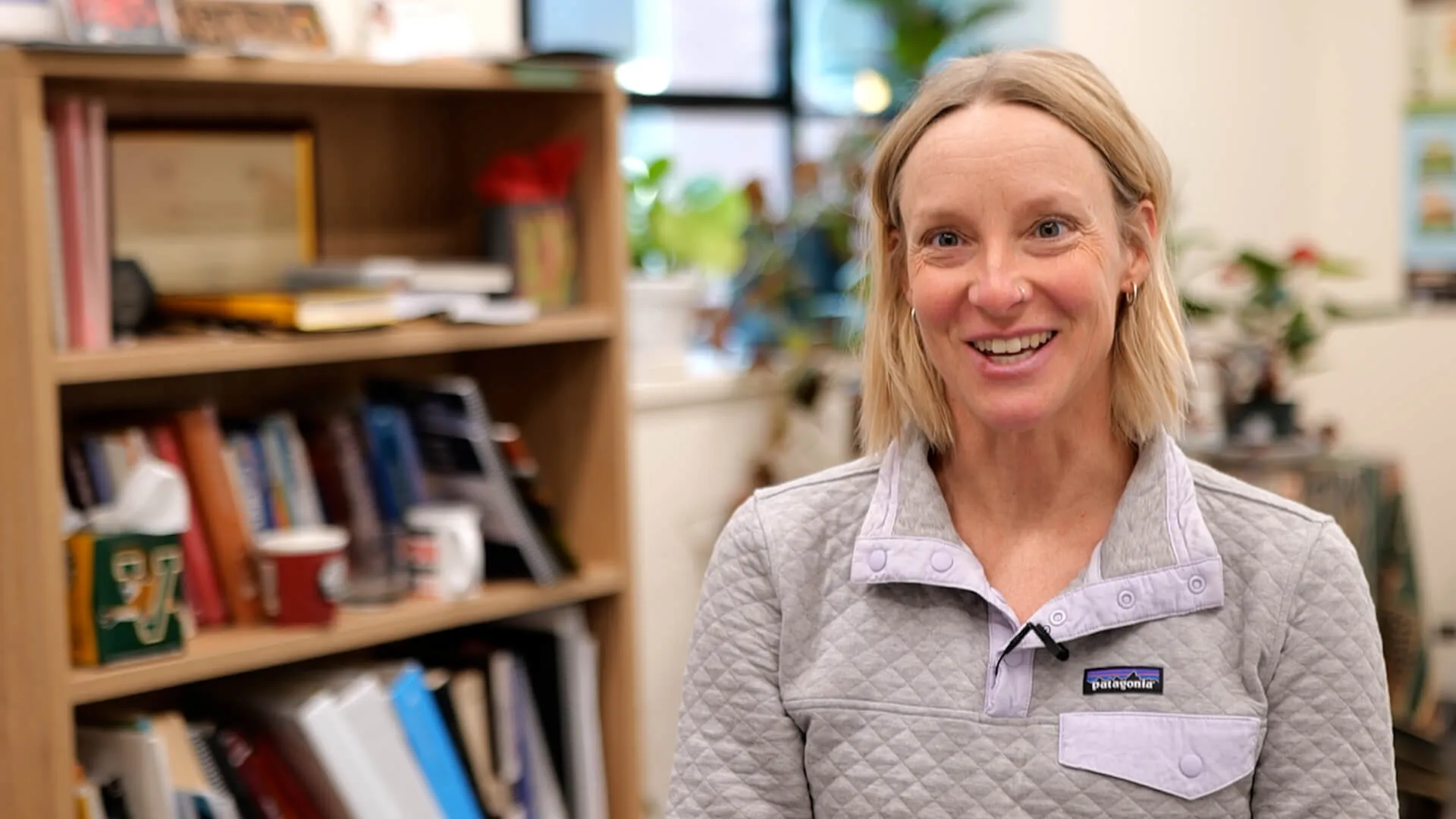
"Most grazing research has been done in the South, Midwest, and West, but we haven't really looked at the Northeast," UVM assistant professor Kate Creutzinger said. "This research will help give producers some region-specific information about the growing season, optimal forages, and some technologies that can be used to improve grazing as well."
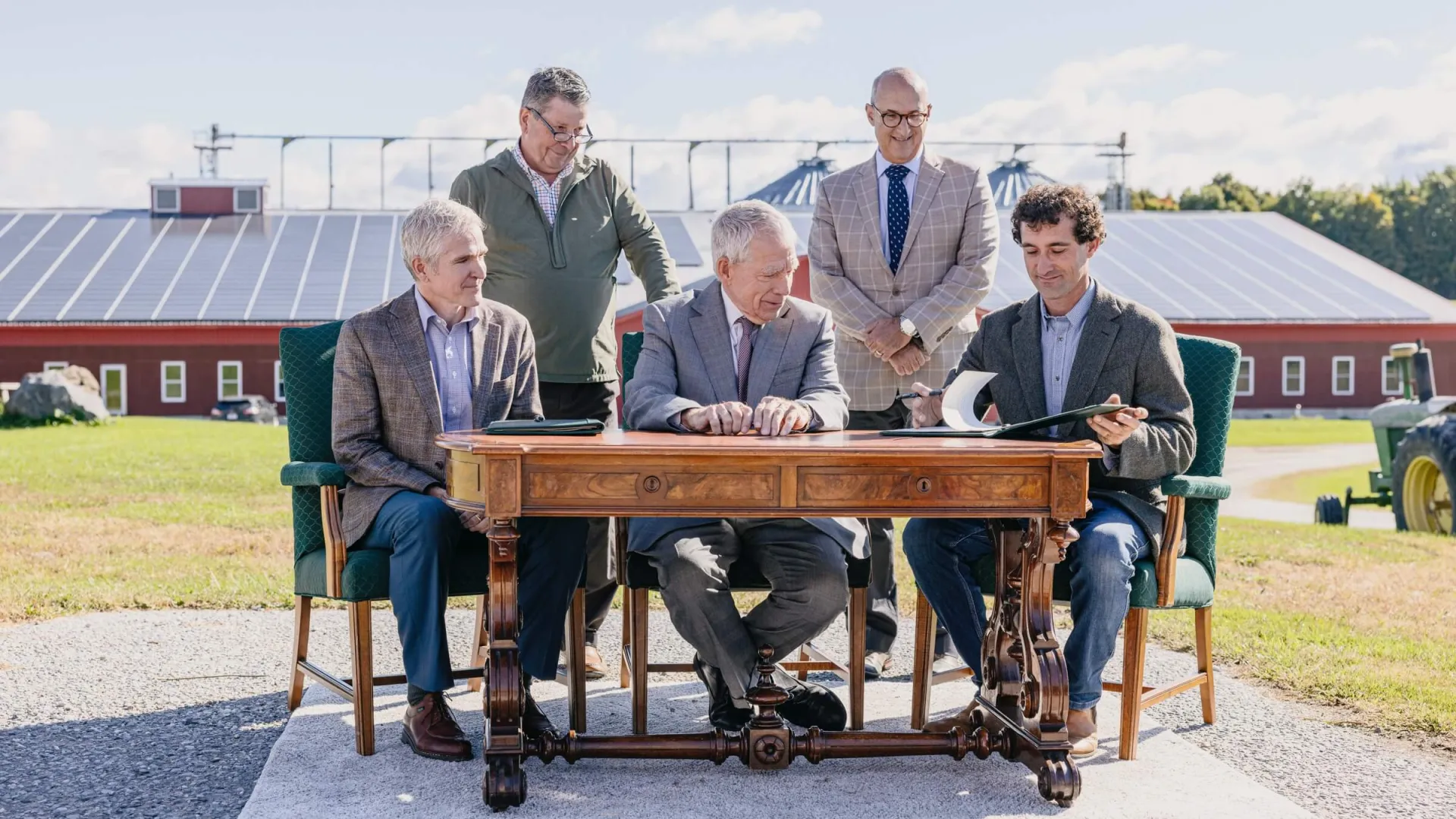
With a new sign installed at the entrance on Lime Kiln Road, the FSRS held an opening ceremony on Thursday, September 17th with dozens of researchers, staff, and stakeholders from UVM, USDA ARS, and the greater Vermont agricultural community.
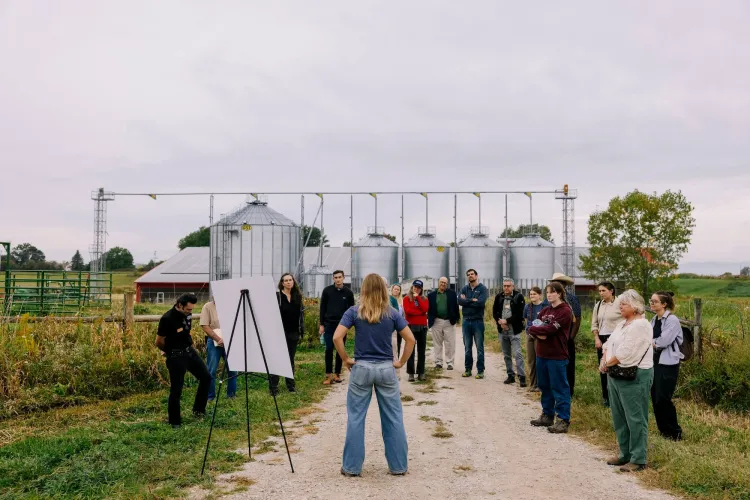
The Research Station provides an opportunity for researchers like Creutzinger to partner on USDA projects like ARS research animal scientist Matthew McIntosh’s “Cow Choice” study. McIntosh believes UVM is the perfect partner for this kind of long-term, highly relevant research. “UVM faculty are really well poised to collaborate on these food systems questions,” McIntosh said.
The newly renovated research station has been transformed from a former free stall dairy and incubator hub into a food systems science facility including a 17,000-square-foot warehouse. This project reflects the highly collaborative approach of the USDA ARS Food Systems Research Unit (FSRU) in Burlington, where scientists from multiple disciplines work together to address food system challenges. This diverse team, combined with a wide range of UVM research partners, ensures that future projects will address topics ranging from climate-resilient forage crops to the growing role of beef-on-dairy crossbreeding as farmers adapt to changing markets and production systems.
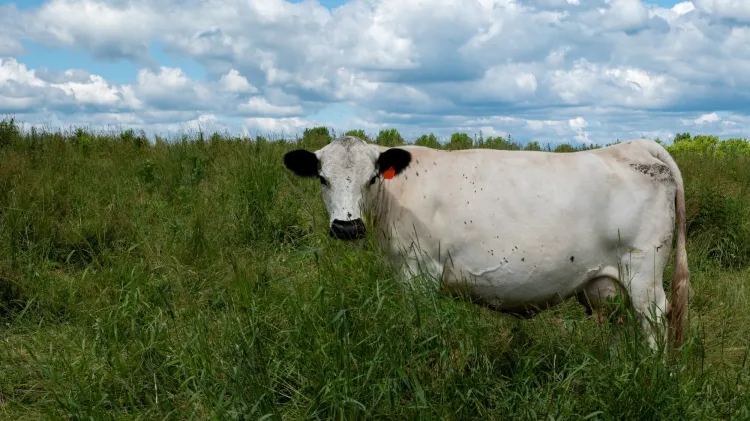
"It feels very meshed," said McIntosh. "Our forage research is tied to animal research, and both are connected to on-farm collaborations with producers. That integration helps us answer real-world questions."
USDA ARS research agronomist Patrick Ewing is examining how oat and pea mixtures can improve forage production while maintaining nutritional quality for livestock.
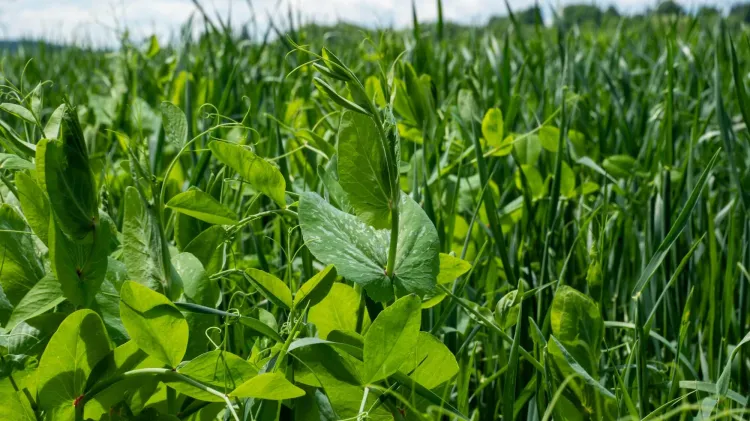
"We want to get as much energy as we can per acre that is also high-quality forage so that cows can eat a lot of it," Ewing said. "The specific application is definitely relevant to Vermont, but it also speaks to challenges farmers face across the country."
The station is also expected to support studies that track changes in weather patterns, crop production, forage systems, and animal performance over time.
"The Northeast is a major food-producing region, but a lot of the science hasn't focused here," Creutzinger said. Much of the research conducted at Nordic Farm is designed not only to advance scientific understanding but also to generate practical solutions for farmers locally, across the Northeast and throughout the country.
"One of our goals is to conduct research in collaboration with farmers," Ewing said. "Research stations are essential for generating data for national applicability and developing agricultural theories.”
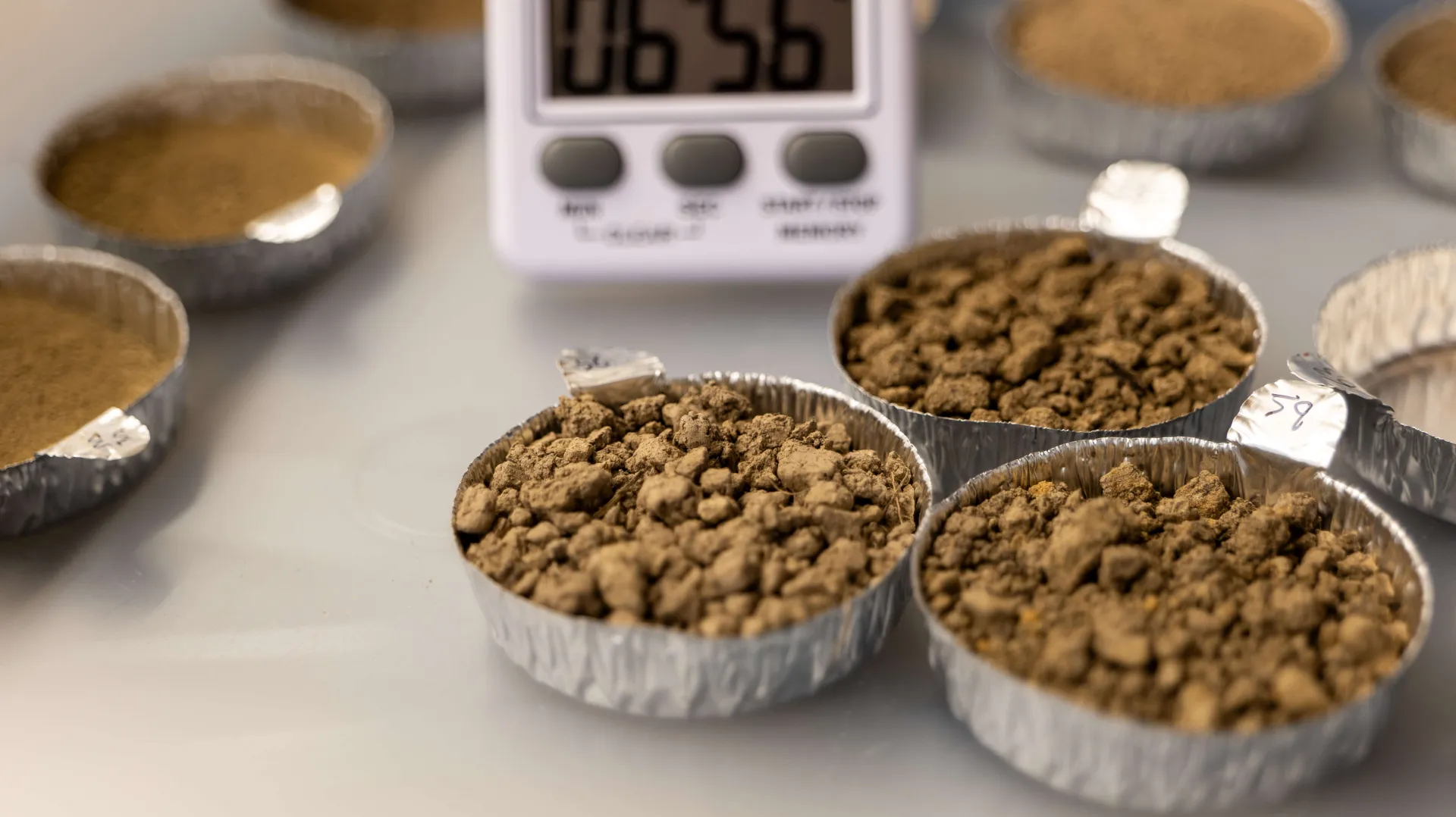
For Shawn Lucas, a UVM Extension agronomist who works directly with farmers, the station offers a valuable bridge between research and on-farm adoption. Lucas is collaborating with Ewing on projects examining alternative annual forage crops such as sorghum-sudangrass, which may offer producers lower-cost feed options while improving soil health and reducing environmental impacts.
"The research station is a place where we can be experimental and try things that may be a bit riskier," Lucas said. "We're trying to put data behind what farmers are already observing in their fields. Having a place like this helps us test new ideas, generate data, and then work with farmers to see how those practices perform in the real world."
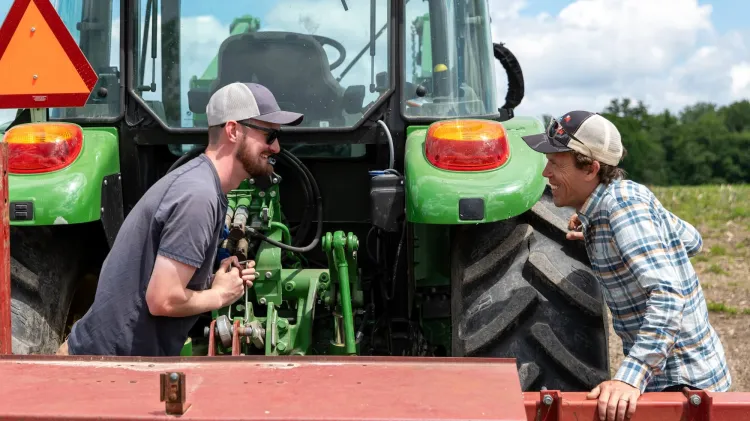
The Food Systems Research Station builds on the longstanding partnership between UVM and USDA ARS, including the UVM Food Systems Research Institute, which funds transdisciplinary food systems research projects at the land grant university. Acquired in 2021 by entrepreneur and conservationist Will Raap, Nordic Farm was later purchased by Benjamin Dobson and Kaspar Meier, and under the partnership agreement, UVM leases the research acreage and subleases it to USDA ARS for scientific research.
Two years after signing a 30-year lease, the site provides the opportunity to conduct applied research over decades, allowing scientists to address challenges facing food systems, produce meaningful information for farmers, and support environmental stewardship across Vermont and the Northeast.
About the Food Systems Research Institute:
The Food Systems Research Institute (FSRI) at the University of Vermont (UVM) funds collaborative research that puts people and the planet first, unites disciplines and communities, and answers complex questions about food systems.
The FSRI gives researchers the freedom, resources, and time to engage community stakeholders, including decision-makers, farmers, and food systems actors, about issues and opportunities across our food system. This results in relevant, widely disseminated research that informs policies, practices, and programs locally and regionally for a more resilient and accessible food future for all.