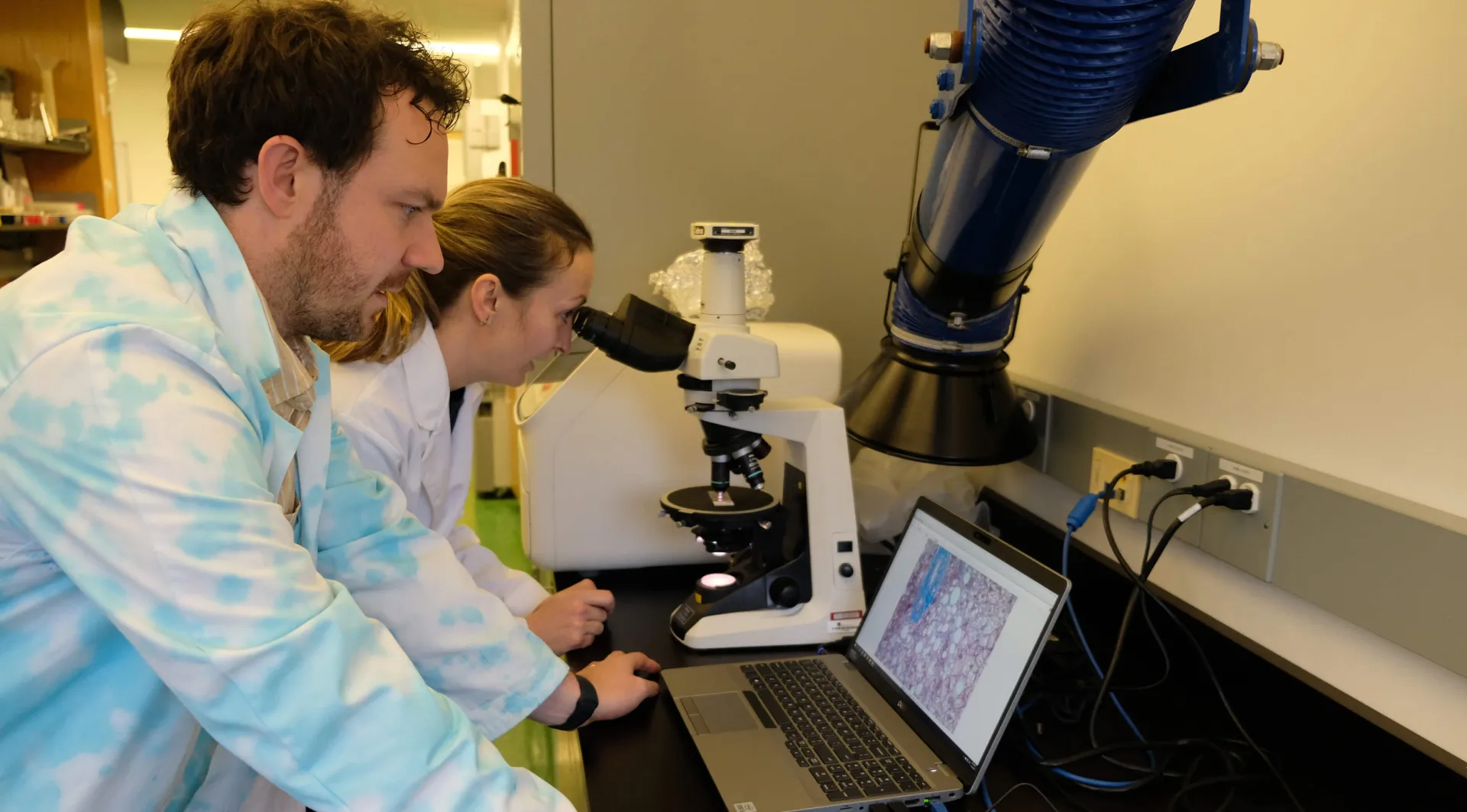
The funding will help the researchers generate key findings, advance their work, and expand their laboratories.
One grant supports research in Parkinson’s disease patients. The study will assess freezing of gait—the sudden sensation of feet feeling “stuck” during walking—which can lead to dangerous falls. Researchers will examine how circulatory changes influence brain function and contribute to these episodes, opening the door to new prevention and treatment strategies.
The other grant supports research examining the biological effects of long-term consumption of a Western-style diet—high fat, high sugar, low fiber—combined with frequent binge drinking. By studying effects on the gut microbiome, liver health, and brain function, the investigators can uncover how these lifestyle factors interact to impact health risk.
Human Movement Science + Neuromechanics = Hope for Reducing Falls
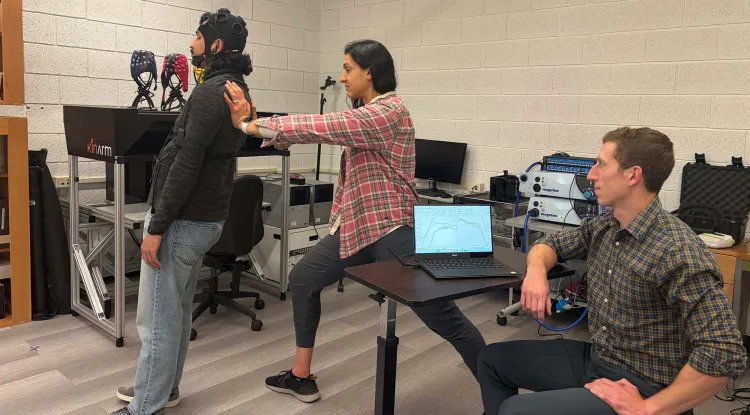
Leading the Parkinson’s disease project are Jasmine Mirdamadi, Ph.D., assistant professor of rehabilitation and movement science in the College of Nursing and Health Sciences, and Michael Rosenberg, Ph.D., assistant professor of electrical and biomechanical engineering in the College of Engineering and Mathematical Sciences.
Dr. Mirdamadi’s research explores how sensory and cognitive processes shape motor control and learning in neurotypical adults, and how these processes change with aging and neurological conditions, including Parkinson’s disease and stroke. Dr. Rosenberg combines engineering, neuromechanics, and applied mathematics to better understand gait in people with biomechanical, motor, and cognitive deficits.
Together, Rosenberg and Mirdamadi will enroll people with Parkinson’s disease in a study that will measure their brain activity, heart rate, and blood pressure during movement to determine whether cardiovascular dysfunction is associated with freezing of gait episodes. At home, participants will wear small sensors to track relationships between freezing and heart rate changes during daily life. Findings from this project could lead to better ways to detect and treat freezing of gait and reduce falls for people with Parkinson’s disease.
“This project is a great opportunity to bring our skillsets together.” — Michael Rosenberg, Ph.D.
The idea for this project emerged from conversations Rosenberg and Mirdamadi had when they were postdoctoral fellows working on very different research projects. “We kept finding ourselves talking about how we can’t holistically study how impairments like Parkinson’s affect mobility without understanding how the brain interacts with the body,” Rosenberg said. “Jasmine’s expertise in neuroscience and perception and my expertise in computational modeling and gait neuromechanics are highly complementary. This project is a great opportunity to bring our skillsets together.”
Diet Choices + Neural Control = Targets for Reducing Heart and Brain Disease
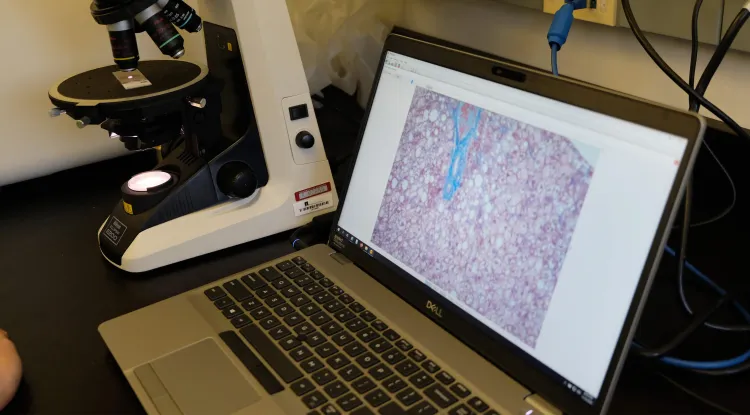
The study assessing diet and alcohol effects on the gut-liver-brain connection is led by Chris Skinner, Ph.D., assistant professor of nutrition in the College of Agriculture and Life Sciences, and Molly Stanley, Ph.D., assistant professor of biology and co-director of undergraduate neuroscience in the College of Arts and Sciences. Dr. Skinner’s research examines interactions among diet, alcohol consumption, exercise, and cardiometabolic health. Dr. Stanley investigates neural circuits that control feeding decisions and the effects of diet on brain health.
Together, Skinner and Stanley will examine effects of the Western diet plus binge drinking on brain health neurodegeneration, inflammation, disruptions to the gut microbiome, and liver function, and uncover any differences by sex. This investigation will expand knowledge of underlying mechanisms and determine potential therapeutic targets to improve health and reduce the burden of cardiovascular and neurodegenerative diseases.
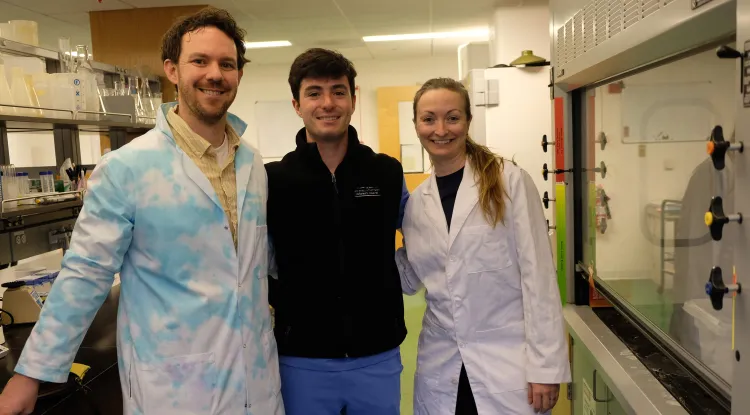
The collaboration began with Jake Grenon ’26, then a sophomore neuroscience major with minors in nutrition and chemistry. While taking Dr. Skinner’s Fundamentals of Nutrition course, Grenon was also conducting research with Dr. Stanley on the neurobiological effects of artificial sweeteners. He saw an opportunity to bring the two fields together and joined Skinner’s lab to pursue an undergraduate thesis combining Skinner’s expertise in nutrition with Stanely’s expertise in neuroscience.
“Through that relationship, Molly and I started working more together, leading us to apply for the grant,” said Skinner. “Much of the preliminary data in support of the grant was generated by Jake as part of his thesis. We currently have a paper in revision at a journal on which Jake is the second author.”
Now working as a medical assistant, Grenon has been admitted to the Larner College of Medicine Class of 2031.
Early-Career Support
The grants are provided by the VCCBH, a Phase 2 National Institutes of Health–funded Center of Biomedical Research Excellence that focuses on elevating exceptional early-career faculty. Called Fostering Innovative Research Excellence (FIRE) grants, the funds support pairs of researchers with complementary backgrounds working together on interdisciplinary projects. Funding for these grants comes from University of Vermont deans and department chairs, administered by the VCCBH.
Now in its seventh year, the VCCBH is building a sustainable research center focused on supporting early-career researchers on their ascent to having independent research programs. The center co-directors are Mary Cushman, M.D., M.Sc., professor of medicine and vice chair for emerging researchers, and Mark Nelson, Ph.D., professor and chair of pharmacology. With support from the center and senior faculty mentors, the researchers complete projects that provide data to support competitive grant applications. Since 2020, the center has supported 18 faculty, including these new FIRE grant recipients.
“Mark and I are so fortunate to develop programs that can help early-career UVM faculty succeed at the beginning of their careers,” Cushman said. “We are grateful to the supporting deans and chairs that make the FIRE grants possible.”
Learn more about the Vermont Center for Cardiovascular & Brain Health at the University of Vermont