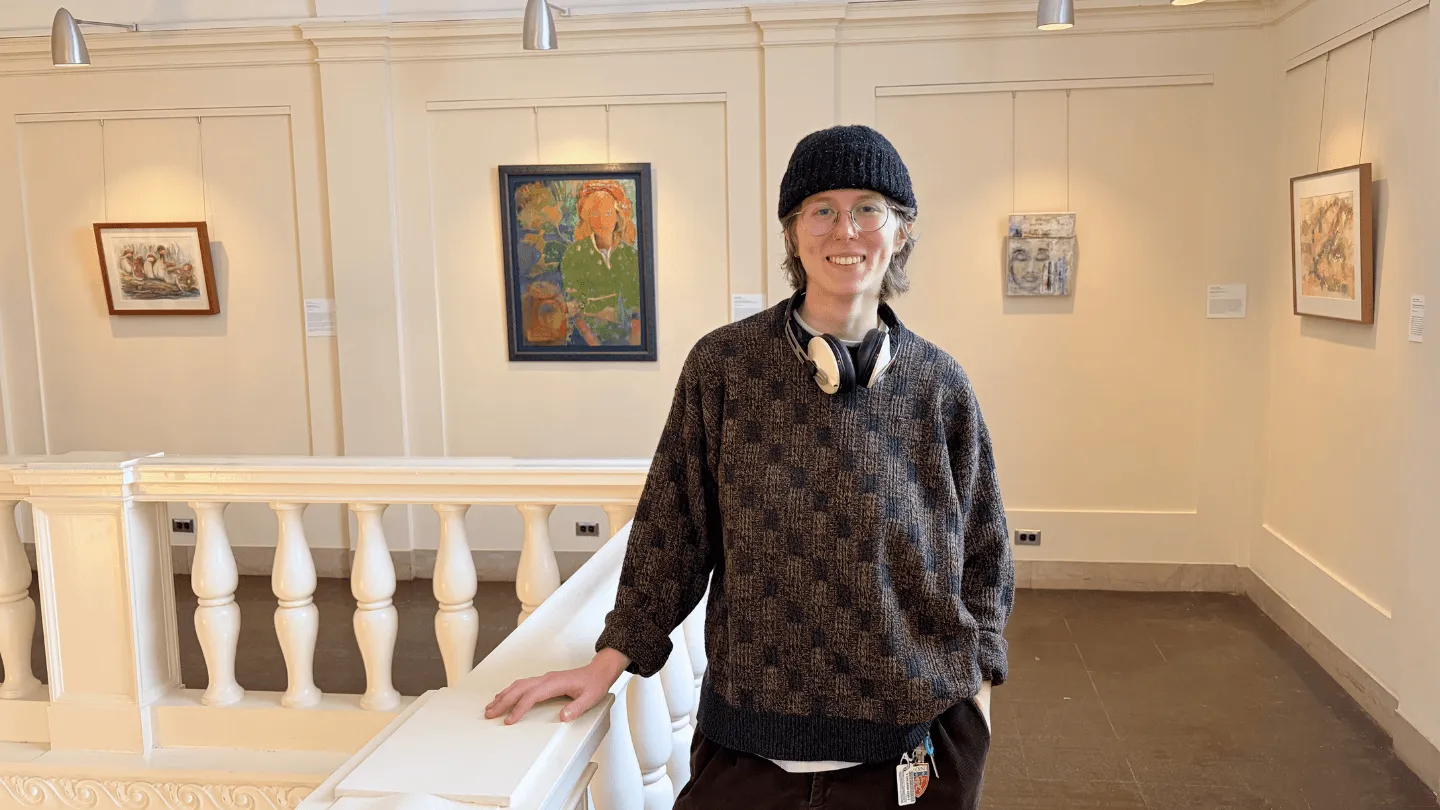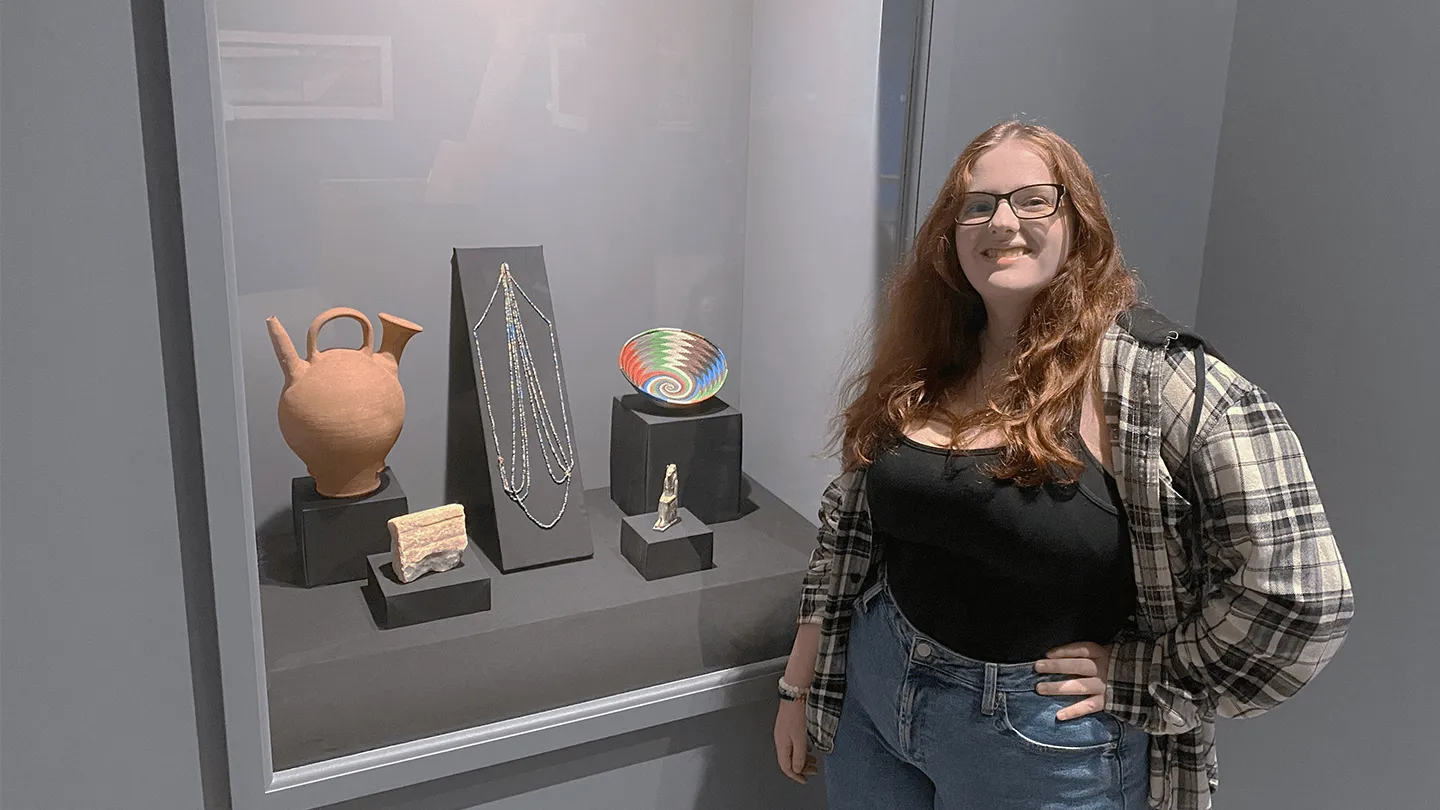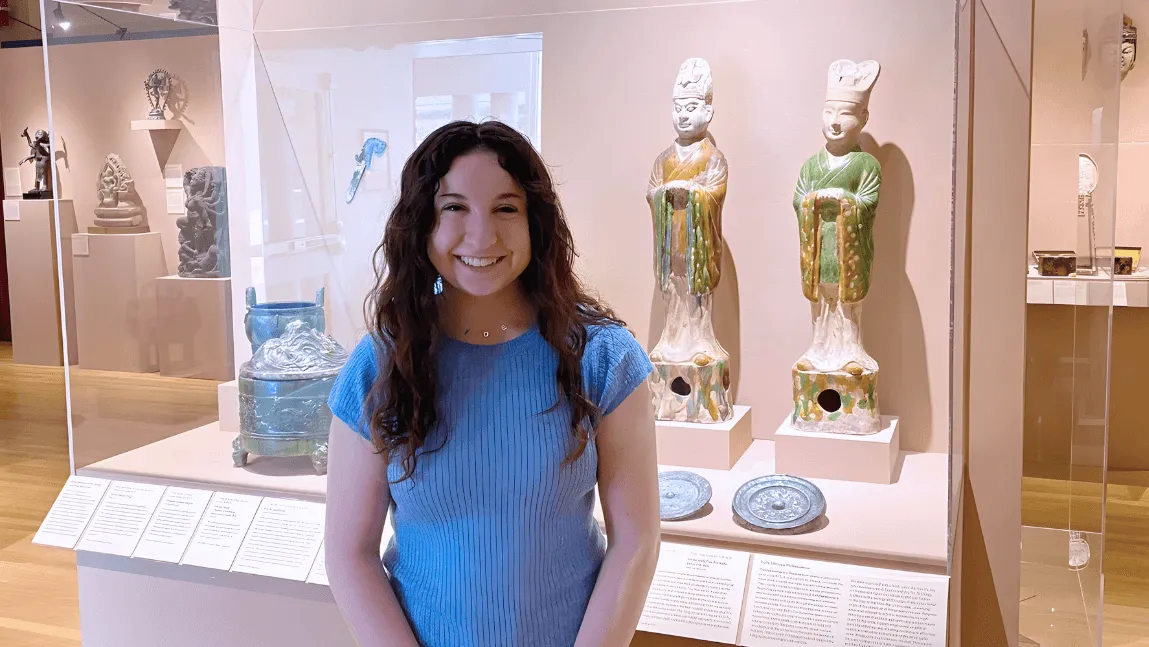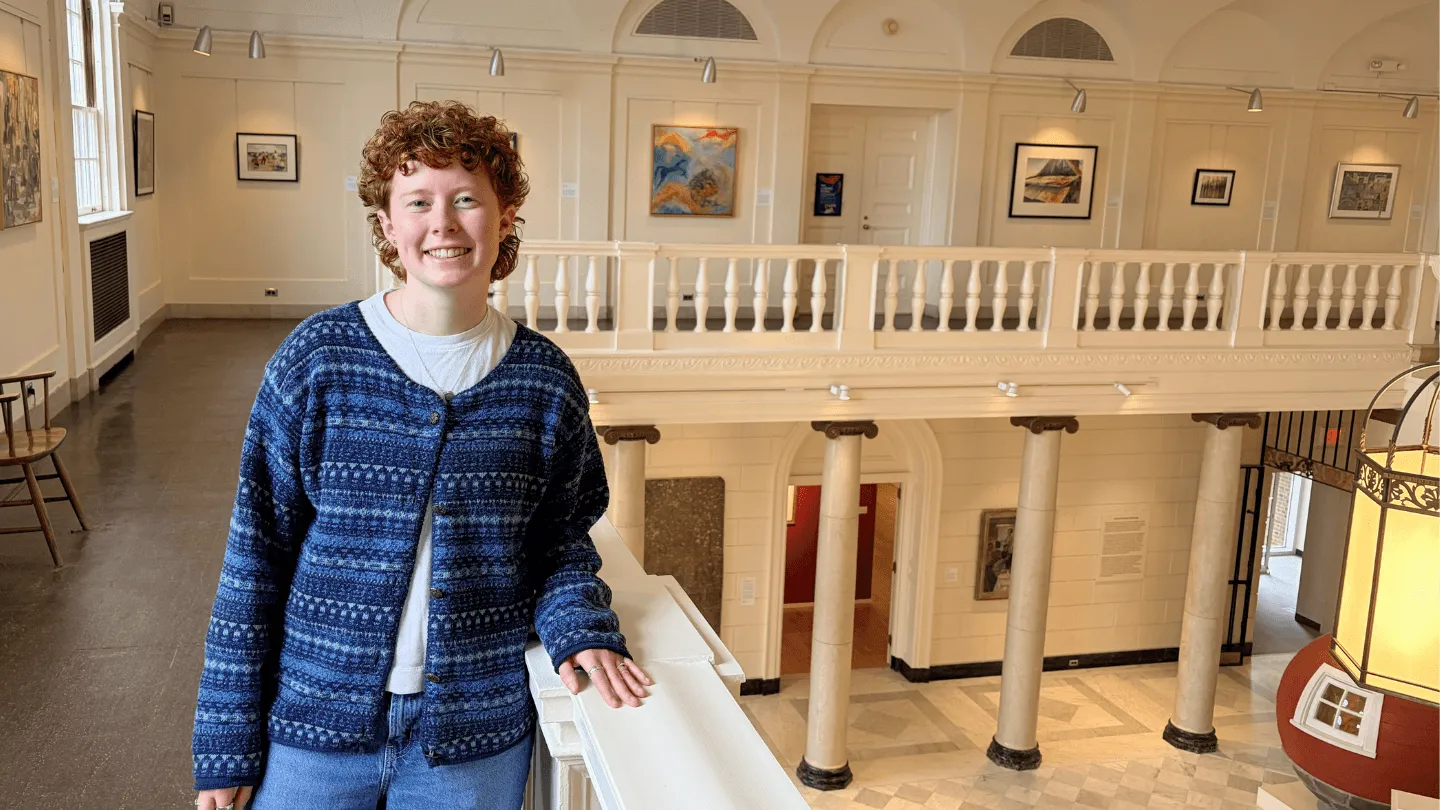
“The most unique part of the Fleming is the people. I instantly felt welcomed and comfortable during my internship and was encouraged to make connections with both Fleming staff and members of the community. Though my internship ended, I have maintained these relationships and know I can count on the staff at the Fleming as I move forward with what comes next!” said Emory Gerlach ’26, the 2025 College of Arts and Sciences Curatorial and Collections summer intern at the Fleming Museum of Art.
From researching and writing labels, cateloguing works, and so much more, there’s a lot that goes into Museum work that the public never sees. But for Emory, these are just the type of hands-on experiences that the drew her to the Fleming internship in the first place. If you’d like to see her work in person, head to The Babysitter to read her label in our Care, People, Place gallery. (And don’t forget to see the painting on loan in the upcoming Norman Rockwell: At Home in Vermont exhibition at the Shelburne Museum!)
Q: What projects did you work on during your time at the Fleming and why did you want to
work on them?
A: I focused on three major projects. First, I conducted original research on and wrote a label for Norman Rockwell’s The Babysitter. The Babysitter stuck out to me from the moment I saw it on view, and I knew I wanted it to be a part of my research during the internship. I spent time in the Silver Special Collections Library researching Rockwell’s time in Vermont and visited with the woman who posed for the baby back in the 40’s! I loved immersing myself in my research and learning about the history behind the painting.
Second, I assisted with the inventory and processing of over 300 works that had been donated to the Museum and created a document to title and track each object. I wanted to learn more about the process and help the Fleming team optimize their efforts in incorporating the objects into the collections.
My third project was to digitize and streamline all paper conservation and condition reports dating back to 1989. While completing this project, I learned about the importance of organization and file-keeping in a museum setting. This skill will help me in my post-grad career, where I intend to continue working in museums.
Q: Was there anything about working behind-the-scenes of a museum that surprised you?
A: Yes! I was surprised by two things in particular: the sheer amount of objects in the Fleming’s collections and how little information there is on some of them. On my first tour of the Fleming, I was amazed at how much storage the building contains. Further, since the Fleming’s collections began two hundred years ago (approx. 1826, prior to the Museum itself being built), there are artifacts that lack institutional knowledge. Some have no record of how they got in the collection in the first place, while others were gifted from donors who were unaware of the artifact’s history.
Q: What makes the Fleming stand out to you?
A: The most unique part of the Fleming is the people. I instantly felt welcomed and
comfortable during my internship and was encouraged to make connections with both Fleming staff and members of the community. Though my internship ended, I have maintained these relationships and know I can count on the staff at the Fleming as I move forward with what comes next!
Sam Hansen, is a sophomore English major at the University of Vermont. She is a 2026 Content and Communications Assistant at the Fleming Museum of Art, avid skier, and chicken pot pie enthusiast.