You’ll need containers with drainage holes and a drip tray, sterile potting soil (not garden soil), seeds, and in most cases, a grow light to replace or supplement natural light.
If you’re a salad lover, consider growing loose leaf lettuce (Lactuca sativa), arugula (Eruca sativa), spinach (Spinacia oleracea), endive (Cichorium endivia), or a combination of your favorites. Select a shallow container 2 to 6 inches deep, the depth depending on whether you intend to harvest baby greens or grow them to maturity.
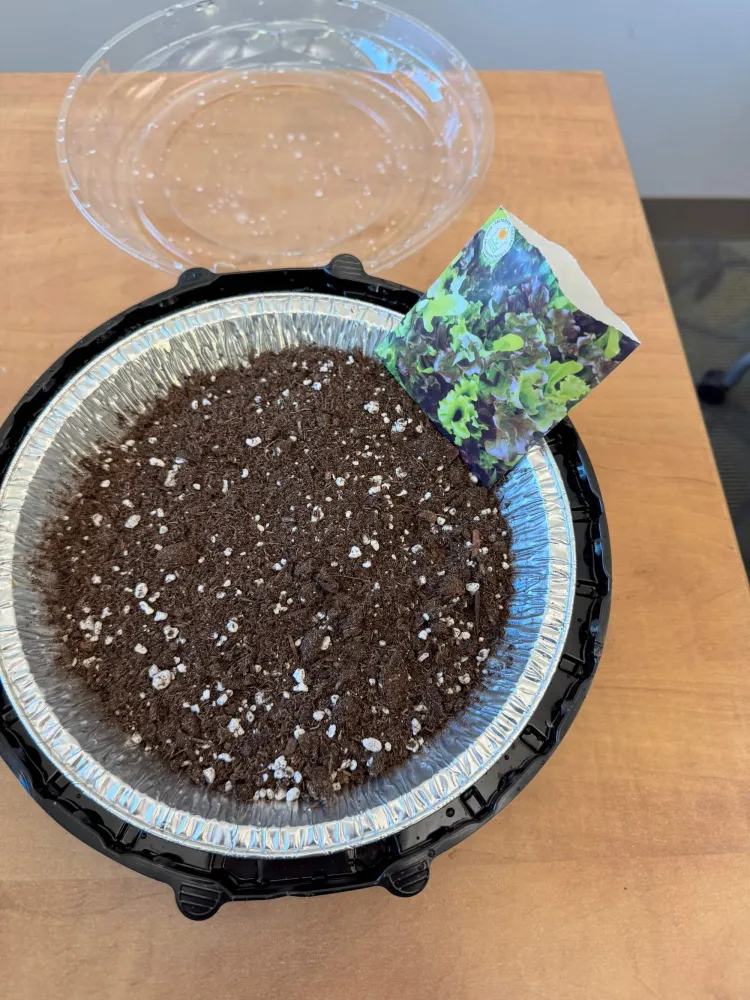
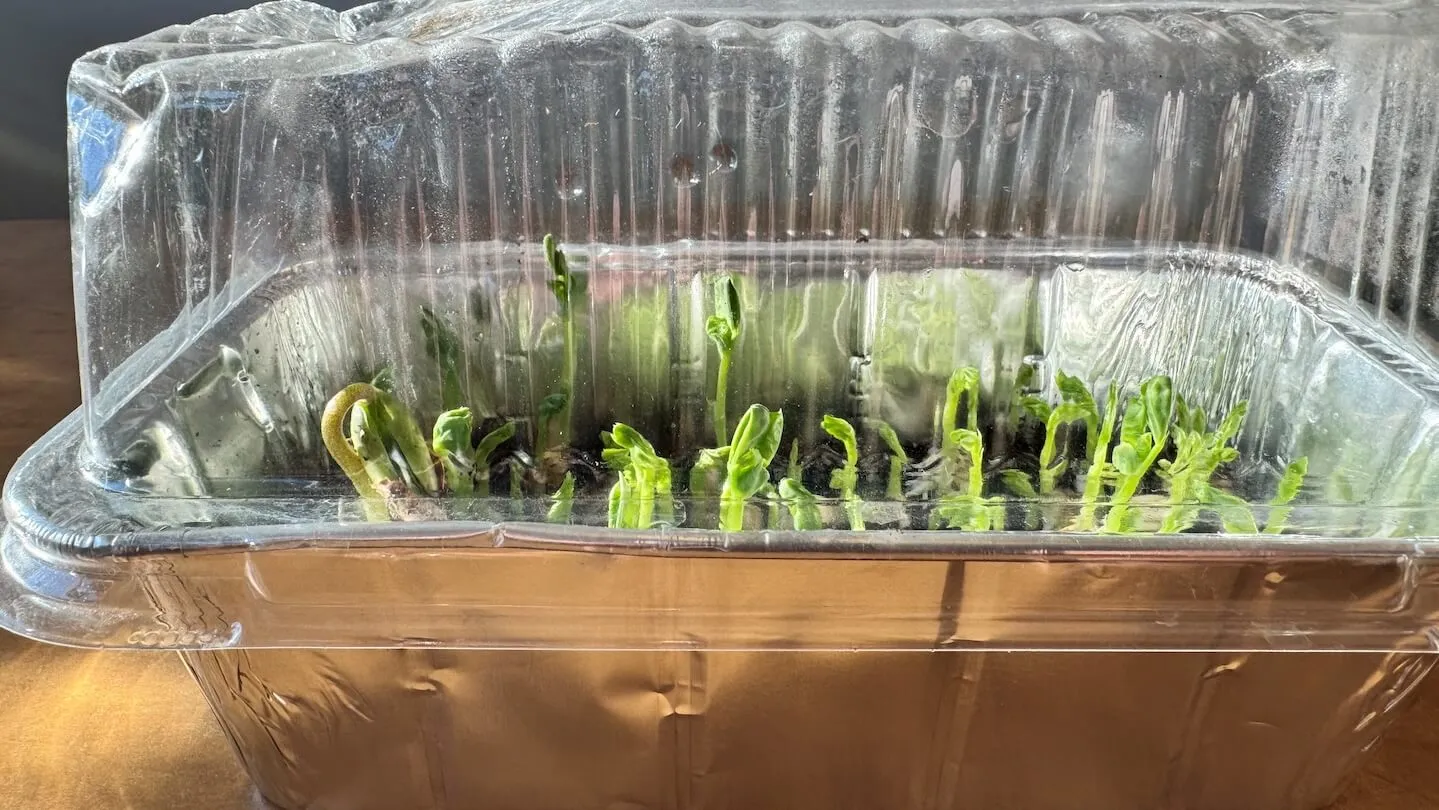
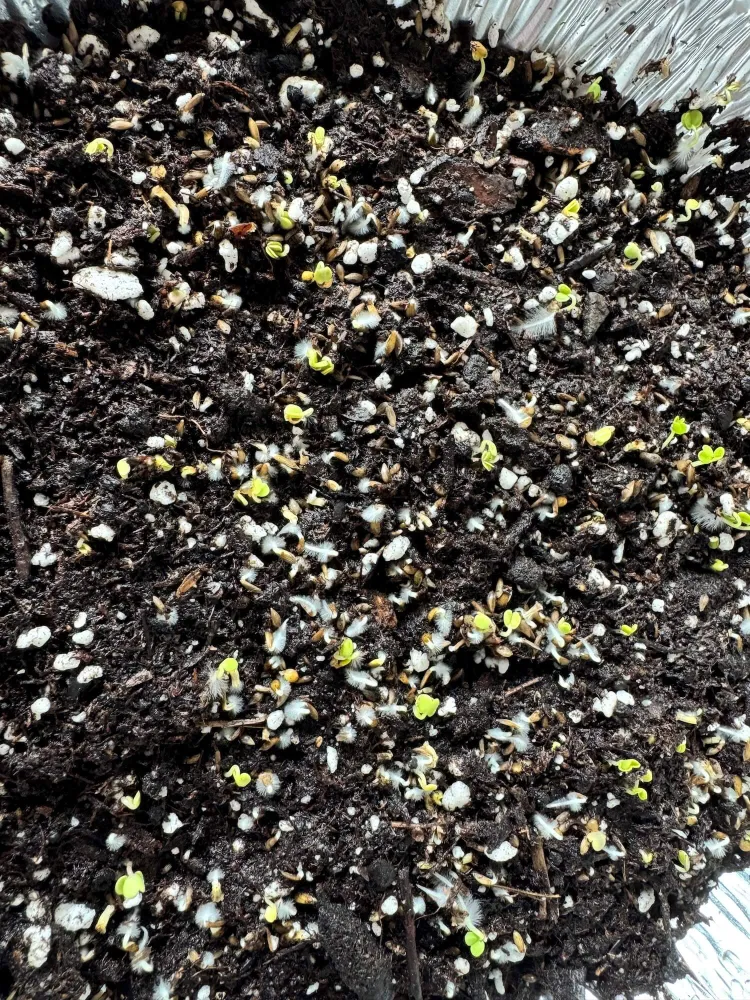
Fill the container with moistened potting mix. Scatter seeds about an inch apart. Cover with a thin layer of soil and mist with water. If the container comes with a humidity dome, put it in place. If not, cover the planter with plastic wrap or enclose smaller containers in a clear plastic bag. Sprouts should be visible within a week. Remove the humidity cover and move the container to a well-lit location. For a continuous crop of greens, stagger planting by beginning a new tray at two-week intervals.
Leafy greens can be grown on a south-facing windowsill that gets bright light, but since most greens grow best with 12 to 14 hours of light daily, a grow light to supplement or replace natural light will produce better results. Place grow lights 2 to 4 inches from the top of the plants to ensure sufficient light. If you can’t adjust the height of your grow light, place books or some other stable support beneath the container to bring it closer to the light source, removing the height boosters as plants grow taller.
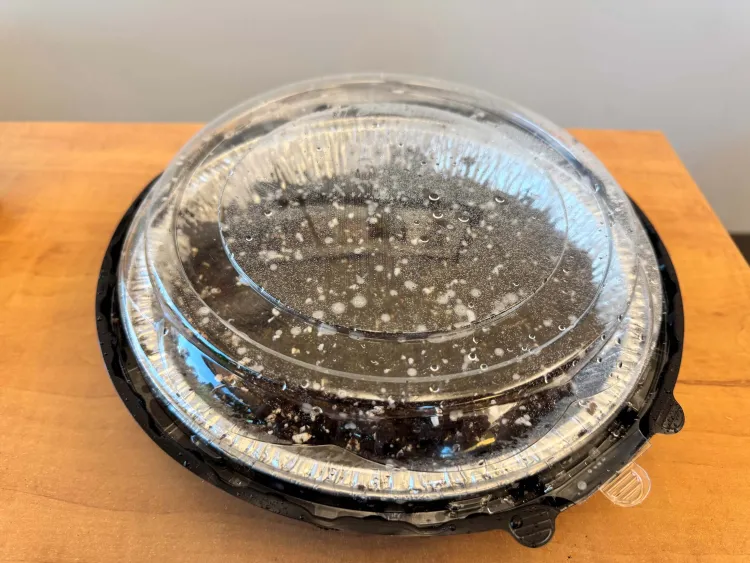
Water as needed to keep soil moist but not wet, and don’t allow the tray to sit in standing water.
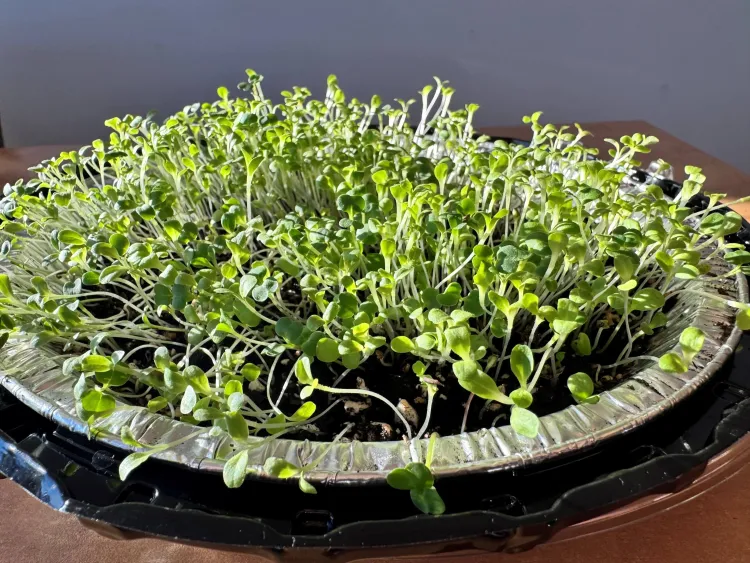
Baby greens should be ready to eat in about a month. Cut outer leaves when they’re 3 to 4 inches tall, leaving the center to continue growing for cut-and-come-again harvesting.
Leafy greens do best at temperatures between 60°F and 70°F. Avoid cold drafts from windows or doors, and hot, drying drafts from radiators, stoves, or heating vents.
You can also grow vine-ripened tomatoes (Solanum lycopersicum) indoors this winter if you select compact dwarf varieties like Red Robin (6 to 12 inches high), Yellow Bush Cherry (12 to 24 inches high) or Dwarf Arctic Rose (36 inches high). The mature size of the plant will determine the size of the container needed. A micro-dwarf variety can be grown in a gallon container, while a larger variety will need a five-or-more-gallon container to accommodate its roots.
The article "Seed Starting Basics" (https://go.uvm.edu/seedstartingbasic) provides information on starting tomato seeds and others. Once seedlings are ready to transplant, you’ll need the appropriate-sized container, sterile potting mix, a support to keep vines upright when heavy with fruit, and a grow light.
Select a location with temperatures of 70°F to 80°F (above 60°F at night) away from cold or hot drafts. Provide 16 to 18 hours of light, keeping grow lights 2 to 4 inches above the plants.
Water when the top inch of soil dries out. Fertilize every two weeks according to package directions.
Since you’ll be growing tomatoes indoors without the benefit of pollinators, shake the stem or tap flowers gently or use a cotton swab or small paintbrush to transfer pollen. Depending on the variety, in as little as 45 days from transplanting you could be harvesting tiny tomatoes.
For answers to your home gardening questions, contact the University of Vermont Extension Master Gardener Helpline online (go.uvm.edu/gardeninghelpline) throughout the winter months.
The UVM Extension Master Gardener program provides science-based gardening education to Vermonters. The program is made possible through the support of dedicated volunteers, state and federal funding, and generous donations. Want to get involved? Learn more on the UVM Extension Master Gardener website.