
What is Mental Health?
The World Health Organization (WHO) conceptualized mental health as a state of mental well-being that enables people to cope with the stresses of life, realize their abilities, learn well and work well, and contribute to their community. It has intrinsic and instrumental value and is integral to our well-being.
Mental Health in the United States
In 2022, WHO’s World mental health report: transforming mental health for all, highlighted the workplace as a key example of a setting where transformative action on mental health is needed. The recent U.S. Department of Health and Human Services report on workplace wellbeing shows a significant challenge:
- 76% of U.S. workers reported at least one symptom of a mental health condition.
- 84% of respondents said their workplace conditions had contributed to at least one mental health challenge.
- 81% of workers reported that they will be looking for workplaces that support mental health in the future.
Additional sources: MindShare Partners’ 2021 Mental Health at Work Report & APA’s 2022 Work and Well-being Survey results
Mental Health in the Workplace Webinar Series

Mindfulness Audio Clips
Audio content curated by UVM Mindfulness can offer support when & where you need it.
A powerful digital wellness platform for support and motivation. Be Well Vermont



Supports, tools, workshops, apps, and more Invest EAP Resources



The Surgeon General’s Framework for Workplace Mental Health and Well‑Being
The U.S. Department of Health and Human Services (HHS) believes we can build workplaces that are engines of well-being, showing workers that they matter, that their work matters, and that they have the workplace resources and support necessary to flourish.
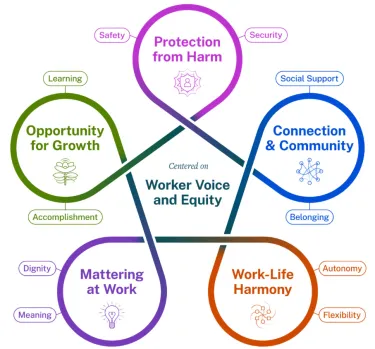
Published in 2022, the 30-page Surgeon General’s Framework for Workplace Mental Health and Well-Being offers a foundation that workplaces can build upon. Centered on the worker’s voice and equity, these Five Essentials support workplaces as engines of well-being. Each essential is grounded in two human needs, shared across industries and roles. Creating a plan to enact these practices can help strengthen the essentials of workplace well‑being.
Learn more and download the Workplace Mental Health & Well-Being Framework at the Department of Health & Human Services' website.