Good health depends on so much more than access to medical care. Early childhood experiences, access to food and transportation, job security and social support - known as social determinants of health - are major reasons why some people are healthier than others.
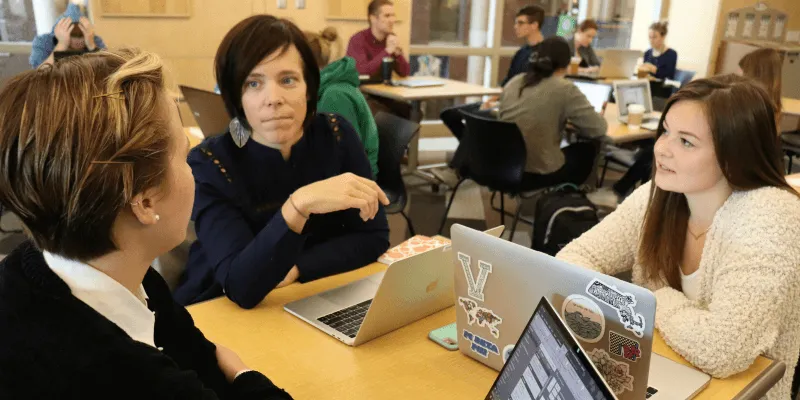
Exploring strategies to advance health equity is Deborah Hinchey’s academic focus. A senior lecturer in the Department of Biomedical and Health Sciences, Hinchey uses her expertise in community-based public health practice and experiential education to help students understand the impact of social determinants on individual wellbeing.
A strategy for better outcomes
At the American Public Health Association conference last fall, Hinchey presented on undergraduate public health education as a tool to advance health equity. She feels strongly that preparing students to understand social determinants will create important social change.
“To have an impact on health outcomes, our students learn the reasons that where you live, work and play matter to food and physical activity access. It’s the big picture – not individual behaviors – that affect choices and predict health outcomes,” she said. “When they take this deeper understanding to their jobs, we’ll see systemic changes.”
In her Health Sciences 240 – Project Planning and Evaluation course, Hinchey’s students participate in a service-learning or internship experience that offers a close view of a public or community health issue. The course helps students learn to apply classroom concepts to authentic challenges, Hinchey said.
Fostering community partnerships
Hinchey also has plans for a capstone experience for students pursuing the Bachelor of Science in Health Sciences degree that will allow them to view systems already in place and apply what they’ve learned to enhance existing strengths and relationships with community partner organizations.
“The capstone project gives students an opportunity to synthesize and culminate their learning and provides a valuable lens through which students see the world,” said Hinchey. “What I love about this work is thinking about where students will go after this and what kind of impact they have. They may work for a non-profit organization or go to business school. They may go into law or policy-making and make changes that affect health outcomes. The potential to really create change is huge.”