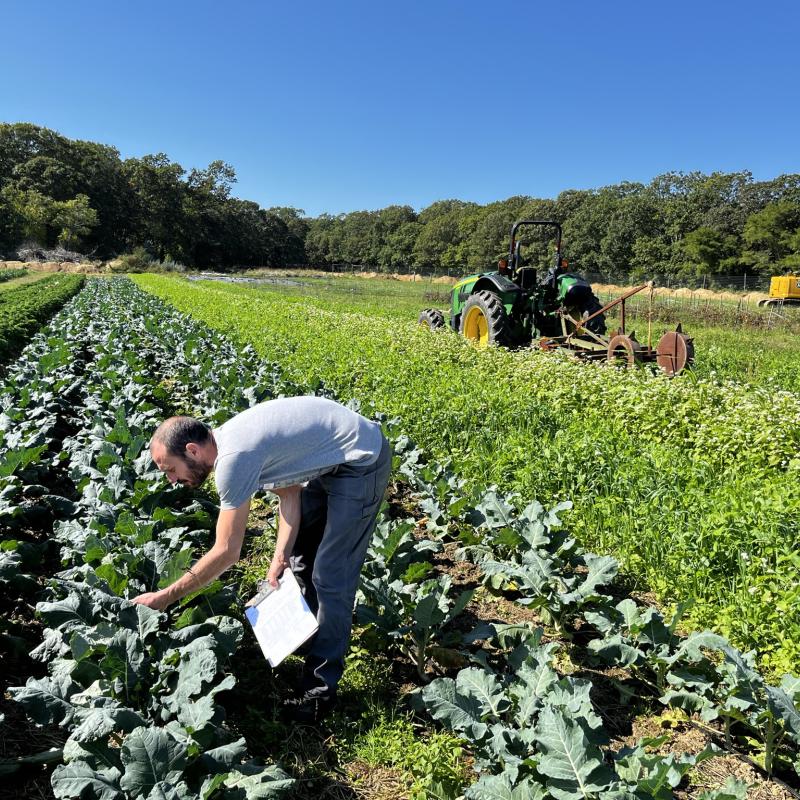
Rhode Island's Changing Climate Creates New Opportunities for Summer Cover Crops
Explores the use of summer cover crops like teff and Japanese millet to fill growing gaps created by shifting planting and harvest dates in Rhode Island.

Filter by subtopic. Click here to search all resources with more filters (e.g. production type, state, issue).
Explores the use of summer cover crops like teff and Japanese millet to fill growing gaps created by shifting planting and harvest dates in Rhode Island.
Research-based, farmer driven information about practicing sustainable agriculture on your farm. Topics to browse include Farm Business Management, Animal Production, Pest Management, Sustainable Communities, Soil Management, and more.
A checklist for Northeast tree fruit growers outlining climate-related risks, opportunities, and actions to reduce future impacts.
When considering soil health practices for row crop farmers it's essentially to understand how each practice can alter the farm's bottom line. This decision making tool helps corn and soy producers simulate the financial impacts of adopting different soil health practices.
Soil Health Indicators and Tests discusses different methods of soil health assessment and provides an overview of soil biology.
This article covers the history context and development of the concept of soil health within soil science. It is part of a larger collection called "Soil and Water Conservation" which includes in-depth chapters on conservation science.
A fact sheet on the use of soil moisture sensors on farms. Includes grower experiences, sensor types, installation, and interpretation of the readings.
A virtual tour of Penn State research on double-cropping and other climate-adaptive practices for sustainable dairy farming.
Diversifying into forest products is a good strategy to spread out climate related risk for any farm, but it's not without it's own challenges and strategies that need to be understood. This guide is a great starting point for any farm business considering farming the woods.
This fact sheet explains how tile drainage can improve yields, outlining design, efficiency, and return-on-investment considerations.
An hour-long webinar about the various invasive species growers might come into contact with in the face of climate change as well as how to deal with them in the most efficient manner.
Publications, tipsheets, and videos to help farmers use cover crops, green manures, and alternative soil amendments to reduce synethetic inputs and increased self-reliance.
Three fact sheets covering soil moisture monitoring, irrigation systems, and optimizing water use on diversified vegetable farms.
As the climate continues to change, food security will likely remain an issue. Urban food hubs like the East Capitol Urban Farm can help mitigate the effects of warming temperatures and precipitation extremes.
Highlights research and variety trials at UMaine’s Highmoor Farm, exploring new opportunities and risks from longer growing seasons.
Resources and network of urban wood industry pros and stakeholders from across the United States and beyond. Aims to unite unique urban wood industry groups and efforts under the common mission of growing professional and consumer confidence in the urban wood industry.
University of Rhode Island is conducting research and outreach on high tunnel production and summer cover crops to help farmers tackle both the risks and opportunities posed by climate change.
IPM pest and disease modeling and forecasting. Includes pest-specific data and other factors such as growing-degree days.
This article discusses how cover crops have the potential to boost key aspects of the soil microbiome typically associated with healthy soils.
Visit the University of Vermont research happening on working dairy farms to see how management practices can affect water quality, economics, and greenhouse gas emissions.
The CSF Water Deficit Calculator estimates soil water content in the root zone to inform decision making about current and forecasted water deficits.
A short fact sheet summarizing how changing climate impacts dairy operations, and what can dairy farmers do to adapt.
This hour-long free webinar is about the impacts of climate change on maple syrup production and how maple producers can best adapt.
Historically, annual precipitation has been sufficient to meet vegetable crop water needs in the Northeast during the growing season, but now shifting precipitation patterns create water management challenges for Northeast specialty crop growers.