College of Engineering and Mathematical Sciences

Type of Degree

B.A.

School or College

College of Arts and Sciences

Area of Study

Science, technology, engineering and mathematics

Program Format

On-campus

Credit hours to graduate

A minimum of 120 credit hours are required.

Program Information:

Program Overview

Computing shapes how people learn, work, create, and govern themselves, and the people who understand it best are often the ones who can also think about the people and ideas it touches. UVM's Bachelor of Arts in Computer Science is a full computer science major set within a liberal arts education, for students who want to connect computing with the humanities, the arts, and the social sciences.

Student at a lectern with a screen behind him and an electronics device beside him.

Offered through the College of Arts and Sciences, the B.A. gives you a solid grounding in both the theory and the practice of computing: how to write and reason about programs, how to analyze algorithms, and how to build systems that work. You'll learn through a mix of lectures, active learning, and hands-on projects. Alongside that, you'll complete a minor and explore, for example, the humanities, social sciences, artificial intellegence, fine arts, literature, or world languages. The result is a degree that pairs technical skill with the breadth to ask what a technology is for, who it affects, and whether it should be built at all.

Graduates are prepared for careers that bring computing to other fields, and for graduate study in computer science or in the area they paired it with.

B.A. in Computer Science Catalogue Listing

Curriculum

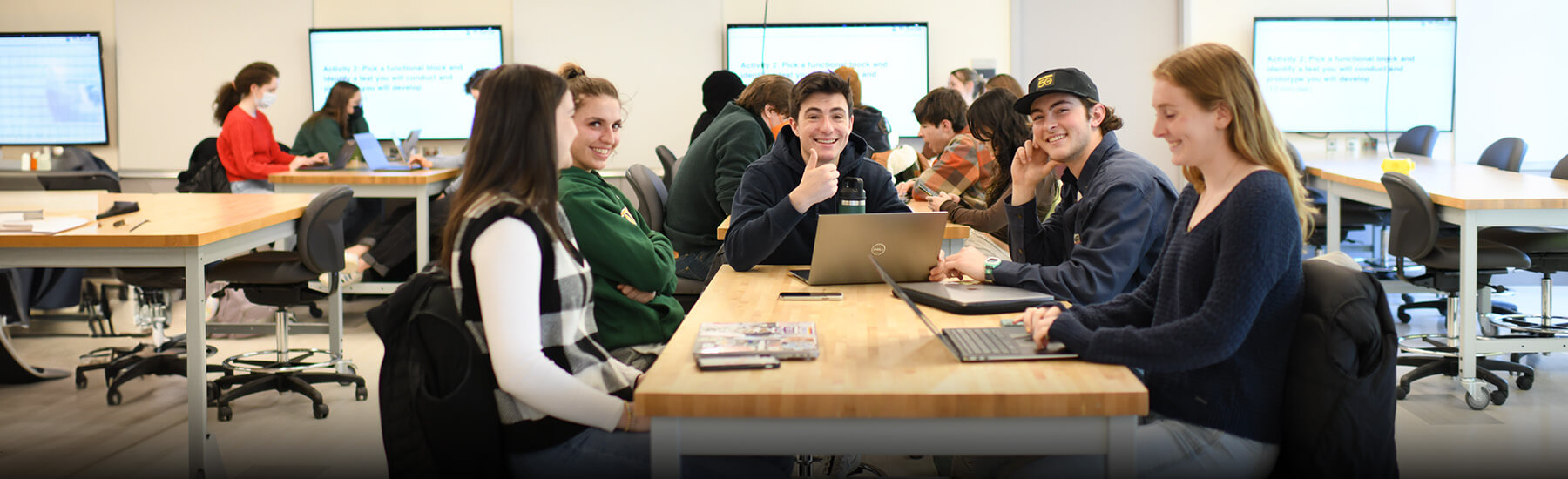
Three students seated at a table facing their laptops and working together

What You'll Study

You'll start with the same foundations as every UVM computer science major: programming, data structures, and the analysis of algorithms. From there, your 15 credits of computer science electives let you follow your interests, whether that is artificial intelligence (AI), privacy and security, human-computer interaction (HCI), or software development. 

What sets the B.A. apart is what surrounds the major. You'll complete a minor of your own choosing, in a field such as e.g., linguistics, music, philosophy, psychology, economics, or environmental studies, and take courses across the humanities, social sciences, fine arts, and literature, along with a world language. Together, these let you build a degree around a question that interests you, with computer science as one of the ways you pursue it.

Link to Curriculum Checksheets (PDFs)


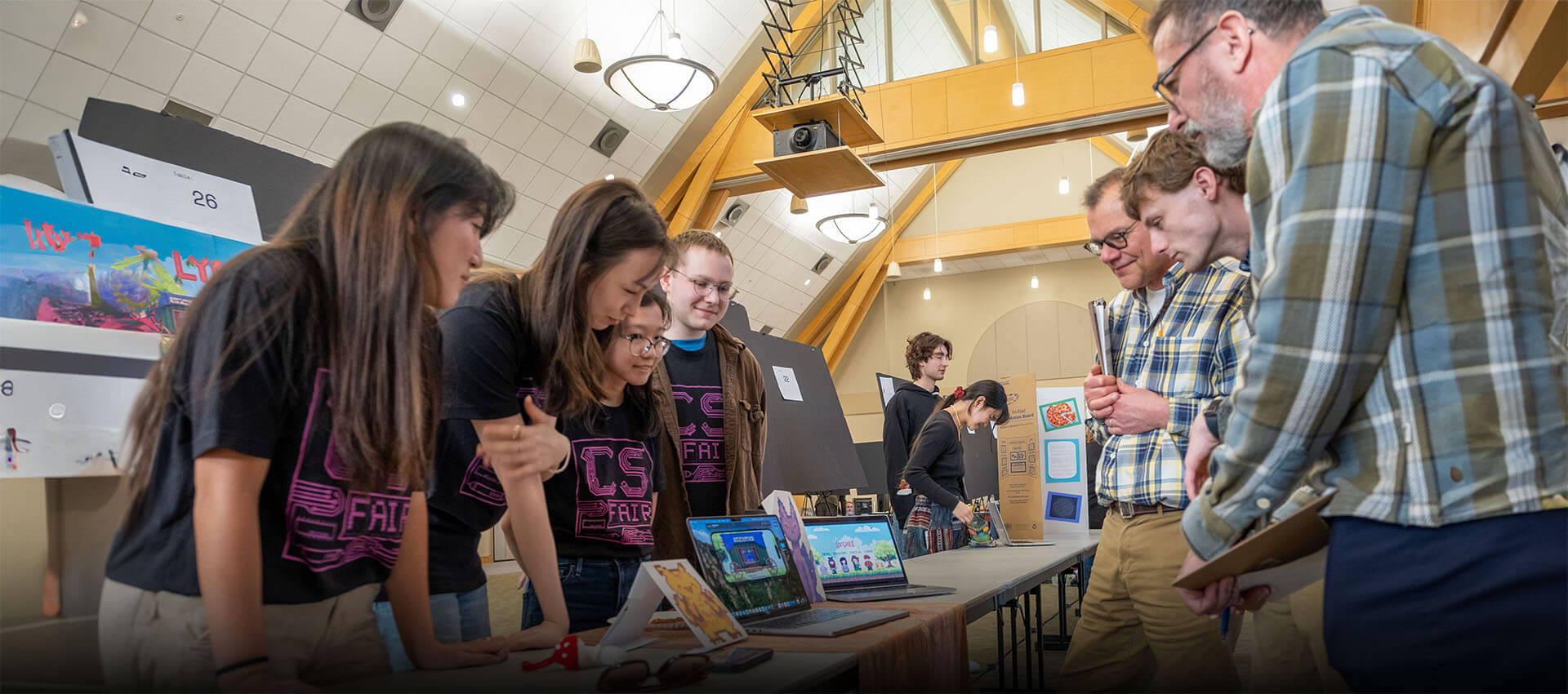
A packed ballroom with students sharing projects on their laptops to visiting guests. A large screen projection says Computer Science Fair

Beyond the Classroom

Many CS students complete paid summer internships, with support from CEMS career services and a dedicated internship coordinator. Through CAT Coders, students get paid to build software for clients in UVM's research community and the wider business community. Computer Science Crew (CS Crew) and the Society of Women in Computer Science (SWiCS) help you find community, and the annual Computer Science Fair is your chance to show off your projects.

Undergraduates can also take part in faculty research, including work with the Center for Computer Security and Privacy and the Vermont Complex Systems Institute, and can pursue independent study with a faculty member through the Vermont Research Open Source Program Office (VERSO).

Because the B.A. sits in the College of Arts and Sciences, you'll also be working alongside students and faculty in your minor and your other courses, which is a natural way to find collaborators for projects that cross fields.


Outcomes

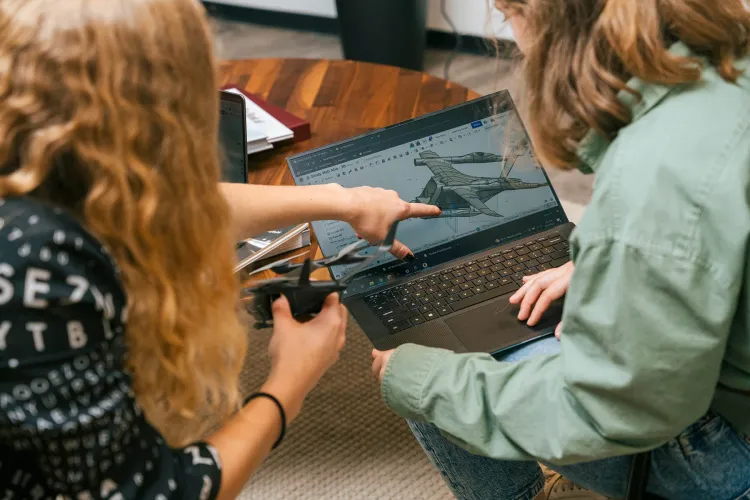
Two students work at a laptop with a futuristic plane on the screen

Where It Leads

Computer science graduates work in AI and machine learning, cybersecurity, data science, software development, and many other fields, and B.A. graduates are well placed for roles where technical fluency meets another discipline: [confirm with alumni stories or career-services data, e.g., digital humanities, user experience, technology policy, journalism, education technology, public health informatics]. Our recent graduates have joined employers such as NASA, GlobalFoundries, Beta Technologies, OnLogic, Marvell Technology, NuHarbor, VIP (Vermont Information Processing), RTX, Northern Digital, Syrona Medical, National Life Group, Chewy, US Air Force, Wingbrace, Sycamore Informatics, Biogen, and many others.

Others go on to graduate school, either in UVM's own Accelerated Master's Program or doctoral programs in Computer Science or Complex Systems, or other destinations including Stanford, Northeastern, UPenn, Boston University, University of Virginia, University of Edinburgh, and University of Maryland.

More

Students gathered around a table posing for the photographer

Getting Started

New students usually begin with CS 1210 Introduction to Programming. If you already have programming experience, you can take a placement exam. Not sure whether the B.A., the B.S. in Computer Science, or Computer Science and Information Systems is right for you? Our recommended first-semester courses keep those options open, and a CS advisor can help you decide.


This chart shows the prerequisites for Computer Science courses (PDF)

If you have trouble understanding this chart or want more information, please speak directly with your advisor or CEMS Student Services.

Loading...