How can community radio, feminist journalism, and Indigenous storytelling advance social change? UVM students will explore these questions in CDAE 1990: Indigenous Media-South America, a new course taught by Dr. Benjamin Dangl in Spring 2027.
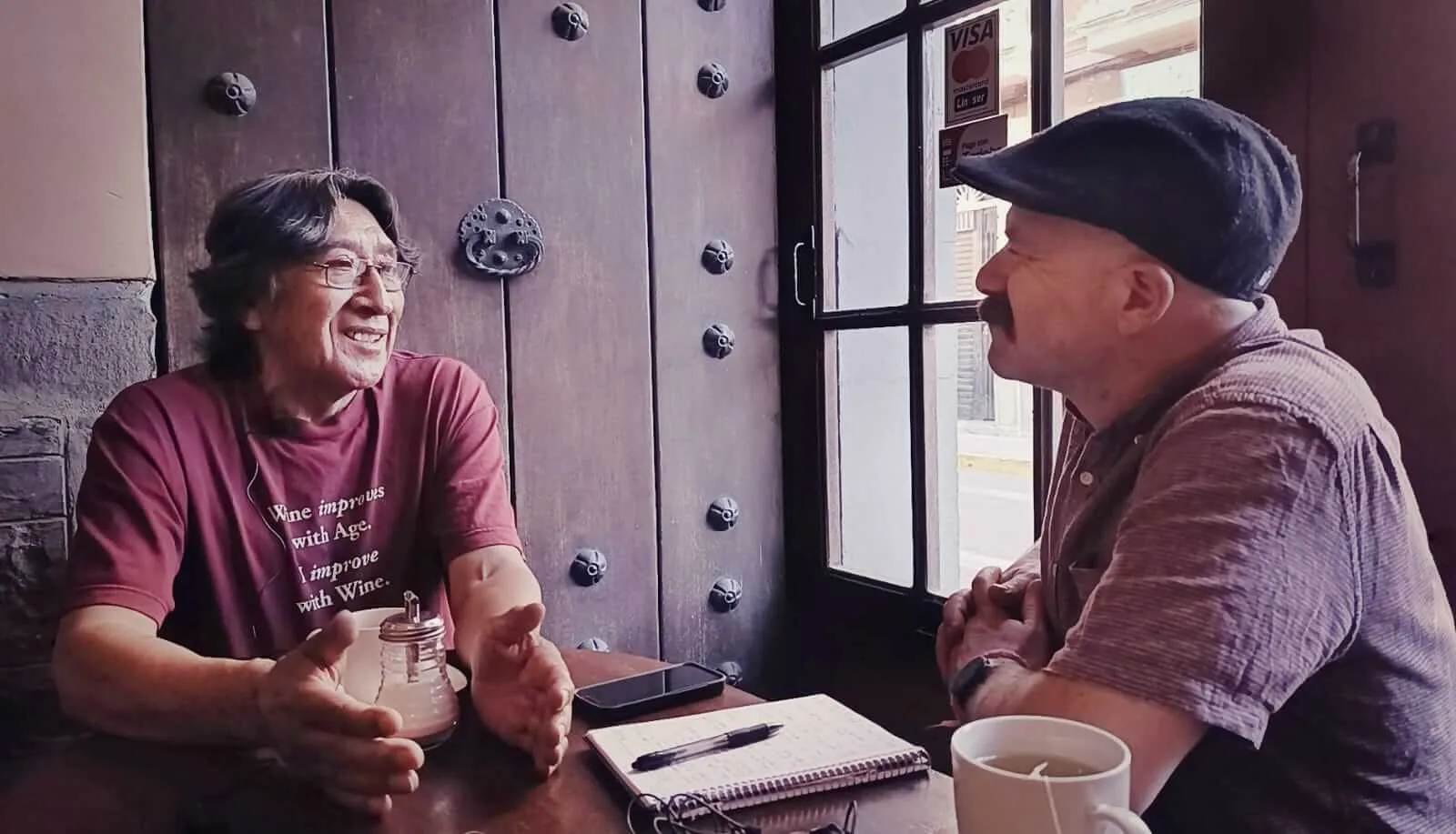
Dangl recently returned from a yearlong research sabbatical across Chile, Argentina, Bolivia, Peru, and Ecuador, where he conducted more than 80 interviews with community media makers. His research will inform a forthcoming book under contract with the University of North Carolina Press.
The new course examines how Indigenous, feminist, and grassroots media challenge dominant narratives and amplify community voices. Students will explore topics including community radio in the Andes, feminist reporting from protests, and investigations into anti-mining movements in the Amazon through readings, documentaries, podcasts, and guest speakers.
“It has been wonderful to share the theories for communicating for social change from Mapuche and Quechua communities across the Andes,” Dangl said. “My interviews with media makers highlighted decolonizing journalism practice as well as non-western forms of knowledge creation in communities. These media outlets, from Guarani pirate radio in Bolivia to feminist podcasts confronting violence, show that another type of media is possible.”
Dangl is also incorporating his research into existing UVM courses, including Activist Journalism, News Writing Across Media, and Public Communication Capstone, where students apply media production skills to their own projects.
“It's really about expanding what we think of as media making and journalism beyond western and colonial conceptions of power, politics, and social change,” Dangl said. “Indigenous communities have been wielding these communication-based tools of resistance against extractivism, state repression, and racism for centuries into today. There is a lot to learn, reflect on and discuss within this transformational space of making media for change.”
Through the course, students will consider how community-based media can support social movements and how these approaches can inform their own research, careers, activism, and media making. CDAE students can talk to their advisor about how to apply this special topics course to their Major graduation requirements.

