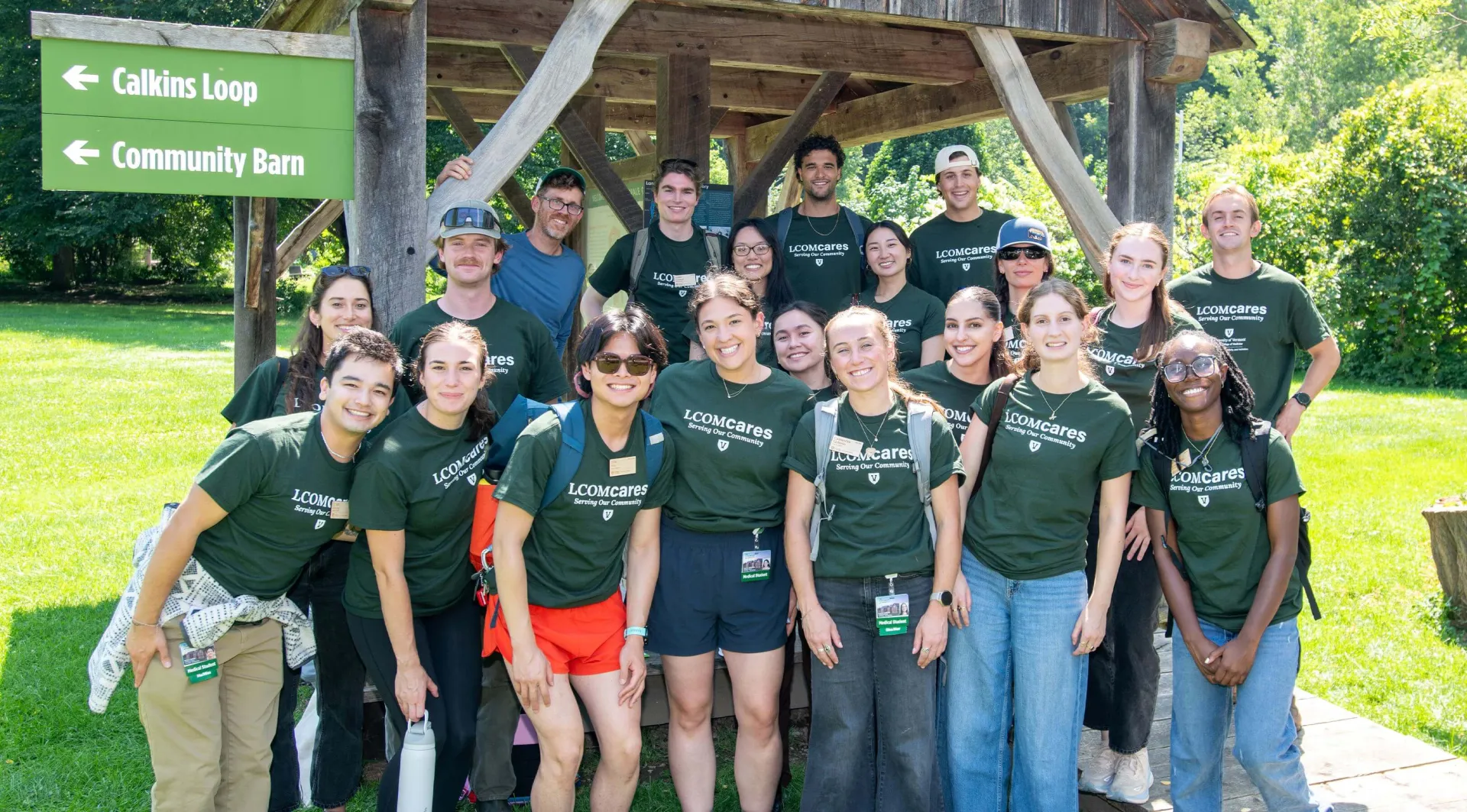
After an exhilarating Orientation week that included a scavenger hunt, college mascot Dr. Moo geocaching, and community service projects throughout the Burlington area, the University of Vermont’s newest medical students are set to begin M1—their first year of medical school. The 124 medical students in the Larner College of Medicine Class of 2030 are among the university’s highest-achieving incoming class, and the most selective class—chosen from a record-breaking pool of 11,609 applicants—Larner has ever assembled. “They were chosen not because they were the most polished on paper, but because we believe they embody Larner’s mission and values and share our understanding of what medicine is meant to be,” said Leila Amiri, Ph.D., associate dean for admissions.
Read on to meet UVM’s newest future doctors.
Transferable Skills: Jake Brown

High-level athletes are known for their intrinsic drive, extreme focus, strict time management, teamwork, and ability to perform well under pressure. These qualities help explain why so many medical students, including Jake Brown, are elite athletes.
Before starting medical school, Brown had a full career as a biathlete. He competed and coached high school skiers in his home state of Minnesota. At St. Olaf college, he competed in cross-country running, Nordic skiing, and track. After completing his student-athlete eligibility, he moved to the Northeast to join the U.S. Biathlon development program and the biathlon / cross-country ski team, splitting time between Vermont’s Craftsbury Outdoor Center and Lake Placid, New York. From 2019 to 2025, Brown competed in biathlon World Championships in Sweden, Italy, Slovenia, the Czech Republic, and Switzerland, as well as in the 2022 Olympic Games in Beijing, China. Now, at age 34, he’s a first-year medical student.
“It’s been a privilege to pursue an athletic career, developing from a hard-working youth skier into an Olympic biathlete,” Brown wrote in his medical school application. “I’m ready to enter a profession where my performance and day-to-day mission is guided not merely by the question ‘How do I make myself better?’ but ultimately ‘How do I make others better?’”
Athletics inspired Brown’s interest in medicine from an early age. “I was a curious learner in the classroom, of my sport, and in the crossover between the two. In high school, I started altering my training methods using insights from anatomy class, then undergrad biology lectures, and finally graduate exercise science seminars. I invented exercises to develop ski-specific neuromotor pathways in the gym,” Brown shared. “I want to take this scientific curiosity with me into my career as a physician.
“I’m ready to enter a profession where my performance and day-to-day mission is guided not merely by the question ‘How do I make myself better?’ but ultimately ‘How do I make others better?’” — Jake Brown ’30
In Vermont, Brown volunteered as an Emergency Medical Technician (EMT), deepening his empathy for patients and their families coping with medical challenges. He was attracted to the Larner College of Medicine for its strong rural medicine programs. “I’ve seen gaps in our health care system that demonstrate the need for rural doctors who are curious about how medicine can inform a solution,” he said. “I believe becoming a physician is the vocation in which I can best apply my skills and passions—for sharing healthy lifestyles, applying scientific learning, working with people in difficult situations, and leading cooperative teams—to advance health in my communities.”
Uplifting the Most Vulnerable: Adrian Garcia

As a teenager growing up in Corona, California, Adrian Garcia had an epiphany while volunteering in a kindergarten classroom: He could make a difference in his community by helping people become their best selves. Grounding and redirecting rambunctious 5-year-olds sparked a sense of leadership and put him on a path toward a career helping others. He didn’t realize it at the time, but this experience started a domino effect that would ultimately lead him to a health care career.
After high school, Garcia enrolled in EMT training. He joined his university’s first responder organization, where he worked alongside a Street Medicine team visiting homeless encampments with medical supplies, food, and water and providing physicals to anyone interested. One encounter during that time resonated deeply with him.
“Getting up every morning and helping people at their lowest is an opportunity only medicine could give me.” — Adrian Garcia ’30
“I approached a middle-aged woman who was feeding her cat, George. She looked nervous and avoided eye contact. I took off my mask and when she saw me smiling, she smiled back,” Garcia recalled. “Her name was Kate, and she’d been living at the encampment for a couple of months, but homeless for many more. I started cleaning and bandaging the blisters on her hands as we talked. When I gave her a few extra cans of food for George, her voice began to quaver, and she began to tell me how much she appreciated my help. It was that same feeling I’ve been chasing since Garretson Elementary, the idea that I could make change my community for the better … Getting up every morning and helping people at their lowest is an opportunity only medicine could give me.”
After his acceptance to the Larner College of Medicine, Garcia received shocking news that will certainly shape the kind of physician he will become: He had cancer.
“I was about three days away from the class of 2029’s Orientation when my doctor called with this news. I was angry, in shock, and very confused about what to do, but the faculty at Larner was incredibly supportive and gave me multiple options to take, including deferment to the class of 2030. My recent scans showed no current evidence of disease, and I’m finally able be a medical student.
“I will forever be grateful for my oncology team back home. I can say without a doubt the amount of support they provided, both inside and outside the clinical setting, has made me want to have a similar lasting impact on all my future patients.”
Compassionate Conversations: Cal Garland
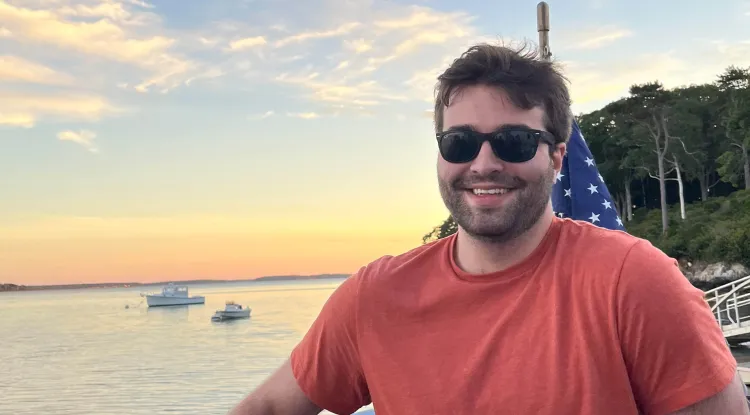
A 30-minute conversation with his pediatrician improved Cal Garland’s health and well-being and set him on a path to become a physician.
As a child in Lebanon, New Hampshire, Garland struggled in school and felt misunderstood by his teachers, especially the fifth-grade educator who told him he didn’t have what it takes to go to college. His pediatrician understood him, though, and after diagnosing his attention deficit disorder and prescribing treatment, Garland felt redeemed.
“Suddenly, the fog I had lived with for my whole life began to clear. So I went to college, feeling triumphant, and with an absolute fascination with the people who can change an entire life trajectory in the span of a 30-minute conversation,” Garland said. “I soon learned that the 30-minute conversation only holds such awesome power due to the thousands of hours of experience that precedes it.”
To learn more about the field of medicine, Garland volunteered for the Intensive Care Unit Bridge program in Montreal, Canada, which pairs university student volunteers with intensive care units to support patients, families, and hospital staff. He witnessed the many challenges physicians face, along with the profound impact one’s presence can have on a patient’s well-being.
“I know from experience how heartening it can be to have a doctor that feels like a partner working with you toward achieving your health care goals.” — Cal Garland ’30
“There was a young man, a few years my junior, who had experienced what was described to me as a ‘neurological event.’ No one could tell his family what had happened, but he was bedridden and unable to speak,” Garland recalled. His parents told the staff he liked soccer. So, I sat by his bed, and we talked about soccer. He passed away a few months after we met, but before that happened, I managed to elicit a few smiles, and the 30-minute conversation seemed more important than ever.”
As a medical student, Garland looks forward to working with patients and learning to connect symptoms or patterns to broader trends. “Larner has a lot of cool initiatives designed to fold things like global health and environmental science into the curriculum, which helps to produce more adaptable, thoughtful physicians,” he said. As a future doctor, “I’d like to be the kind of physician that patients trust to work with them for the long haul. I know from experience how heartening it can be to have a doctor that feels like a partner working with you toward achieving your health care goals.”
He also looks forward to strapping on ice skates. “I love hockey! I know this is a big ski town, but if you’d prefer to lace up your skates with me this winter, let me know!”
Part of Something Bigger Than Myself: Alexander Janouris
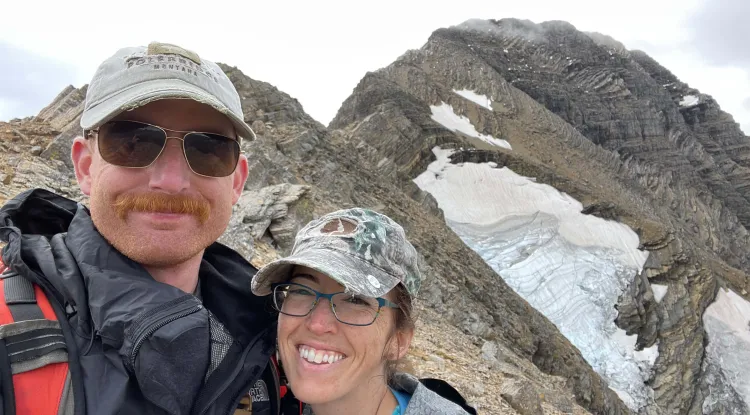
Alexander Janouris understands what it’s like to feel dependent upon the kindness of others. He also knows full well how to make tough decisions to get through hard times.
As a child, Janouris lived in Maryland with his parents in a trailer that struggled to retain heat. For about six months, “an extension cord routed through the window and connected to our neighbor’s power supply gave us warmth from a portable heater and filled me with gratitude for human kindness,” he said. “Where I come from, it is typical to put personal aspirations aside for the greater good of your family. Community college was a dream for most and something that I could not obtain, given my family’s socioeconomic class.”
Janouris joined the U.S. Marine Corps after high school. During his service, he discovered his talent for leadership and his ability to work hard. “Every day, I pushed my body and mind to their limits, committed to giving everything to my men, our unit, and our mission. I found genuine pride and confidence in my ability to create something from nothing,” he said. That experience solidified an enduring belief “that with a clear mind and persistent effort, nothing is impossible.”
After leaving the military, Janouris felt the pull to continue serving his community and became an EMT. “I recall the first 911 call that I responded to—the resuscitation of a middle-aged male in a quiet suburb. The coordinated control and quick decision-making of the paramedic saved a father, husband, and son that day. It was on this call, in the bedroom of that home, that I truly fell in love with medicine.”
“I was struck by the strong sense of community embodied by the UVM Emergency Medicine residency program … Knowing I was joining the Larner family was why I chose Larner College of Medicine.” — Alexander Janouris ’30
He became interested in the role of a hospital physician. “I viewed the physician as akin to a platoon commander in the Marine Corps—one who provides calculated and precise directions in situations that could overwhelm even the most experienced paramedic,” he said. “In my eyes, they were masters of controlled chaos, capable of calling upon extensive knowledge and skill when it mattered most.”
Janouris moved to Vermont in 2023 with his wife, Sarah Janouris, M.D., for her emergency department residency at the UVM Medical Center. This provided him with an opportunity to interact with Larner faculty members and understand the culture here. “I was struck by the strong sense of community embodied by the UVM Emergency Medicine residency program and saw that this culture was consistent throughout the student body. Knowing I was joining the Larner family was why I chose Larner College of Medicine.”
True Grit: Meghan Owens

From the moment she was born, Meghan Owens’s iron will has been her signature trait: her fortitude to survive as a one-pound, premature, twin infant; her drive to understand how physicians make decisions that keep critically ill babies alive; her fierce determination as a professional cyclist; her grit to advocate for women and gender-diverse cyclists; her resolve to become a doctor.
“From a young age, knowing the details of my birth story sparked a desire to learn more,” Owens said. “While most girls watched cartoons in sixth grade, I tuned in to the Discovery Channel—‘A Baby Story’—and was captivated by doctors who could problem-solve, support patients, and save lives. I found an insatiable desire to understand my dire beginnings—every moment that occurred and every decision that was made in my care.”
Owens grew up in Richmond, Vermont, where she enjoyed outdoor adventures in the rugged Green Mountains. “My hometown shaped who I am today and inspired my commitment to serving rural communities,” she said. She raced bikes at a professional level, and cycling remains a central part of her life. Her fraternal twin, Matthew Owens, is a Ph.D. candidate in cellular, molecular, and biomedical sciences at the Larner College of Medicine.
“I’m excited to see how we continue to learn from, uplift, and support each other as we navigate the challenges of medical school together.” — Meghan Owens ’30
She pursued a B.S. in molecular genetics and then worked at an obstetrics and gynecology clinic. “I embraced learning from my clinical mentors with dogged determination. Observing medical doctors and midwife nurses with patients helped me connect the dots between observations in the NICU and TV stories—teaching me that, at its core, medicine is patient support during vulnerable times,” she said. Witnessing tragic pregnancy outcomes in the clinic struck a personal chord. “I thought about how fragile life is and where I might be without my neonatal care.”
Reflecting on her first week as a medical student, Owens said, “I already feel such a strong sense of connection. We all bring incredible lived experiences and unique perspectives. I’m excited to see how we continue to learn from, uplift, and support each other as we navigate the challenges of medical school together.”
Wielding Tools of Emancipation: Tania Wilson
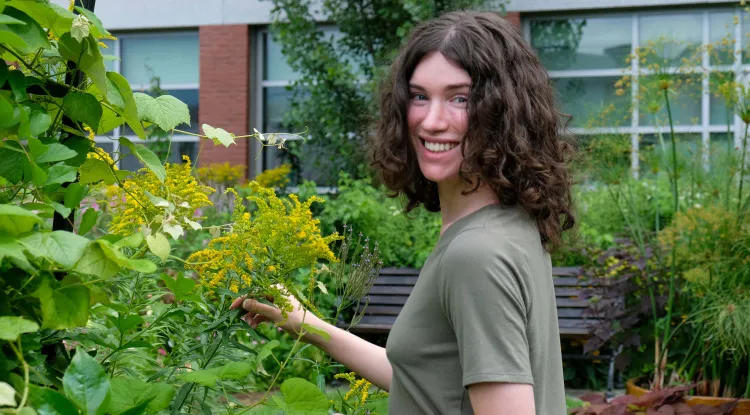
“The underrepresentation of trans people in medicine not only speaks to differences in privilege—it lays bare the broader alienation of an entire patient population,” Tania Wilson wrote in her medical school application. “Trans people are pathologized and reduced to a mere disorder that is to be monitored and treated as if it were a disease. But to us, our ‘disorder’ isn’t a disease, it’s our identity. Our lives depend on affirming care that sees our humanity.”
Wilson loved science from a young age. Growing up in Griffin, Georgia, she planned to become a chemist. She studied biochemistry in college, aiming for a career in research or industry. She worked as a laboratory technician and, while she enjoyed lab work, she craved the fulfillment of serving others. She was also motivated by the health inequities in her community, noting that “the vast majority of trans people I know in Atlanta use ‘do-it-yourself’ hormone therapy, and very few have access to surgery.” Wilson chose to pursue a career in medicine to use her “power and privilege as a physician to bring lived experience and genuine understanding to the rooms where care guidelines are written and laws are voted on.”
“I want my patient to know I’m not just there to treat them, I’m there to fight for them. I want them to feel understood.” — Tania Wilson ’30
To prepare for medical school, Wilson participated in clinical experiences and leadership activities, centered around the trans community wherever possible. Shadowing a physician who provided hormone replacement therapy with compassionate care felt like “witnessing liberation,” she said. “I knew I was called to medicine, and not just to learn the techniques of healing. I was called to wield the tools of emancipation.”
Wilson chose Larner for its mission and curriculum. “Larner College of Medicine centers cultural humility, restorative justice, and health equity to further its mission of cultivating professionalism in the field of medicine. These goals align closely with my personal values and will be integral to my practice as a physician,” she said. “I am excited to begin getting involved around campus and in the broader Burlington community.”
As a future doctor, “my greatest hope is to promote equity, inclusion, and justice in the medical system, particularly for trans and gender-diverse patients. As a doctor, I’ll meet patients who have faced similar neglect: people of color, people with chronic illness, invisible disabilities, or going through menopause. I want my patient to know I’m not just there to treat them, I’m there to fight for them. I want them to feel understood.”