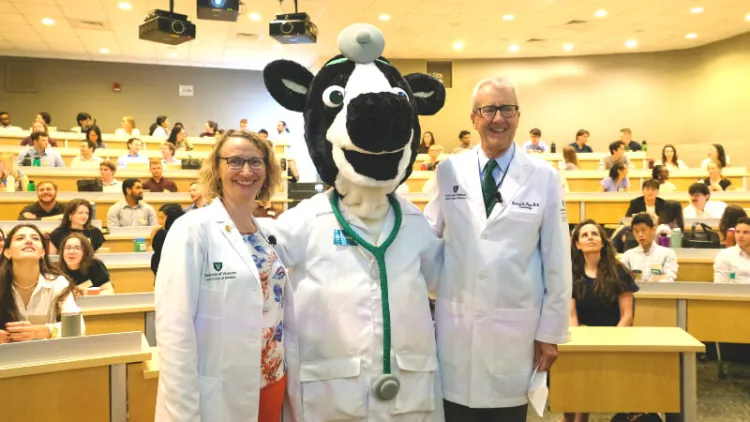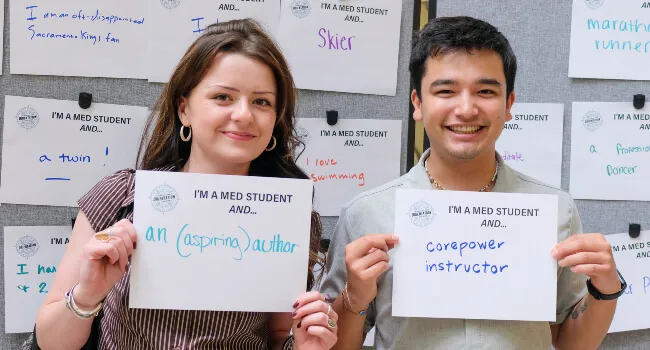
For 124 new medical students, Orientation Week marked the beginning of their journey at the Larner College of Medicine. From August 10-14, Larner welcomed its 203rd medical class with a week of activities designed to build community, introduce students to the college's learning environment, and familiarize them with the academic programs, resources, faculty, staff, and classmates who will shape their medical school experience.
Larner College of Medicine Dean and UVM Chief Academic Affairs Officer Richard L. Page, M.D., welcomed the Class of 2030 on their first day, affirming that they had earned their place at Larner and will be supported throughout their medical school journey.
“I want you to take something home from this greeting: You belong here,” said Dean Page. “We are thrilled to have identified you as the Class of 2030, and we are committed to your success. We are here to support you.”
Through words of encouragement and personal reflection, Dean Page acknowledged that the first weeks of medical school can be challenging. He reminded students that they had already overcome significant obstacles to reach this point and have what it takes to succeed.
Selected from a record-breaking pool of 11,609 applicants, members of Larner's Class of 2030 come from 28 states, ranging from Vermont to Alaska. They are fluent in 15 languages in addition to English, represent 43 majors from 73 colleges and universities, and bring more than 375,000 hours of clinical and medical experience. The class also reflects a wide range of professional backgrounds, including ICU nursing and other health-related fields.
"With 11,609 applicants, this is the most selective class we've ever assembled," said Leila Amiri, Ph.D., associate dean for admissions. "They were chosen not because they were the most polished on paper, but because we believe they embody Larner's mission and values and share our understanding of what medicine is meant to be."
An Introduction to Medical Education
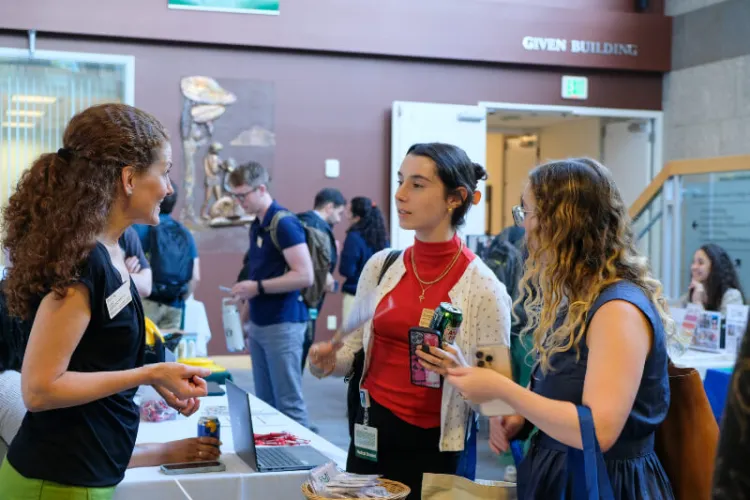
The week-long orientation featured hands-on activities and sessions designed to introduce students to key aspects of their medical education. Students toured the college’s facilities, met department chairs, faculty, and staff, connected with classmates, and gained an overview of the learning environment before classes began.
A highlight of the week was the “First Patient” presentation, a simulation led by Molly Rideout, M.D., vice chair for education in the Department of Pediatrics. During the session, Dr. Rideout interviewed a guest patient while faculty guided students through the clinical assessment and underlying biology needed to understand and treat the patient’s condition. The exercise also demonstrated how the college’s curricular competencies are integrated into medical training, providing an early glimpse into the approach these students will use throughout their education.
Fostering Community and Compassionate Care
The students participated in a series of community service activities, exploring the social and environmental factors that influence health and well-being while helping local organizations. Their efforts included pulling weeds at the Intervale Conservation Nursery, which grows native trees and shrubs for restoration projects across Vermont; removing invasive plant species at Burlington's Callahan Park; and helping the Green Mountain Habitat for Humanity ReStore in Williston prepare for its grand reopening on August 15 after damage from a fire forced its closure. These experiences offered an early opportunity for students to engage with the communities they will serve and better understand the broader contexts that shape health outcomes.
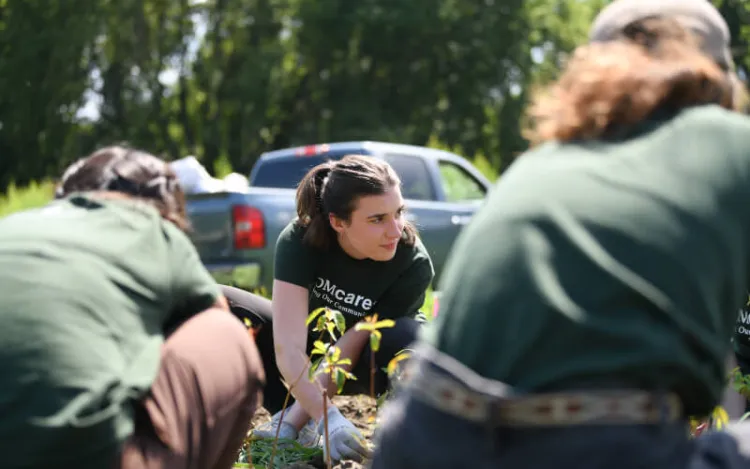
“Coming to Vermont completely alone was intimidating, but my classmates and the faculty have been so welcoming that I already feel like part of the community. Two days in, a few of my classmates and I volunteered to do something we’d never done before: tree discovery, or, as I like to call it, weeding. It began as a simple activity, but it ended up being a great way to get to know my classmates outside the classroom and made Vermont feel like home already,” said first year medical student Kianna Torres.
Addressing the Physician Shortage
These students begin their medical training at a time when the nation continues to face significant physician workforce shortages. A 2024 Association of American Medical Colleges (AAMC) report projects a shortage of up to 86,000 physicians by 2036, driven in part by an aging workforce: in 2021, 42% of active physicians were age 55 or older. At the same time, interest in medicine continues to grow. The AAMC reported that 54,699 individuals applied to M.D.-granting medical schools for the 2025-26 application cycle, a 5.3% increase over the previous year and the largest year-over-year rise in 10 years.
Training and retaining the next generation of physicians and scientists in Vermont is central to the Larner College of Medicine's mission. Nearly one-third of physicians practicing in Vermont either attended the Larner College of Medicine or completed residency or fellowship training at UVM Medical Center, and that figure rises to 38 percent for primary care physicians. Over the past five years, almost half of the residents and fellows completing their training at UVM Medical Center have remained in Vermont to practice medicine.
The need for that physician pipeline is especially critical in Vermont, where 64.9% of residents live in rural communities without easy access to medical care.
“Ensuring access to care across the state depends on a strong and sustainable health care workforce and the Larner College of Medicine remains steadfast in addressing this challenge," said Dean Page.
As the Class of 2030 begins its medical education, those 124 students represent not only the future of medicine, but also the next generation of physicians and scientists who will help meet Vermont's evolving health care needs.