Publication of The Red Wheelbarrow 2025

Produced by the Office of Medical Communications in collaboration with a Larner student editorial team, the 2025 edition of The Red Wheelbarrow, the student-run magazine for the literary and visual arts at the Robert Larner, M.D. College of Medicine at the University of Vermont, has just been published.
so much depends
upona red wheel
barrowglazed with rain
waterbeside the white
chickens— “The Red Wheelbarrow” by William Carlos Williams, M.D.
Named after physician-writer William Carlos Williams’s poem “The Red Wheelbarrow,” this publication aims to capture, cultivate, and explore the creative endeavors of the medical and scientific communities—past and present—here at UVM and its clinical education partners. This year’s edition features 33 written and visual works, with additional audio and visual artworks on the Red Wheelbarrow website.
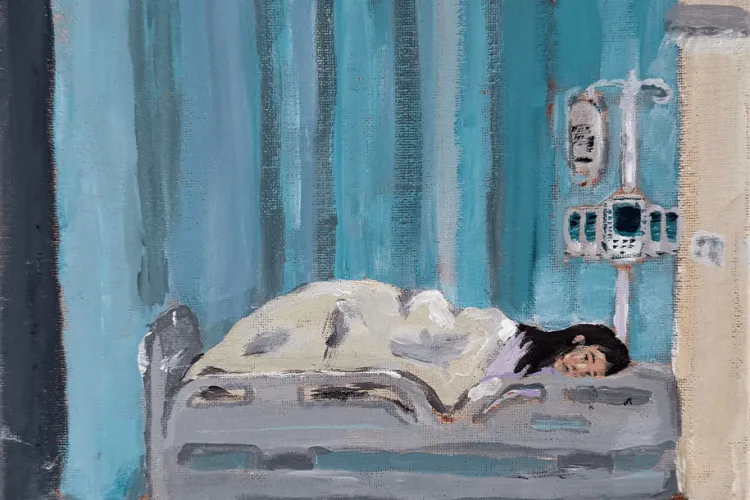
The Red Wheelbarrow encourages submissions related to the medical humanities—an interdisciplinary field that strives to contextualize and interpret topics including, but not limited to, the medical profession and education, and human health and disease; however, this publication remains inclusive of all ideas and artistic pursuits outside the scope of the medical humanities and showcases voices of all types, including first-year medical students, administrative employees, and alumni as far back as the Class of 1960.
The Red Wheelbarrow welcomes submissions from all members of the Larner College of Medicine, UVM graduate health sciences and biomedical programs, and our clinical affiliates.
View the 2025 edition of The Red Wheelbarrow (opens in Foleon) Back to Top
Matthew Caporizzo, Ph.D., Receives Geneen Charitable Trust Award for Coronary Heart Disease Research
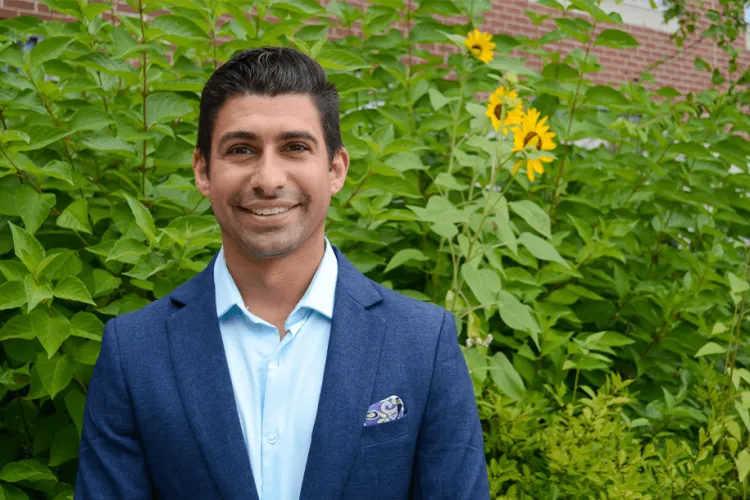
Matthew Caporizzo, Ph.D., assistant professor of molecular physiology and biophysics at the Larner College of Medicine, has been selected to receive the Geneen Charitable Trust Award for Coronary Heart Disease Research, which entails $250,000 over two years.
His proposal, “Defining the Extracellular Regulation of Diastolic Dysfunction,” examines how the extracellular matrix—the structural network that surrounds heart cells—communicates with cardiomyocytes, the muscle cells responsible for heart contraction. The study focuses on how this interaction contributes to diastolic heart disease, a condition in which the heart has difficulty relaxing and filling with blood. To investigate these mechanisms, the research uses engineered heart tissue, a laboratory-grown model that mimics key features of human heart muscle.
“Another advantage of the Engineered Heart Tissue platform is, we are working to adapt it for compatibility with patient tissue samples that would demonstrate that the matrix in human disease reinforces contractile dysfunction,” says Dr. Caporizzo. “This would allow us to identify new therapeutic targets in the matrix to improve diastolic performance without directly impacting cells.”
The Harold S. Geneen Charitable Trust Awards Program for Coronary Heart Disease Research supports research on preventing coronary heart disease and circulatory failure, and improving care for these patients. At this time, the program focuses on basic and translational scientific research; clinical studies are currently not eligible. The trust only allows a single application from one full-time faculty member at each of the 14 invited smaller or mid-size institutions, one of which is the University of Vermont.
Dr. Caporizzo’s proposal was chosen to represent UVM.
Larner Group Receives UVM AI Innovation Fund Grant to Investigate Use of AI in Scoring Clinical Skills Exams
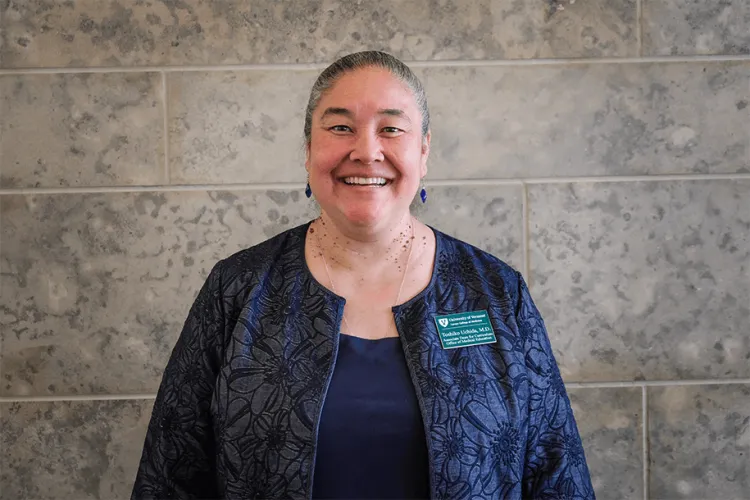
A group of faculty from the Larner College of Medicine headed by Toshiko Uchida, M.D., associate dean for curriculum, Dr. Yvette Pigeon Professor in Medical Education, and professor of medicine, has received a $10,000 award from the University of Vermont’s AI Innovation Fund to develop a process to use artificial intelligence (AI) to accurately, objectively, and securely score notes for Clinical Skills Exams.
In a CSE, medical students interact with trained Standardized Patients in a simulated environment designed to assess students’ history-taking, physical examination, and clinical reasoning skills. After the encounter, students write clinical notes that are currently scored manually by faculty—a process that is time intensive and sometimes delayed due to limited faculty availability. This project aims to leverage AI to automate scoring of CSE notes using refined rubrics and secure Microsoft Copilot (GPT‑5) technology. The initiative seeks to enhance feedback quality, reduce administrative burden, and improve equity in grading, as well as strengthen assessment rigor, provide timely feedback, and ensure sustainable implementation across the curriculum. Long-term plans include integrating AI scoring into routine workflows while maintaining FERPA and HIPAA compliance.
The Larner group includes Daniel Ackil, D.O., assistant dean of clinical simulation and assistant professor of emergency medicine; Elise Everett, M.D., M.S., assistant dean for clerkship curriculum and professor of obstetrics, gynecology, and reproductive sciences; Garth Garrison, M.D., assistant dean for advanced integration and associate professor of medicine; Laurie Gelles, Ph.D., director of technology integration and innovation; Kathryn Huggett, Ph.D., director of the Teaching Academy, Robert Larner, M.D.’42, Professor of Medical Education, and assistant dean for medical education; Martha Seagrave, PA-C, professor and director of medical student education for the Department of Family Medicine; and Toshiko Uchida, M.D., associate dean for curriculum, Dr. Yvette Pigeon Professor in Medical Education, and professor of medicine.
The AI Innovation Fund, launched in fall 2025 and sponsored by Enterprise Technology Services, is designed to support experimentation, foster critical and intersectional conversations, and spur innovation across disciplines by providing financial support for initiatives that grow technical and intellectual expertise around AI at UVM.
Christian Pulcini, M.D., M.P.H., M.Ed., Receives AcademyHealth 2026 Early Career Investigator Award

AcademyHealth’s Child Health Services Research Interest Group has selected Christian Pulcini, M.D., M.P.H., M.Ed., assistant professor of emergency medicine at the Larner College of Medicine, as the recipient of its 2026 Early Career Investigator Award.
This award recognizes the scientific work of emerging scholars in the field of child health services research, particularly research on quality improvement of pediatric health services. It will be presented to Dr. Pulcini at the AcademyHealth Annual Research Meeting in Seattle on May 30.
CMB Graduate Students Dominate Larner Three Minute Thesis Competition
Fifteen Ph.D. candidates who are in their dissertation phase participated in a preliminary round of the 2026 Three Minute Thesis Competition (3MT®) hosted by the UVM Larner College of Medicine and the College of Nursing and Health Sciences for medical and nursing/health sciences graduate students on Thursday, March 12. Presentations were evaluated on comprehension, content, engagement, and communication, with awards given for 1st, 2nd, and 3rd place, as well as a People’s Choice award. The UVM-wide competition will be held during UVM Research Week on April 15 at 4:00 p.m. at the Fleming Museum Room 101.
The Larner/CNHS winners are all graduate students in the cellular, molecular, and biomedical sciences program:
- 1st Prize - Matthew Owens, Bruce Lab, “Preventing Cellular Grand Theft Auto” (Advisor: Emily Bruce, Ph.D.)
- 2nd Prize - Madeline McTigue, Howe Lab, “A Game of Cellular Telephone” (Advisor: Alan Howe, Ph.D.)
- 3rd Prize - Maggie Trout, Cunniff/Stafford Lab, “Hot Glioma Cells in Your Area Looking for Mitochondria: How Brain Tumors Steal Mitochondria From Neighboring Cells” (Advisor: James Stafford, Ph.D.)
- People’s Choice Award: Alexa Price, Howe Lab, “Telling a Tal-in Mechanobiology” (Advisor: Alan Howe, Ph.D.)
Saúl Huerta de la Cruz, Ph.D., Named 2026 Postdoc of the Year Award Finalist
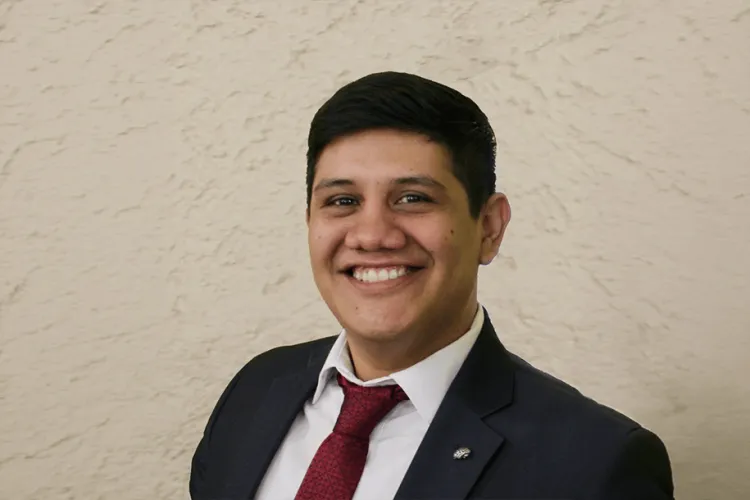
Saúl Huerta de la Cruz, Ph.D., a postdoctoral pharmacology fellow working in the Nelson Lab at the Larner College of Medicine, was named a finalist to receive the 2026 Postdoc of the Year Award from the National Postdoctoral Association (NPA). This award recognizes a postdoc who has advanced the postdoctoral community in an exceptional manner beyond their work duties and in alignment with the NPA mission and core values. The winner was announced during NPA’s annual conference March 13–14, 2026, in San Francisco.
Dr. Huerta de la Cruz’s research interests center around understanding the electrophysiological features and the functional interaction among the cells that make up the neurovascular unit. As a pharmacologist, he is also interested in identifying the molecular mechanisms driving neurovascular dysfunction in disease conditions.
While ultimately Huerta de la Cruz did not come out on top for the award, he certainly did “advance the postdoctoral community” by—collectively with fellow postdoctoral researchers Emmanuel Owoicho Abah, Ph.D., Anila Ajayan, Ph.D., Sima Bhowmik, Ph.D., Stacia McIntosh, Ph.D., Ariane de Almeida Rodrigues, Ph.D., and Piumi Amasha Withana, Ph.D.—reviving UVM’s Postdoctoral Association (PDA), which was initially organized at UVM in 2018. This renewed effort aims to strengthen the sense of community among postdocs, create opportunities for networking and professional development, and ensure that the voices of early-career researchers are heard. The revival of the PDA at UVM is about creating a space where postdocs can share experiences, advocate for their needs, and build lasting connections.
Jill Stockwell, Ph.D., assistant dean and manager of postdoctoral affairs for the Graduate College at UVM, lauded Huerta de la Cruz: “I have had the opportunity to work closely with Saúl and witness his exceptional leadership, integrity, and dedication to the postdoctoral and early career community. What truly distinguishes him is his ability to elevate others, creating inclusive spaces and professional development opportunities that have had a profound impact on the postdoc experience at UVM.”
The UVM Cancer Center 2025 Annual Report: Progress, Partnership, and Purpose

The newly published University of Vermont Cancer Center Annual Report celebrates a year of success—and steady progress toward National Cancer Institute re-designation—with stories that highlight scientific breakthroughs, expanded training opportunities, community-engaged research, and inspiring patients.
The report reflects a center that is evolving with purpose and growing in ways that strengthen the Cancer Center’s mission: to reduce the burden of cancer in Vermont, northeastern New York, and across northern New England through research, outstanding clinical care, community outreach, and education.
Read the UVM Cancer Center’s 2025 Annual ReportBack to Top
UVM Medical Center Stroke Center Earns Joint Commission Gold Seal of Approval
The University of Vermont Medical Center has earned the Joint Commission’s Gold Seal of Approval as a Comprehensive Stroke Center—the highest level of stroke care certification—which recognizes hospitals with the ability to treat the most complex stroke cases while providing high-quality, patient-centered care over a period of multiple years. The certification establishes the UVM Medical Center as the advanced, central hub for stroke care and treatment for a regional system of stroke care that has been developed over a period of many years.
“Certification as a Comprehensive Stroke Center showcases the work our teams have been committed to for more than a decade and confirms that we provide high-quality, advanced stroke care as one of the most advanced stroke centers in the country,” said Chris Commichau, M.D., director of cerebrovascular diseases and neurocritical care for UVM Health. “Our program provides all the intensive and interventional components of top-tier, comprehensive stroke care close to home.”
“Our program provides all the intensive and interventional components of top-tier, comprehensive stroke care close to home.” — Chris Commichau, M.D.
Comprehensive Stroke Center Certification is awarded to hospitals that demonstrate exceptional quality, utilize advanced technology, and employ multidisciplinary expertise in treating both common and complex strokes. The certification highlights the UVM Medical Center’s strength in performing minimally invasive, interventional procedures, a holistic approach to comprehensive neurocritical care, its ability to manage high-acuity patients around the clock, and work expanding access to advanced, high-quality stroke care through telehealth initiatives like the telestroke program, which makes specialists from the hospital’s stroke team available to both patients and providers via phone and video consults.
“The Comprehensive Stroke Center designation is well-deserved recognition of the magnificent transformation of the stoke center that has occurred under the leadership of Dr. Commichau,” said Peter Calabresi, M.D., professor and chair of the Department of Neurological Sciences at the Robert Larner, M.D. College of Medicine. “He and his team have built an outstanding stroke center that is a resource to our community, providing cutting-edge high-quality stroke treatment for everyone in our health system.”
The Joint Commission partnered with the American Heart Association/American Stroke Association to develop a suite of comprehensive, evidence-based stroke certifications. This partnership provides the highest national standards for safe, high-quality stroke care, designed to help hospitals improve their stroke care services and outcomes by providing a framework to ensure that patients receive the highest standard of care based on the latest evidence and best practices.