- Ph.D., Cell and Molecular Biology, University of Vermont, Burlington, VT
- B.S., Chemical Engineering, Northwestern University, Evanston, IL
- Fellowship, Biochemistry, University of Vermont
Department of Pathology and Laboratory Medicine
Areas of expertise
- Systems Biology Analysis of Coagulation and Fibrinolysis Dynamics
- Functional Characterization of Extracellular Vesicles
- Longitudinal Observational Studies of Different Human Conditions
BIO
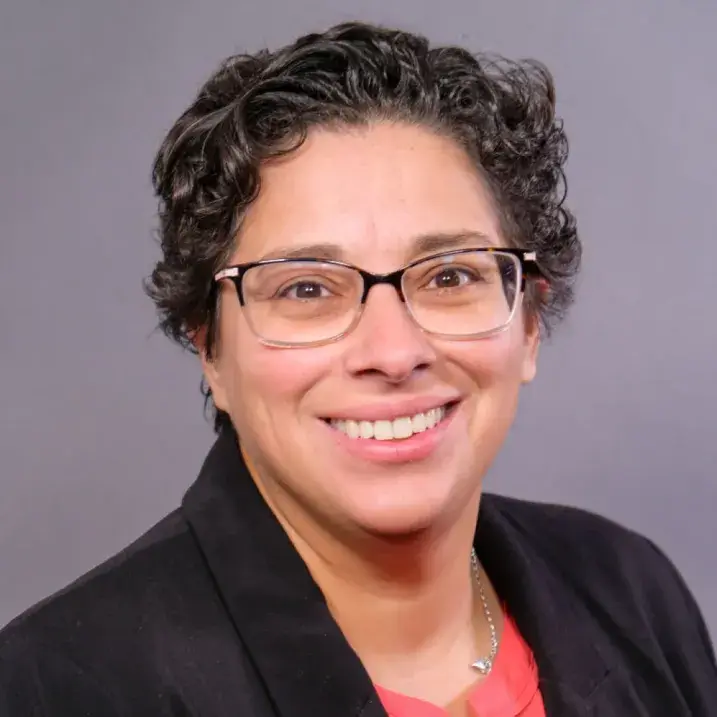
Maria-Cristina Bravo is an Assistant Professor of Pathology in the Division of Laboratory for Clinical Biochemistry Research. Thrombotic events account for a significant amount of hospitalizations and deaths in the United States. A majority of thrombotic events are considered provoked events and linked to known risk factors, hospitalizations or associated with certain diseases or genetics. Pregnancy is a transient period associated with an increased risk for thrombotic events. Thrombotic events complicate approximately 150 of every 100,000 deliveries and VTEs account for 9-10% of maternal deaths in the United States. Despite the recognition of known risk factors for thrombotic events, there are few biomarkers that can be used to identify the individuals at the greatest risk. I am interested in translational studies that examine bleeding and clotting dynamics in high-risk groups, especially as it pertains to women’s health, to help identify subclinical markers of thrombosis or hypercoagulability. Our long-term goal is to contribute to the identification of novel biomarker profiles that can be used to identify individuals at greatest risk for thrombotic events for targeted intervention to reduce the incidence of thrombosis and maternal deaths. Despite the recognized increased risk and hypercoagulable state of pregnancy, the vast majority of women do not develop a clinical TE and so identifying individuals at the greatest risk for TEs remains difficult. In our laboratory, we have taken a complex systems approach to identifying what biomarkers or ensembles of biomarkers may contribute to the risk of coagulopathic events, or counter that risk. We explore how interactions across different scales of biology (protein, cellular, and whole-body level) can contribute to or counteract the risk of thrombosis in women. We study coagulation and fibrinolysis dynamics both empirically on collected plasma as well as by employing mathematical models of based on coagulation and fibrinolysis proteome measures. Recently, our laboratory has become interested in exploring extracellular vesicles as a potential subclinical marker of elevated thrombotic risk. We believe that functionally characterizing extracellular vesicles’ coagulant and fibrinolytic potential may serve as an effective biomarker of thrombosis risk especially in the peripartum period and eventually be used in other at-risk groups.
Publications
Bio
Maria-Cristina Bravo is an Assistant Professor of Pathology in the Division of Laboratory for Clinical Biochemistry Research. Thrombotic events account for a significant amount of hospitalizations and deaths in the United States. A majority of thrombotic events are considered provoked events and linked to known risk factors, hospitalizations or associated with certain diseases or genetics. Pregnancy is a transient period associated with an increased risk for thrombotic events. Thrombotic events complicate approximately 150 of every 100,000 deliveries and VTEs account for 9-10% of maternal deaths in the United States. Despite the recognition of known risk factors for thrombotic events, there are few biomarkers that can be used to identify the individuals at the greatest risk. I am interested in translational studies that examine bleeding and clotting dynamics in high-risk groups, especially as it pertains to women’s health, to help identify subclinical markers of thrombosis or hypercoagulability. Our long-term goal is to contribute to the identification of novel biomarker profiles that can be used to identify individuals at greatest risk for thrombotic events for targeted intervention to reduce the incidence of thrombosis and maternal deaths. Despite the recognized increased risk and hypercoagulable state of pregnancy, the vast majority of women do not develop a clinical TE and so identifying individuals at the greatest risk for TEs remains difficult. In our laboratory, we have taken a complex systems approach to identifying what biomarkers or ensembles of biomarkers may contribute to the risk of coagulopathic events, or counter that risk. We explore how interactions across different scales of biology (protein, cellular, and whole-body level) can contribute to or counteract the risk of thrombosis in women. We study coagulation and fibrinolysis dynamics both empirically on collected plasma as well as by employing mathematical models of based on coagulation and fibrinolysis proteome measures. Recently, our laboratory has become interested in exploring extracellular vesicles as a potential subclinical marker of elevated thrombotic risk. We believe that functionally characterizing extracellular vesicles’ coagulant and fibrinolytic potential may serve as an effective biomarker of thrombosis risk especially in the peripartum period and eventually be used in other at-risk groups.