95 Carrigan Drive
Stafford 118
Burlington, VT 05405
United States
- Ph.D, SUNY Downstate, Brooklyn, NY
- M.S., Memorial University of Newfoundland, St. Johns, NL, Canada
- B.A., St. Francis Xavier University, Antigonish, NS, Canada
- Postdoctoral Fellow, University of Vermont
- Postdoctoral Fellow, Dartmouth Hitchcock Medical Center, Lebanon, NH
- Postdoctoral Fellow, SUNY Downstate, Brooklyn, NY
BIO
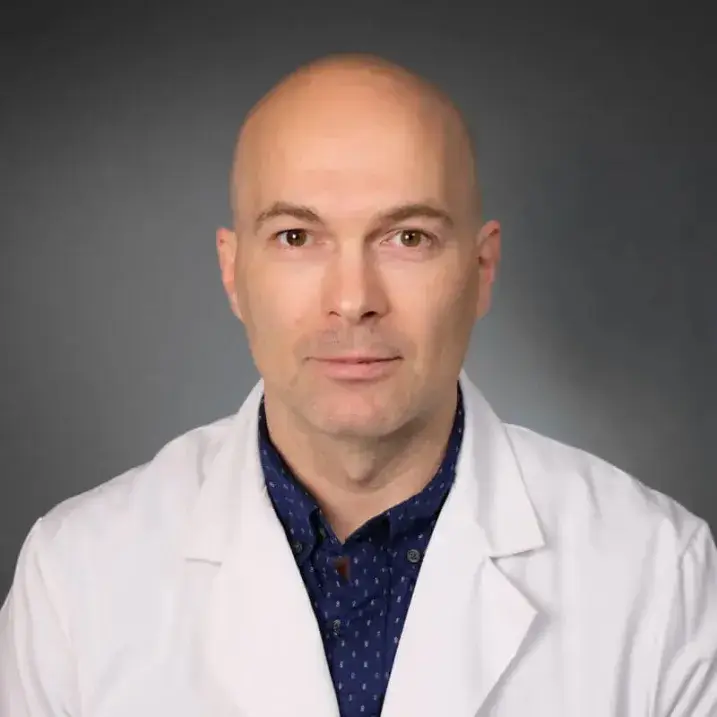
Jeremy Barry is an assistant professor in the department of Neurological Sciences. He has carved out a unique niche that bridges basic and translational science by employing a systems neuroscience approach to the origins of cognitive deficits that accompany pediatric seizures. The culmination of this work has been his formalization of the temporal coordination theory, which states that a network’s ability to dynamically organize cell activity relative to theta oscillations, both within and between relevant neural circuits, is necessary for normal cognition and is frequently disrupted as a long-term consequence of seizures experienced in early life. This theory is therefore of great relevance to basic scientists interested in the organization of spike timing in relation to cognition as well as translational scientists that are concerned with how neurological insults in early development affect cognitive outcomes. Apart from his success in both formulating and providing initial evidence for a new theory, he has become recognized for pushing the boundaries of technical limitations in neuroscience research. He was the first to formally characterize the electrophysiological properties of propagating action potentials along axons in freely moving animals, carried out pioneering work that suggests preempting transcriptional factor changes following pediatric seizures can improve cognitive outcomes, and has recently developed new tools for the simultaneous optical control and measurement of oscillations in the medial septum in order to effectively pace oscillations in both subfields of the dorsal hippocampus. His work with in vivo optogenetics is now serving as a foundation for multiple NIH grants that aim to further test the temporal coordination theory in spatial cognition and incorporate closed-loop optical interfaces with hippocampal circuit physiology in order to correct pathological spike timing changes caused by early-life seizures.
Publications
Awards and Achievements
2015 American Epilepsy Society Fellow
Bio
Jeremy Barry is an assistant professor in the department of Neurological Sciences. He has carved out a unique niche that bridges basic and translational science by employing a systems neuroscience approach to the origins of cognitive deficits that accompany pediatric seizures. The culmination of this work has been his formalization of the temporal coordination theory, which states that a network’s ability to dynamically organize cell activity relative to theta oscillations, both within and between relevant neural circuits, is necessary for normal cognition and is frequently disrupted as a long-term consequence of seizures experienced in early life. This theory is therefore of great relevance to basic scientists interested in the organization of spike timing in relation to cognition as well as translational scientists that are concerned with how neurological insults in early development affect cognitive outcomes. Apart from his success in both formulating and providing initial evidence for a new theory, he has become recognized for pushing the boundaries of technical limitations in neuroscience research. He was the first to formally characterize the electrophysiological properties of propagating action potentials along axons in freely moving animals, carried out pioneering work that suggests preempting transcriptional factor changes following pediatric seizures can improve cognitive outcomes, and has recently developed new tools for the simultaneous optical control and measurement of oscillations in the medial septum in order to effectively pace oscillations in both subfields of the dorsal hippocampus. His work with in vivo optogenetics is now serving as a foundation for multiple NIH grants that aim to further test the temporal coordination theory in spatial cognition and incorporate closed-loop optical interfaces with hippocampal circuit physiology in order to correct pathological spike timing changes caused by early-life seizures.
Publications
Awards and Achievements
2015 American Epilepsy Society Fellow