Epilepsy Cognition and Development Lab
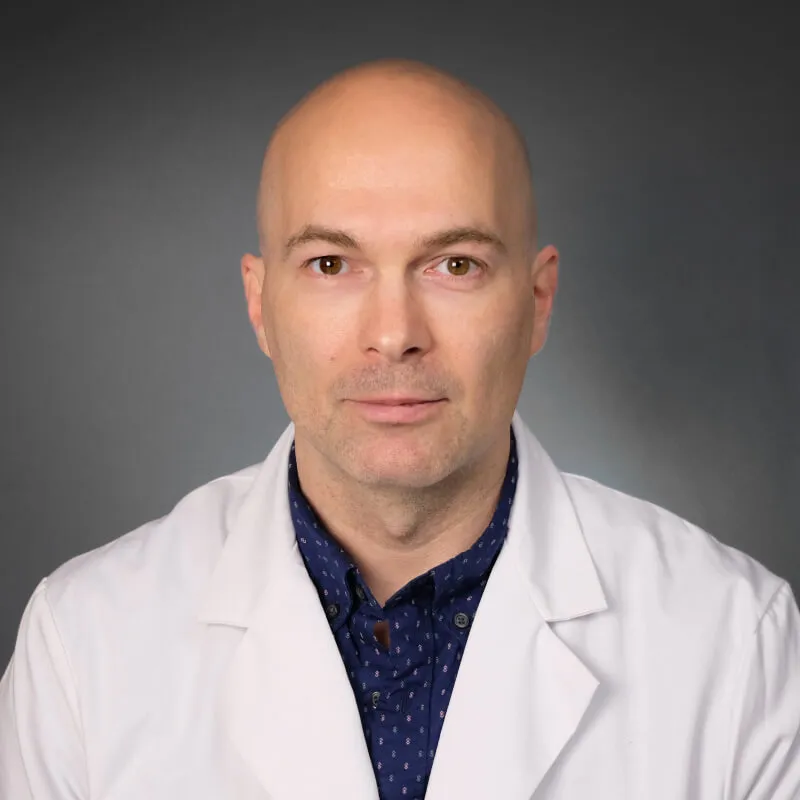
Jeremy Barry, Ph.D.
Associate Professor of Neurological Sciences
Research Focus
People in the Lab
Faculty
Jeremy Barry, Ph.D.
Associate Professor of Neurological Sciences
Dr. Barry received his B.A. in Psychology from St. Francis Xavier University, and his M.Sc. in Biopsychology from Memorial University. He earned his Ph.D. in Neural and Behavioral Science from SUNY Downstate in the laboratory of Robert Muller, studying sensory-driven and plasticity dynamics of hippocampal place cells. He stayed at SUNY Downstate for his first post doc at the Robert F. Furchgott center studying mechanisms of plasticity maintenance with Andre Fenton and Todd Sacktor. During a second post doc, he turned his attention toward cognitive comorbidities in pediatric seizure models with Gregory Holmes at Dartmouth Hitchcock Medical Center. He is now Associate Professor of Neurological Sciences at Larner College of Medicine at the University of Vermont. He is a recent winner of the Lucey prize for Innovative research for infant or child health and runs the Epilepsy Cognition and Development laboratory at the University of Vermont. His current work straddles basic and translational neuroscience in the study of circuit discoordination mechanisms in genetic and acquired developmental encephalopathy models. His favorite hobbies include complaining about the complexities of the dentate gyrus and taking sunset bike rides in the Vermont countryside.
Dr. Barry is part of the Eastern Association of Electroencephalographers. EAEEG website
Medical Students
Hassaan Malik
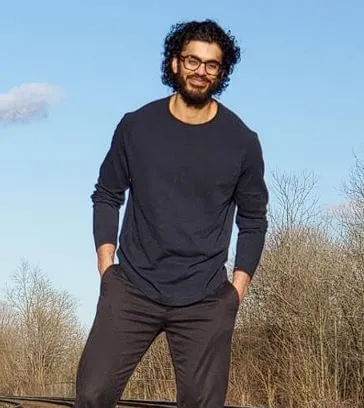
I’m a medical student at the UVM Larner College of Medicine, originally from Toronto. I recently completed my first year and joined the Barry Lab to explore my interests in neuroscience and developmental disorders. Having grown up alongside a sibling with epilepsy and developmental challenges, I’ve long been drawn to understanding the brain and how we can better support children facing similar conditions. My goal is to build a career as a physician-researcher focused on pediatric populations, and I’m excited to contribute to work that deepens our understanding of brain function.
Graduate Students
Rain Younger
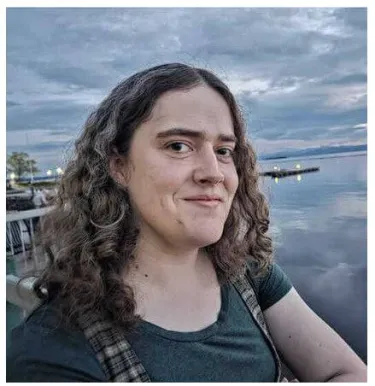
PhD Student, Neuroscience Graduate Program
I come all the way from small town Aurora, Oregon where I completed a cell and molecular biology BS in a small undergrad near my hometown. As a student, I interned in Dr. Jacob Raber’s behavioral neuroscience lab at Oregon Health Science University. While there, I helped validate a mouse model for FoxG1 syndrome and assisted in the behavioral scoring of mice exposed to radiation to simulate chronic space radiation.
After graduation, I worked as a senior research assistant in Dr. Jake Estes immunopathology lab at the Oregon National Primate Research Center. During my three years in Dr. Estes’ lab, I helped manage active projects with rhesus macaques (RM), collect RM tissue during biopsies and necropsies, perform both chromagen and fluorescent IHC and ISH staining, and utilize an image analysis program. My primary projects explored the microenvironments surrounding simian immunodeficiency virus (SIV) reservoirs. One major project involved determining whether an asset designed to disrupt the follicular dendritic cell network of B-cell follicles, a known SIV reservoir, would impact viral rebound after stopping antiretroviral therapy in an RM model.
Since joining the Barry lab as a PhD student, I have primarily focused on the lab’s PTEN project, which aims to determine how the altered dendritic morphology of dentate gyrus granule cells impacts circuit activity and spatial and object based learning. I have performed headplating surgeries, high-density probe electrophysiology recordings, and spatial accuracy behavioral tasks in mice. Working with other members of the lab, we have been utilizing multiple coding languages (R, Python, and MATLAB) to assist in analyzing the incredible amount of data we receive from our high-density probe recordings.
Outside the lab, I enjoy reading (mostly fiction), playing all sorts of games, go bouldering, and engage in activism with a focus on LGBTQ+ rights. I also make sure to spend as much time with my two cats, Nyx and Gingersnap, as I can. Thankfully Vermont has felt like a home away from home, featuring many of the aspects I love about Oregon, and I look forward to spending my remaining time here while in the neuroscience graduate program.
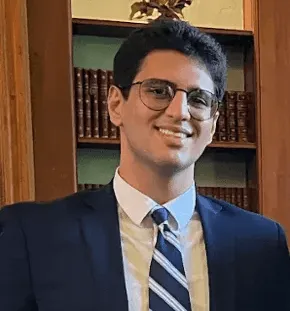
Shahriar Tafti
PhD Student, Neuroscience Graduate Program
With a background in Computer Science, I bridge the gap between code and cortex. As a PhD student in the ECD Lab, I use computational approaches to investigate hippocampal circuits, specifically focusing on the neural dynamics of epilepsy. My goal is to decode the complex signaling patterns that underlie seizure activity and cognitive dysfunction.
Personal interests: Volleyball, yoga, learning new languages, and exploring the nature of consciousness.
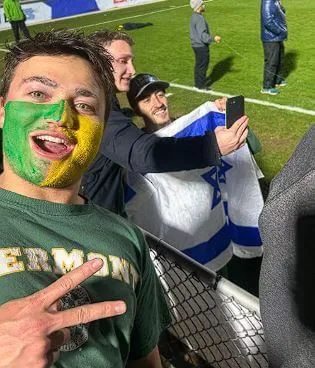
Thomas Bausman
Masters Student, Biomedical Engineering
I grew up across Fairfield County, CT, and I’m a recent UVM graduate from the Biomedical Engineering Program with a Minor in Emergency Medicine and Chemistry. I am currently pursuing my Master’s in Biomedical Engineering while working in Dr. Barry’s lab. When I’m not in the labspace, I’m an outdoors person through and through. I grew up playing Soccer, Hockey, and Track while also working as a Sailing instructor. Throughout my undergraduate time, I stayed active by snowboarding/skiing during the long winters, participating in a wide range of intramural sports throughout the year (2-time hockey champ, no biggie), and hiking. I also made a brief appearance on the UVM Club Sailing team. In the classroom, I discovered a passion for designing and developing medical devices, paired with a growing interest in utilizing Python and Arduino to collect and interpret data. I’m excited to see what challenges the world or science brings this next year!
Undergraduate Students
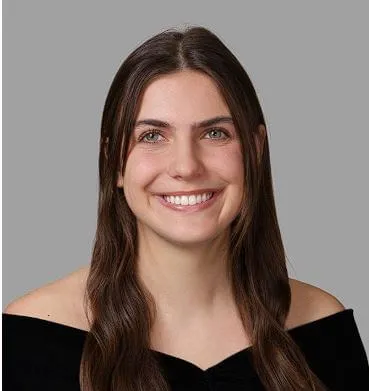
Isabella Piatek
Undergraduate Student
I'm a junior neuroscience student at UVM. I joined the Barry Lab in January 2025 and assist with rodent behavioral studies related to early-life seizures and cognition. Previously, I worked on the FitKids program, promoting physical activity in young children. I'm broadly interested in neurodevelopment and brain plasticity.

Angelina Woychosky
Undergraduate Student
I am a third-year undergraduate at UVM, pursuing a B.S. in Neuroscience with a minor in Health & Society. I believe memory–which lives not just in the brain but also the land, language, culture–is the essence of our human existence, and so I am grateful and excited to study some of the basic and translational neuroscience of learning, memory, and epilepsy in the Barry Lab. After completing my degree, I am considering grad school or going into medicine and/or public health, but whatever I do, I will center community and promote justice within my work, which includes protecting history and preserving social memory. My additional interests and joys include dancing, running, and lots of language and visual art.
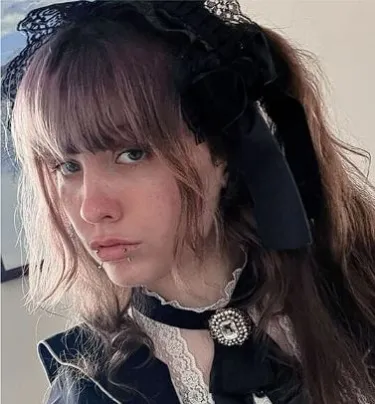
Sylvia Clouse
Undergraduate Student
I’m from New Haven CT and a third year neuroscience major with a minor in philosophy. I would like to go into research and get a PhD after I graduate! I am interested in all levels of neuroscience, but have lately been intrigued by neurochemistry, circuits and systems. Aside from Dr. Barry’s lab, I also do research in Dr. Dettmer’s lab at the Yale Child Study Center where we look at cortisol and other hormones in nail and hair samples from a variety of research participants. In the future I would like to explore broader topics that are still more prevalent in philosophy, like consciousness. Outside of academia I enjoy many forms of art like making jewelry and nails, painting, drawing, sewing, crochet, digital art and fashion. I also enjoy baking, reading, music and anime!
Hunter Holoubek
Undergraduate Student
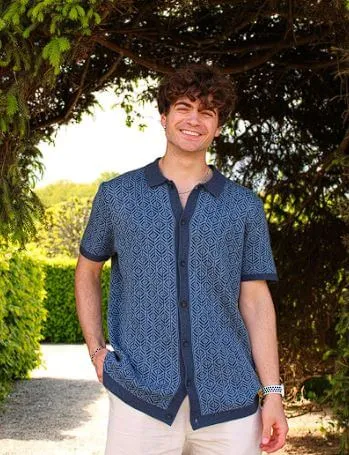
I am a fourth-year undergraduate student studying Psychology and Neuroscience here at the University of Vermont. I am currently pursuing a BS with the intention of obtaining a PhD and going into the field of Neuropsychology. I love learning about how the brain works and using that knowledge to help inform/treat people with neurological/psychological conditions or illnesses. In addition to the work I do in Dr. Barry’s neuroscience lab, I work with Dr. Thrailkill in his psychology lab doing work with attention and habituation. I believe psychology is best appreciated with the context of neuroscience (and vice versa), and I love combining these interests wherever possible! In my free time I love playing volleyball and practicing guitar. You can also find me on various hikes and ski mountains around Vermont throughout the year or in the gym whenever I can!
Eli Rachimi
Undergraduate
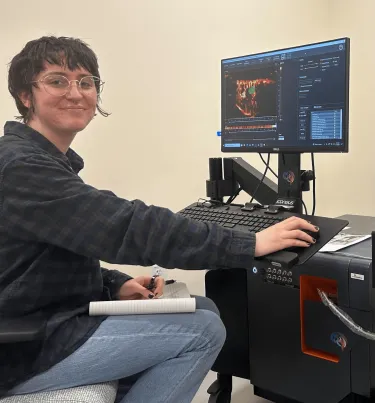
I am a senior studying biochemistry and neuroscience and I am passionate about understanding the role of vascular pathology in epilepsy and other neurological disorders. Since joining the lab in 2023 I have largely focused on the Kcnt1 project, performing the active avoidance behavioral task, functional ultrasound imaging, and mouse breeding and colony management. In the summer of 2024, I received a SURF grant where I assisted in designing a protocol for functional ultrasound imaging in awake, head-fixed mice. After graduation, I plan to attend medical school and ultimately specialize in cardiology. Outside the lab, I enjoy concerts, crochet, and advocating for disability rights!
Collaborators
- Kalev Freeman, Larner College of Medicine at the University of Vermont
- Travis Todd, University of Vermont
- Jordan Farrell, Harvard Medical School
- Bryan Luikart, Heersink School of Medicine at the University of Alabama
- Matthew Weston, Virginia Tech