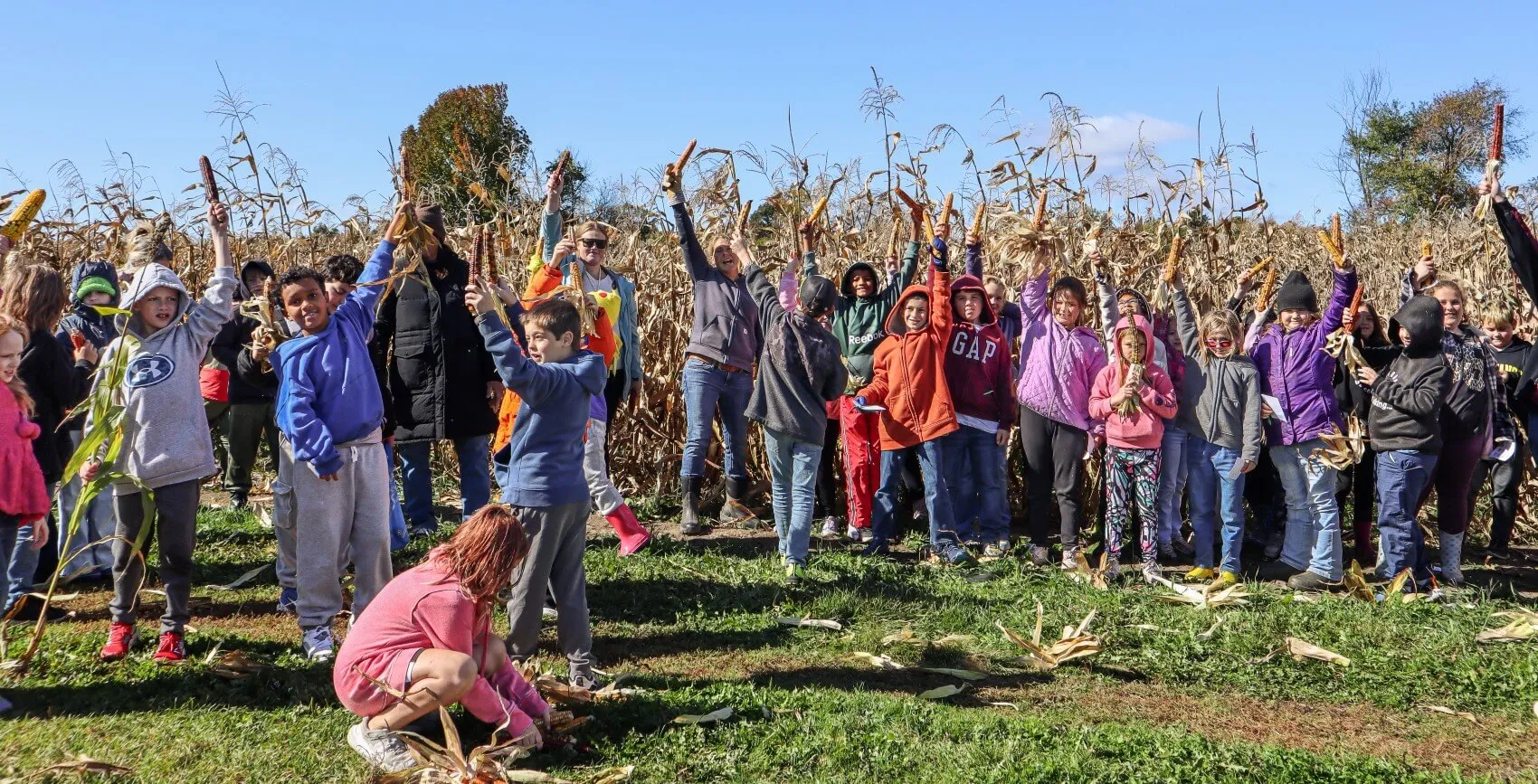
For the second year in a row, UVM Extension’s Northwest Crops & Soils Program (NWCS) welcomed third and fourth graders from Alburgh Elementary School to Borderview Research Farm to learn about different crops, how they are grown, and how they are processed into foods and products we use daily. The field trip was an opportunity for students to engage in local agriculture and learn how UVM Extension’s on-farm research helps farmers.
On the crisp morning of October 6, 38 students stepped off the bus after a short ride from their school down the road. Teachers and chaperones corralled the students into a large circle around Dr. Heather Darby, UVM Extension professor, agronomist, soil scientist, and leader of the NWCS team.

Credit: NWCS
“Welcome, everyone! Quick show of hands. Who was here last year?” Dr. Darby asked. About half the students raised their hands, signaling that this wasn’t their first visit to the farm. The fourth graders who had attended the 2025 field trip eagerly shared memories of their favorite activities. Many recalled making and eating crepes with locally grown grains and strawberries, while others remembered harvesting crops like flint corn and dry beans and discovering the differently colored varieties.

Credit: NWCS
Before heading out into the field to explore research plots and learn about crops, the students got to see a demonstration of cutting-edge technology and something every kid can appreciate, a very large remote-control robot.
This robot was one of six BOTONY™ robots from Greenfield Robotics purchased by the NWCS program to pilot test on farms in northern Vermont this summer. The robots aim to help combat weeds and reduce chemical inputs and herbicides in fields. NWCS Precision Agriculture Specialist Daniel Bliss explained the basic anatomy of the robot, gesturing to various pieces and parts. The students were mildly interested in the robot’s purpose and very interested in its maximum driving speed. They squealed with delight as Bliss made the robot motor around and do fancy spins.
Next up was the farm tour on a hay wagon. Students and chaperones climbed aboard and settled in for the guided tour of Borderview’s research plots, including dent corn, flint corn, soybeans, and sorghum. Throughout the tour, students played “Farm Bingo,” crossing off topics as they learned about them.

Credit: NWCS

Credit: NWCS
In the afternoon, students rotated through four hands-on learning stations, each highlighting a different aspect of the NWCS team’s work.
The students got crafty and decorated small pots before filling them with soil and planting seeds. As they worked, NWCS Research Specialist Lindsey Ruhl taught them about soil health and the dangers of compaction by demonstrating how packing soil tightly left little room for roots, air, and water.
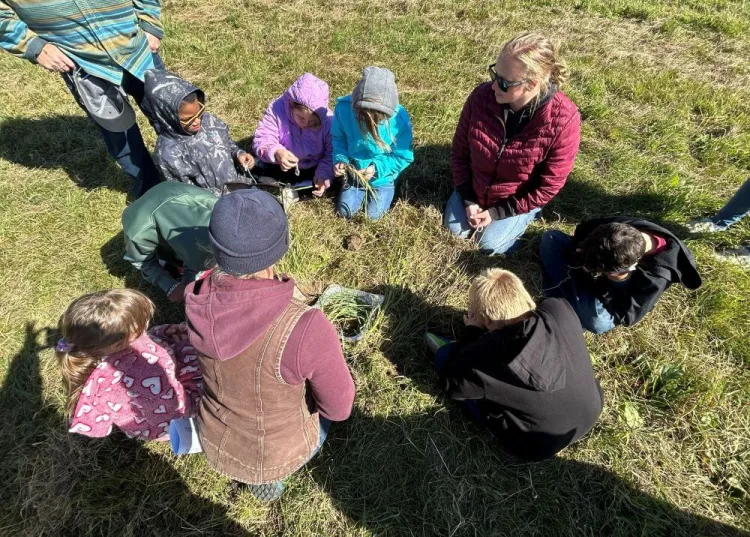
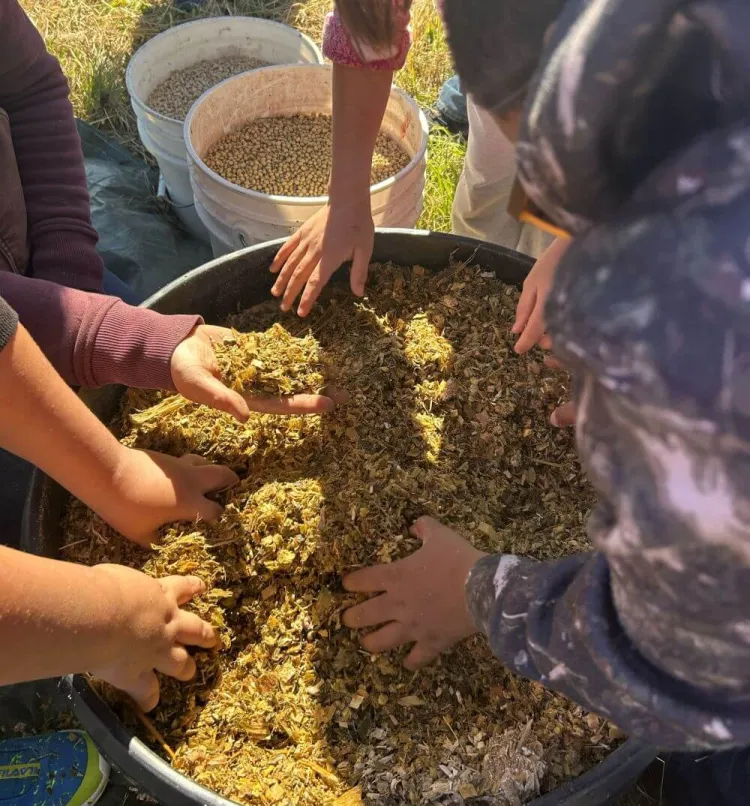
NWCS Dairy Research Specialist Amber Blodgett’s session helped students identify the plants in a dairy cow’s diet. Then, students worked together to weigh the amount of corn silage and hay silage that a dairy cow should eat in a day. This was quite the sensory experience! Students were encouraged to smell and feel the cow feed made of fermented corn.
Credit: NWCS
Credit: NWCS
Students explored all things grains with NWCS Research Specialists Kellie Damann and John Bruce. They sampled crackers made from different grains, discovering how each grain can bring its own unique flavor and taste. The NWCS team is also trialing popcorn at Borderview Research Farm, and gave students the special opportunity to enjoy popcorn popped straight on the cob!
Finally, the third and fourth graders competed in the Junior Farmer Olympics, putting their skills to the test in tug-of-war, dry bean counting and sorting, and corn toss. They even raced the weeding robot to the finish line! The competition was clearly a fan favorite, and students’ cheers, laughter, and excitement echoed across the farm as they cheered on their teammates.
We offer big thanks to the folks at Alburgh Elementary School, Grand Isle County Natural Resources Conservation District, and the Healthy Roots Collaborative for making the field day possible. We hope that by getting outside, connecting with nature, and learning about the local food system, students gain a deeper appreciation for agriculture and science, inspiring curiosity that lasts long after their farm visit.
The NWCS team loves introducing young students to the science behind agriculture. Who knows? The field day may have inspired some of them to become the next generation of farmers and agricultural researchers.