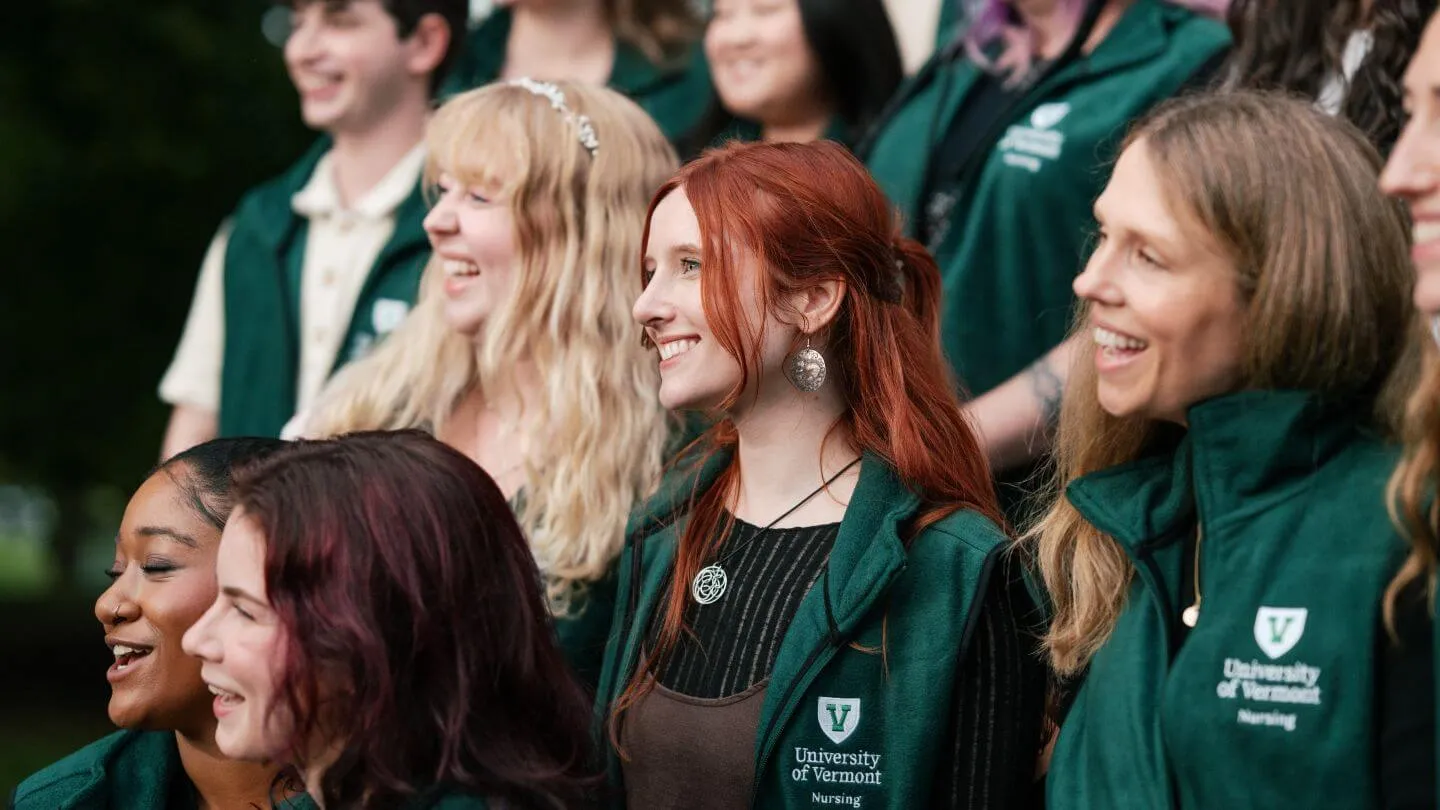
At the 13th annual Nursing Department Investiture Ceremony on October 2, undergraduate and graduate-entry nursing students gathered in Ira Allen Chapel to celebrate their transition from classroom and simulation-based learning to clinical education and hands-on care in healthcare settings across Vermont.
Welcoming the 155 members of the undergraduate Class of 2029 and 33 students in the Direct Entry and Master's Entry graduate programs, Department Chair and Associate Dean for Clinical Practice Rosemary Dale encouraged students to think broadly about where a nursing education might lead.
"As you envision what you'll be doing at the end of your nursing program and after receiving your license, I'm sure many of you see yourselves working in a hospital or other acute care setting," Dale said.
"Direct clinical care is a remarkable career," she continued. "But I'd like to expand your perspective today to the many paths a nursing education can open."
She pointed to nursing alumni and leaders Allison Brown, Bonnie Parenteau, and guest speaker Patricia Pomerleau as examples of the many ways nurses can apply their expertise beyond traditional bedside roles.
That message was reinforced by keynote speaker Patricia Pomerleau, whose career has spanned nursing, healthcare administration, entrepreneurship, philanthropy, and corporate leadership. Drawing on experiences that included improving communication between nurses and emergency responders, guiding hospitals through accreditation challenges, serving on the board of a Fortune 500 company, and launching a technology company, Pomerleau encouraged students to remain curious and open to unexpected possibilities.
"The critical thinking and decision-making skills that you develop as nurses are not confined to the bedside," Pomerleau said. "They are transferable skills that can take you places you may not even know exist yet."
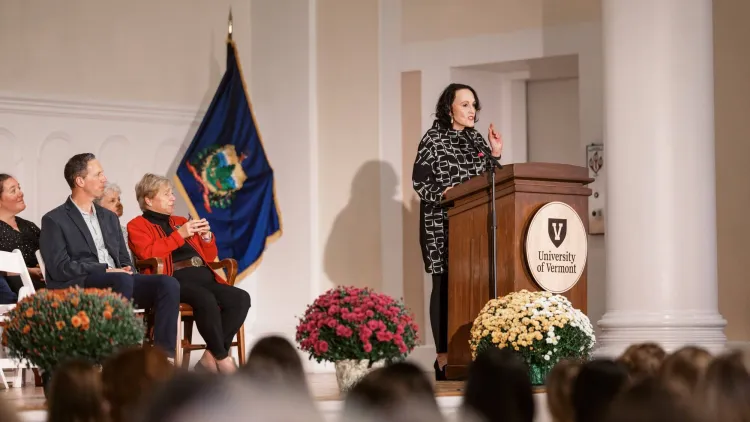
Pomerleau described artificial intelligence as this generation's technological revolution, with the potential to improve patient care while reducing nurses' administrative workload. While acknowledging both the opportunities and risks associated with emerging technologies, she urged students to help shape how they are applied in healthcare.
“Nursing is the most human profession in the most technological moment in history.” – Patricia Pomerleau
"The responsibility that comes with the decisions we make about technology will affect the future of healthcare and all of the patients we serve," Pomerleau said. "Embrace technology, challenge assumptions, and don't limit yourself. But remember that, at the end of the day, it's your humanity that will make the greatest difference in the lives of the people you care for."
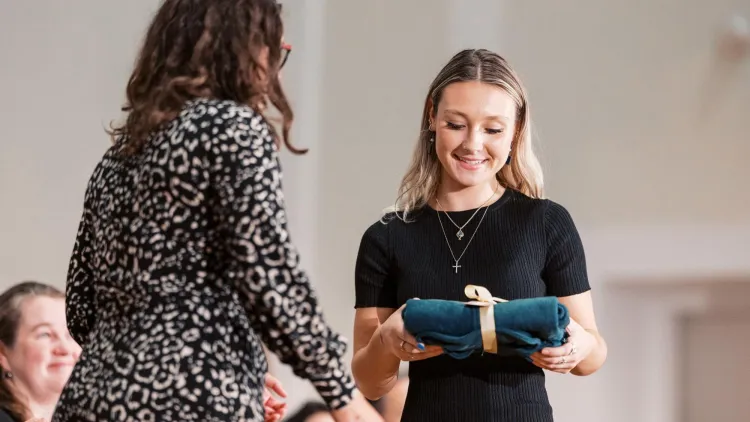
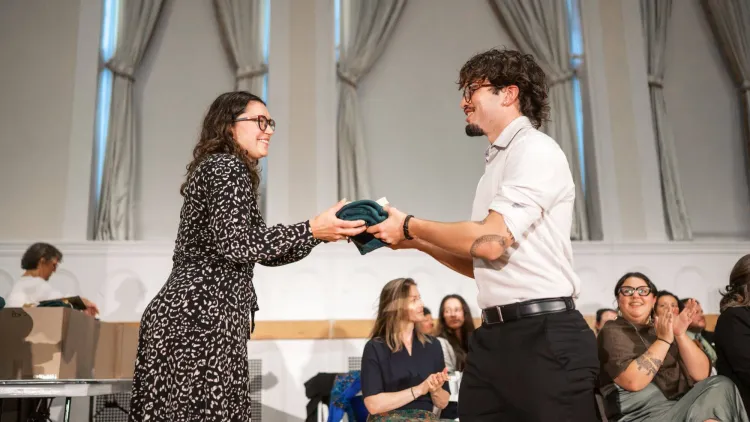
As part of the ceremony, each student received a green vest symbolizing both entry into clinical education and membership in the UVM nursing community. The vest serves as a lasting reminder of the responsibilities and trust inherent in the profession. Reflecting changes in contemporary healthcare practice, the Department of Nursing has replaced the traditional white coat once presented at the ceremony with a more practical alternative.
The ceremony also recognized UVM Nursing alumna Bonnie Parenteau '70, who received the Department of Nursing Alumni Award. Her career investigating medical insurance fraud provided another example of the diverse professional opportunities available to nurses.
This year's investiture marked a milestone for the department as the largest in the program's history. The incoming undergraduate Class of 2030 is even larger, with 173 students enrolled.
In 2025, undergraduate nursing students achieved a 98.7% first-time NCLEX-RN pass rate, while direct-entry graduate students achieved a 100% pass rate, significantly exceeding the national average of 87.6%.