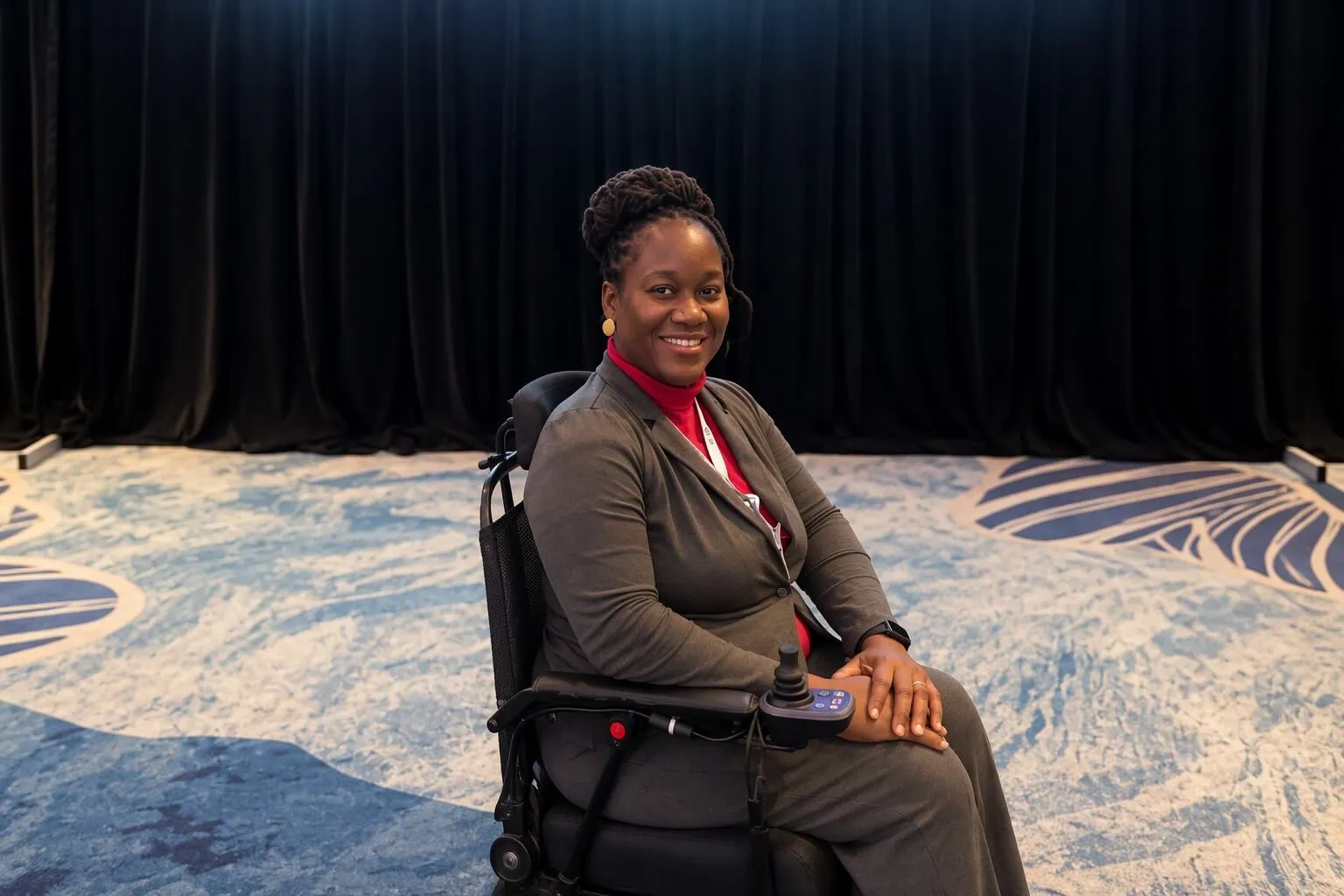
Sefakor G.M.A. Komabu-Pomeyie, director of intercultural excellence in the College of Nursing and Health Sciences and lecturer in Public Health Sciences, recently attended the 2026 Association of American Colleges and Universities (AAC&U) Conference on Global Learning, where educators, administrators, and institutional leaders explored strategies for advancing global learning in higher education.
Komabu-Pomeyie participated in sessions focused on integrating global learning into institutional missions, academic programs, research initiatives, and student experiences. One session, Connecting Global Learning Goals to Institutional Strategic Plans and Major Initiatives, examined how universities can align global engagement efforts with broader institutional priorities.
According to Komabu-Pomeyie, a key theme of the conference was the growing importance of preparing students to succeed in an increasingly interconnected world. Presenters discussed how global learning can help students develop intercultural competence, critical-thinking skills, and the ability to collaborate across cultures and disciplines. Discussions also highlighted global challenges, including public health, climate change, disability inclusion, and health equity.
Many of the conference themes aligned with ongoing conversations about internationalization and intercultural engagement at UVM, Komabu-Pomeyie said, as well as the university's Our Common Ground values and Green, Gold, and Bold strategic plan.
“The conference reinforced that global learning is no longer an optional addition to higher education,” said Komabu-Pomeyie. “When global engagement becomes a shared responsibility across disciplines and departments, we create richer learning experiences for students and strengthen our ability to make a meaningful impact locally and globally.”
Komabu-Pomeyie said she plans to apply lessons from the conference to expand global and intercultural learning opportunities within the College of Nursing and Health Sciences. Areas of interest include Collaborative Online International Learning (COIL) partnerships, intercultural mentorship opportunities, international classroom collaborations, and research partnerships focused on public health, disability inclusion, and health equity.
“No single institution or country possesses all the knowledge and solutions needed to address today's complex challenges,” said Komabu-Pomeyie. “Through global partnerships and collaborative learning opportunities, we can exchange knowledge, strengthen academic networks, and create more meaningful experiences for our students while advancing health equity and public health.”
The conference also underscored the value of collaboration across academic units and reinforced the idea that global engagement is most effective when shared across colleges, departments, and disciplines. For Komabu-Pomeyie, the conference theme echoed an African proverb highlighted during the event: “If you want to go far, go together.” The message reinforced the importance of partnerships, collaboration, and shared responsibility in advancing global learning and institutional impact.