Building on partnerships with the University of Cape Coast (Ghana), University of the Western Cape (South Africa), and the African Leadership University (Rwanda and Mauritius), the program offers both virtual and in-person experiences. Students can earn academic credit through HSCI 1993: Public Health, Disability, and Intercultural Connections, which combines structured coursework with hands-on fieldwork.
With opportunities to work within the hospital system, schools, or community in Ghana, this program provides a unique opportunity for students to engage virtually with African students with disabilities, build global networks, share experiences, and gain cross-cultural perspectives that will enrich their academic and professional journeys.
Students may earn between 1 and 6 credits based on the number of on-site hours completed, with 1 credit requiring 45–60 hours, 2 credits requiring 60–90 hours, 3 credits requiring 90–135 hours, 4 credits requiring 135–180 hours, 5 credits requiring 180–225 hours, and 6 credits requiring 225–270 hours. In addition to fieldwork, students must complete pre-service training modules, submit biweekly reflections, obtain a site supervisor evaluation and hours log, and produce a final project aligned with course objectives.
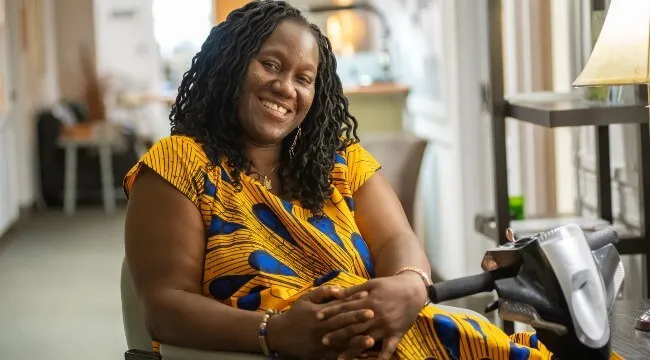
The program’s first participant, Laura Terry, a trainee in UVM’s Vermont Leadership Education in Neurodevelopmental Disabilities (VT LEND) program, developed a public health policy information sheet addressing healthcare needs for individuals with intellectual and developmental disabilities. She plans to present her findings to Vermont legislators and at the 2026 Conference of The Association for Persons with Severe Handicaps (TASH).

“Working with professionals and students in Africa has been eye-opening,” Terry said. “I’m learning how different cultures approach disability and finding ways to collaborate globally to break down stigma and promote inclusion.”
Dr. Komabu-Pomeyie envisions these independent studies as transformative experiences that prepare CNHS students to become global citizens while strengthening their ability to serve communities in Vermont and beyond.
Interested students can design their own intercultural independent study and connect with Dr. Komabu-Pomeyie for guidance. Email: sefakor.komabu-pomeyie@med.uvm.edu