The performing arts always intrigued Eilish Anderson, Athletic Training ’14. As a child growing up in South Burlington, Vermont, she danced tap, jazz and ballet and took to the stage in school and community theatrical productions. She spent 10 summers clowning, walking tightropes and swinging from a dance trapeze with the youth troupe Circus Smirkus.
Anderson loved sports, too: She played youth soccer, ran track and attended college basketball tournaments with her family. The drama on the court intrigued her, especially when she saw an athletic trainer rushing out to help an injured player. She dreamed of a career involving athletics, physical performance health care.
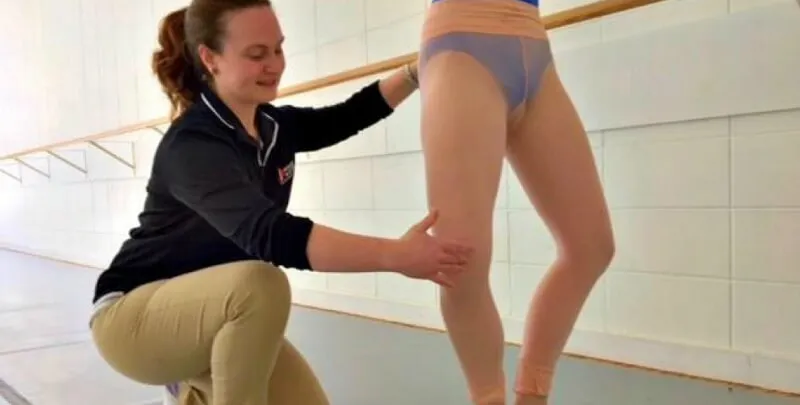
Today, as an athletic trainer (AT) for a professional dance troupe, Anderson gets to do it all: She works for the Indianapolis Ballet, evaluating and treating dancers’ injuries and providing prevention strategies so they can rehearse and perform at their best. She maintains a clinic schedule at a physical therapy clinic and, as a local “expert” in athletic training for dancers, Anderson provides injury assessments to several local dance studios in the Indianapolis region.
“I feel I am able to understand what a dancer is going through during their daily lives and the interesting injuries in the performing arts world,” Anderson said.
Versatile Profession
Athletic trainers are health care professionals who collaborate with physicians, emergency medical teams, orthopedic surgeons, dieticians, mental health counselors and other health care providers to provide injury prevention, emergency care, clinical diagnosis, therapeutic intervention and rehabilitation of injuries to help patients return to play or work. UVM’s Athletic Training program, now transitioning from an undergraduate to a master’s degree, integrates evidence-based, interprofessional practice with hands-on health care skills.
“Athletic trainers are prepared multiple injuries and illnesses… not just physical but mental and emotional components as well,” said Professor Kelly Tourville, UVM Athletic Training Program Director. “We must understand overuse and repetitive issues to address underlying biomechanical imbalances and acute care management of musculoskeletal injuries and concussions. A big piece of what AT's do is educate individuals who are physically active about how to reach their full potential.”
Although she knew she wanted to pursue athletic training at UVM, Anderson did not anticipate where her career could take her. Participating on the UVM Dance Team gave her insight and understanding. The College of Nursing and Health Sciences faculty guided her choices.
“Dancers are athletes, but I was unaware that athletic trainers work in performing arts. When one of my UVM mentors mentioned to me that there are athletic trainers that work with the Rockettes, I immediately became intrigued,” she said. “What's great about athletic training is that you can see the profession in many different settings. In addition to performing arts, there are athletic trainers in the physicians’ offices, rehabilitation clinics, industrial settings, the military and public safety.”
Athletic trainers also work for colleges, secondary schools, hospitals, factories, fitness centers and professional sports teams.
Anderson credits the Athletic Training program at UVM for preparing her for a rewarding career in the specialty she adores.
“After completing the UVM Athletic Training program, I was able to confidently go out into the world and provide quality athletic training services,” she said. “The UVM CNHS faculty and staff are passionate about their students learning. They have such a joy spreading their knowledge to their students in the classroom, clinical and research settings.”
The 50-credit curriculum at UVM creates an impactful, affordable way to become a leader in athletic training. An interprofessional collaboration with The University of Vermont Medical Center and the Larner College of Medicine provides students with unique educational, clinical and research opportunities. Students practice their skills under the direct supervision of AT clinical preceptors at 25 affiliated sites within the Burlington community. These include local collegiate and high school settings, outpatient orthopedic rehabilitation clinics, local sports teams and the Burlington Fire Department.
No ‘Typical Days’
Dividing her time between the Indianapolis Ballet, dance studios and a clinic gives Anderson opportunities to work with many different people in a variety of venues. She likes that each work day is different.
“When I am at Indianapolis Ballet, I provide my skills in prevention, evaluation, treatment and rehabilitation to those dancers that might have a potential injury. When needed, I am able to refer a dancer to one of our doctors at the orthopedic clinic that I work with. There are also times where a dancer just needs a little manual therapy, which I am able to provide, in order to continue rehearsing/performing,” she explained. “When the company is in "show mode," I am there an hour before the performance providing treatments to the dancers, and I am also backstage in the wings during the show providing ‘side-line’ coverage. ...I have no 'typical day.'"
Employment of athletic trainers is projected to grow 23 percent by the year 2023, much faster than the average for all occupations, according to the Bureau of Labor Statistics. Having an onsite athletic trainer can keep a company in business, Anderson explained.
“Access to quality sports medicine health care is a big benefit to a dance company. I believe having someone, like myself, there to help guide dancers in their injury-prevention and recovery process gives them a sense of comfort and value,” she said. “I hope that the awareness of the athletic training profession continues to grow so that all athletes are able to have access to good quality orthopedic-sports medicine health care.”