The transition from high school to adult life presents uncertainties for all students, but this journey can be particularly fraught for students with disabilities and their families. Secondary services often stop after graduation, leaving these individuals and the people who care for them to navigate new rules and criteria in an unfamiliar adult service sector.
Compounding the confusion, no single agency claims responsibility as a common point of reference, not all students meet eligibility requirements for services they may have depended upon previously, and Medicaid funding varies from state-to-state.
Some Vermont school districts are experiencing success in meeting these challenges, but staffing shortages have led to a lack of shared resources that prevent evidence-based solutions from broader implementation.
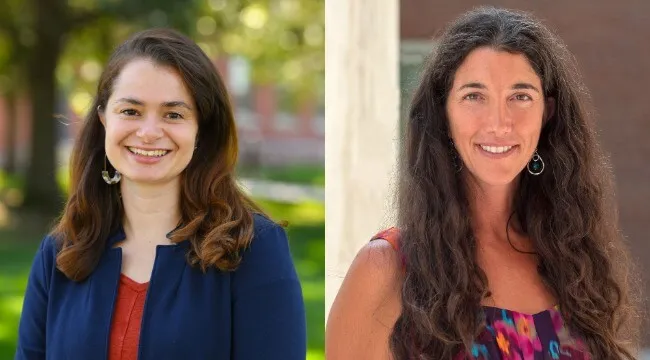
Kristabel Stark and Shana Haines, University of Vermont researchers within the College of Education and Social Services, recently received a $1.25m federal grant to help address these issues through Project STEPS, Strengthening Transition Expertise & Partnership Skills.
“Project STEPS is poised to serve as a national model through its integration of local school successes, close partnerships with self-advocacy and family advocacy organizations, and emphasis on evidence-based practices.” —Jesse Suter, CDCI Director
Funded through the U.S. Department of Education’s Office of Special Education Programs (OSEP), the project is designed to address Vermont’s persistent shortage of licensed secondary special educators while creating a network that better prepares and supports students with disabilities for the transition into adulthood.
“Training people with a unique expertise in postsecondary transition will help to fill those many gaps in traditional services,” says Bryan Dague, a research assistant professor with UVM’s Center on Disability and Community Inclusion (CDCI), a collaborator on the grant.
Haines echoes Dague’s sentiment.
“Our goal is to help staffing in Vermont,” she says.
The five-year grant provides scholarships for 27 UVM graduate students to become licensed special educators with expertise in transition planning.
A collaboration between UVM, the CDCI, the State Agency of Education, as well as multiple Vermont school districts and transition professionals, the project has three fundamental components: accredited online graduate coursework with a year-long, 600-hour student teaching internship that will culminate in Vermont state teaching licensure; a micro-certificate in Postsecondary Transition to Adulthood; and opportunities for greater collaboration statewide, through efforts such as the Annual Vermont Transition Summit, video spotlights of successful transition efforts in action, and biannual networking and community-building sessions.
“We have these amazing programs here in Vermont,” Haines says. “We want to be able to uplift what is working well.”
Applications for the first year of graduate funding launch in early 2027 and will support eight students with prior experience working in special education. At least seven of these students will be Vermonters.
With oversight from an advisory panel of national and local leaders in transition research and technical assistance, the team will also collaborate with Vermont organizations such as the Vermont Family Network, HireAbility Vermont, Green Mountain Self-Advocates, and other family caregivers and community agencies.
“We have so many partners who are doing amazing transition work throughout the state,” Stark says.
Dague sees the grant as a significant opportunity to highlight adult services as a career option.
“Students in education and special education learn about K-12, but often are not aware of the adult services field,” he says.
The researchers hope their findings will have an impact beyond state lines as well.
"Young people with disabilities across the US experience the 'transition cliff' when they abruptly lose services after high school,” says CDCI Director Jesse Suter. “Project STEPS is poised to serve as a national model through its integration of local school successes, close partnerships with self-advocacy and family advocacy organizations, and emphasis on evidence-based practices.”