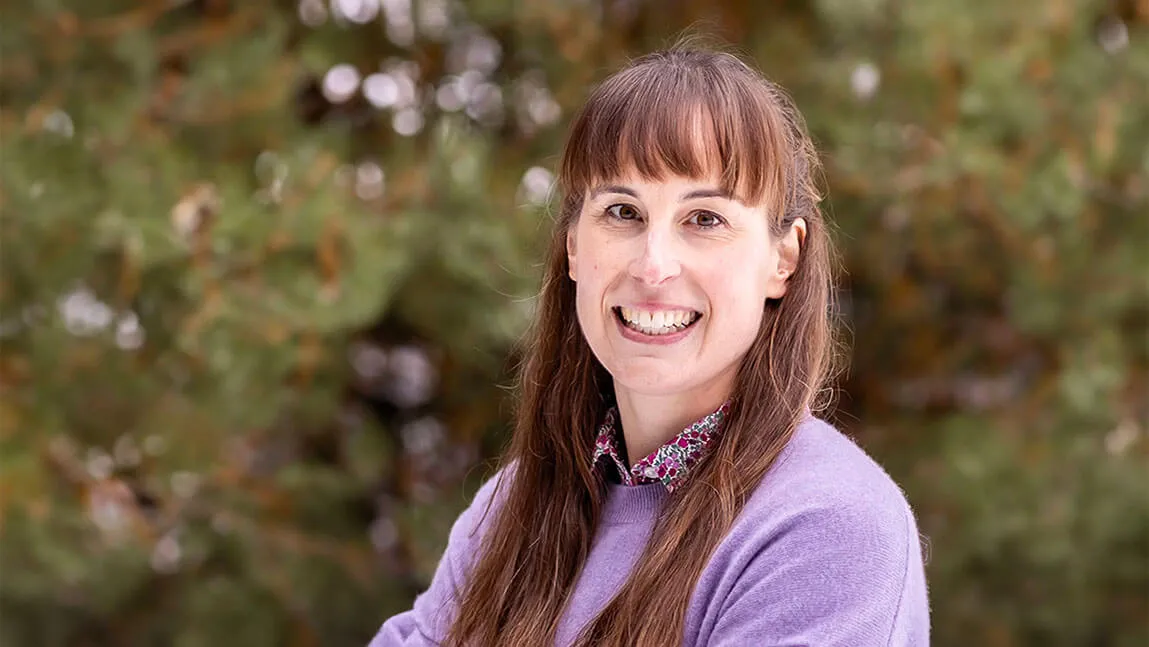
Pope is the recipient of the 2026 George V. Kidder Outstanding Faculty Award, a university-wide recognition given by the UVM Alumni Association that celebrates exceptional teaching and advising. The award is especially meaningful because students nominate their faculty. So, it recognizes faculty members whose dedication leaves a lasting positive impact on the lives of UVM students.
For Pope, the honor is both humbling and deeply personal.
"I'm honestly still a bit in shock that I have won this award," she said. "It is an incredibly touching recognition of my work because it's really from my students."
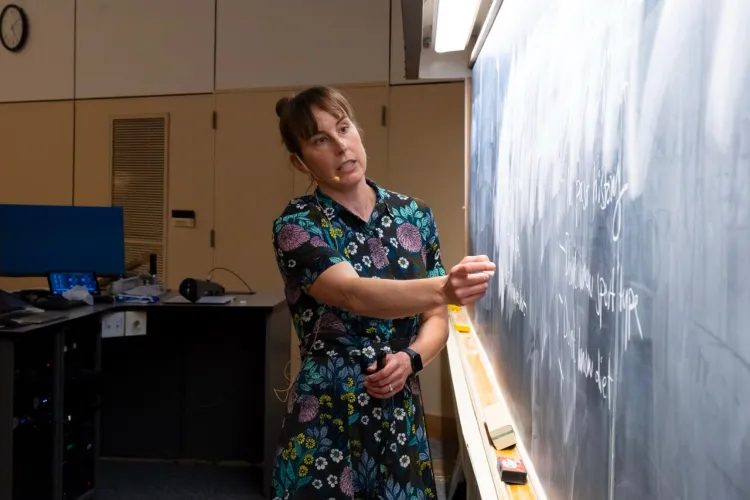
For more than a decade, Pope has helped students navigate the ever-evolving science of nutrition and dietetics while challenging them to think critically about health information, food systems, and their own relationships with food. Her approach combines rigorous science with unbridled enthusiasm for education.
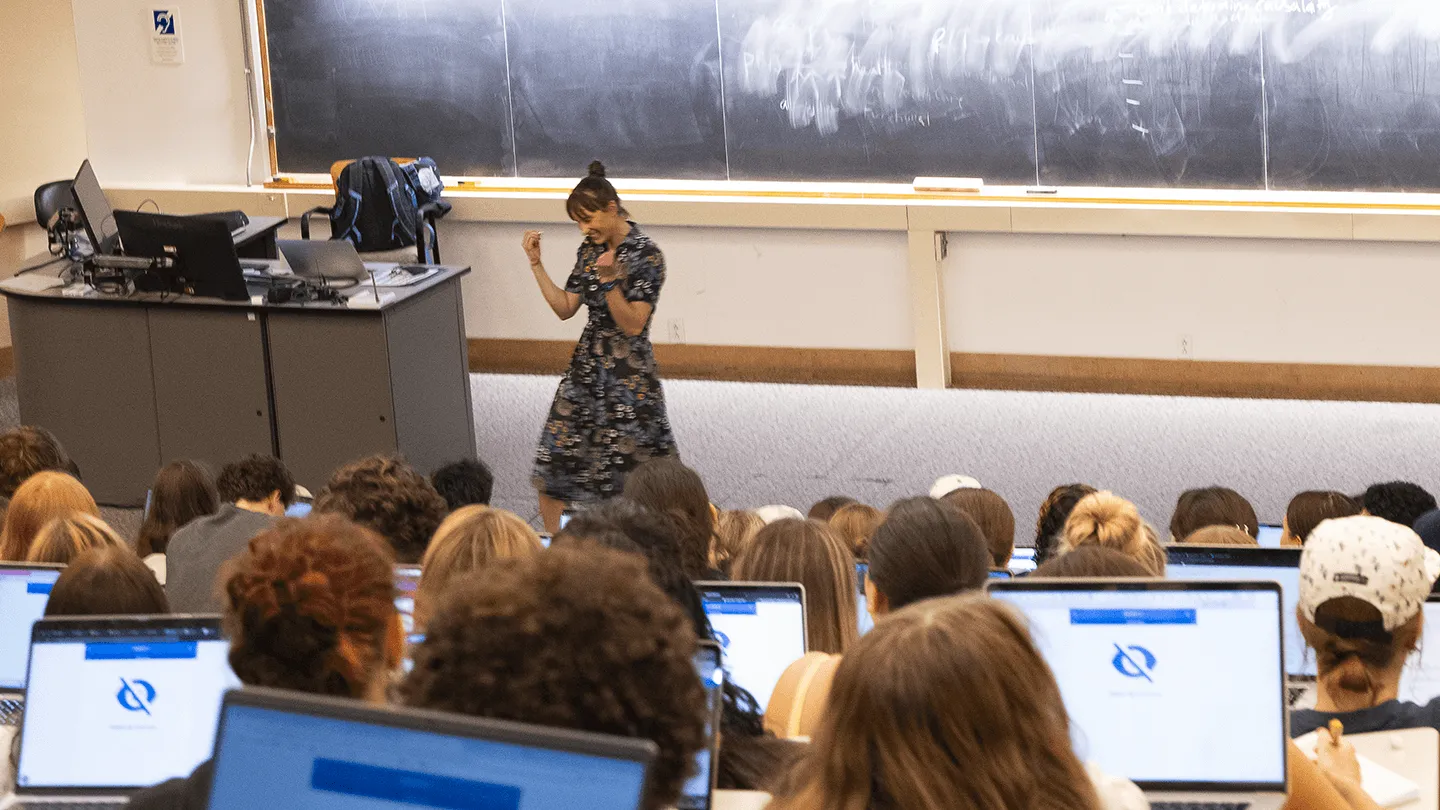
"My teaching philosophy focuses on helping students learn by fostering a supportive environment, providing transparency about expectations and assessment, and incorporating humor and contemporary culture when possible," Pope said. "I always try to bring my passion for the material to each class and emphasize why what we're learning matters."
That philosophy extends to her course design. If a lesson feels uninspiring to her, she knows it will feel the same to students.
"I do not like to be bored," she said. "If I'm planning a class and feel bored by it, I change my approach so I'm excited."
Colleagues and students alike point to Pope's ability to make complex scientific concepts engaging and accessible. She continuously refines her teaching, drawing inspiration from UVM's Center for Teaching and Learning, books and podcasts on pedagogy, her fellow faculty members, and even world-class performers.
"I think about entertainers I love like Taylor Swift and Beyoncé and consider how they hold people's attention and excitement," she said. "I adapt small parts of what all these people do to my class environment."
While nutrition science continues to evolve, Pope embraces change as a core feature of both her discipline and her teaching. She encourages students to question assumptions, evaluate evidence, and understand that scientific knowledge grows over time.
"Nutrition recommendations do change, but that's a good thing and shows the scientific method at work," Pope said. "I know I don't know everything, and sometimes my students bring something up that I'm unfamiliar with. When that happens, I take it as an opportunity to learn something new, not a threat to my expertise."
The result is a classroom culture where students feel seen, challenged, and inspired. Many student evaluations speak not only to Pope's mastery of the subject but to the sense of belonging and confidence they gain through her courses.
Some comments have become favorites.
One student humorously wrote that after a difficult semester, "Lizzy Pope was our light at the end of a dark, dark void. She came in with a bang, galloping into class majestically on the back of her white steed."
Another praised both her enthusiasm and pop-culture references: "She really enjoys teaching and is very passionate about this material and Beyoncé."
The evaluations that mean the most to Pope, however, are often the most personal.
"The best ones to me are when a student thought they would hate nutrition and ended up loving it," she said, "or when a student tells me that my class helped them recover from disordered eating."
Those transformative experiences reflect what motivates Pope most as an educator.
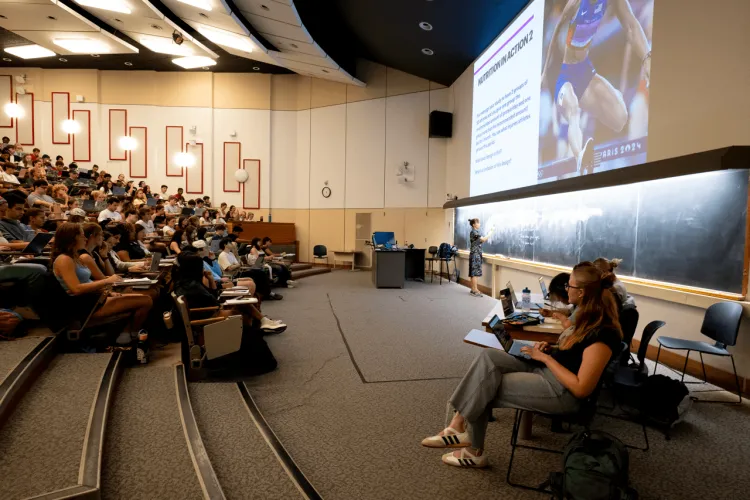
"I love nutrition, but what I really love is sharing nutrition knowledge with my students," she said. "I love that my students challenge me to be creative, thoughtful, and prepared."
As misinformation about nutrition continues to circulate widely on social media and public conversations about health become increasingly complex, Pope believes there has never been a more important time to study nutrition and dietetics.
"Nutrition is a science that is always changing," she said. "There are so many things to learn and so many different areas where you can have an impact."
For students pursuing dietetics, that impact can be profound.
"As a dietitian, you can make a tremendous difference in people's lives and in their relationships with food and their bodies," she said.
If Pope were a food herself, she knows exactly what she would be.
"Probably something like a funfetti cake," she said. "Something that strives to always bring happiness to those that eat it and is also approachable."
The comparison feels fitting. Like the colorful dessert she chose, Pope's classes are marked by energy, warmth, and plenty of memorable moments, such as the learning unit when her students dress up as parts of the fat digestion process and perform a musical about their collaborative functions. Beneath that approachable teaching style is a deep commitment to student success, a passion for lifelong learning, and a belief that education is most powerful when it is both meaningful and joyful.
"This award helped reassure me that my approach and my values are recognized and appreciated by my students," Pope said. "Without students, there is no UVM."
For the countless students who have discovered a love of nutrition in her classroom, the feeling is clearly mutual, a symbiotic exchange. Kind of like the way the digestive organs function. Maybe her students could write a musical about the empowering pedagogical experience Pope excels at crafting.
Register to attend Lizzy Pope’s award lecture and award ceremony Oct. 14