Rethinking Scraps: A UVM Collaboration Explores the Culinary Potential of Food Trimmings
Since 1997, UVM Dining has diverted food scraps from landfill through its composting program. Today, UVM diverts approximately 15 tons of food scraps and compostable materials each week, helping reduce methane emissions, one of the most powerful greenhouse gases.
While that is itself an impressive feat, UVM Climate Kitchen's Sarra Talib, who has since earned her Ph.D. in Food Systems from UVM, was eager to see if back-of-house trimmings from catering prep that were headed for the compost could be rescued and valorized. That is, could fruit and vegetable scraps be transformed into something delicious for human consumption instead of being trucked off to a local composting facility? Composting is a great option for food that is no longer edible, but it is a resource-intensive process that should be avoided whenever possible by extending the life and use of ingredients before they enter the composting cycle.
This is in line with the Climate Kitchen's sustainability tenets of low waste and whole foods, based on principles of the circular economy for food.
To experiment with different techniques and recipes to valorize the food scraps, Talib enlisted the support of the Casella Center for a Circular Economy's Hailey Sanphy, a graduate student in environmental engineering with a keen culinary sensibility. Working closely with UVM Dining’s Executive Chef Dan Miele, whose longstanding collaboration with the Climate Kitchen has supported a variety of food systems initiatives, such as “Green Gourmet” and “Designing Waste Out,” Talib and Sanphy identified the "top ten" fruit and vegetable scraps produced by catering and brainstormed different recipes that could be tested using only those scraps, with minimal added ingredients.
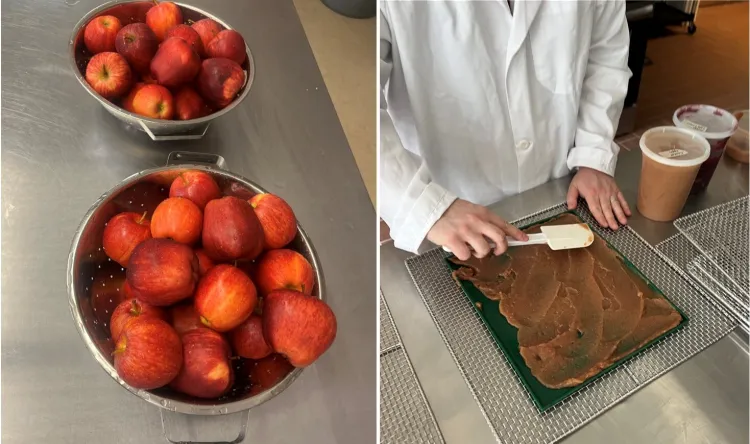
Scraps were requested from the catering team a day or so in advance and set aside for collection—a surprisingly smooth and efficient process. Then recipes were developed, tested, and refined in the UVM foods lab with the help of the Climate Kitchen's special equipment, including tabletop dehydrators, Instant Pots, immersion blenders, and hermetically sealed glass bottles.
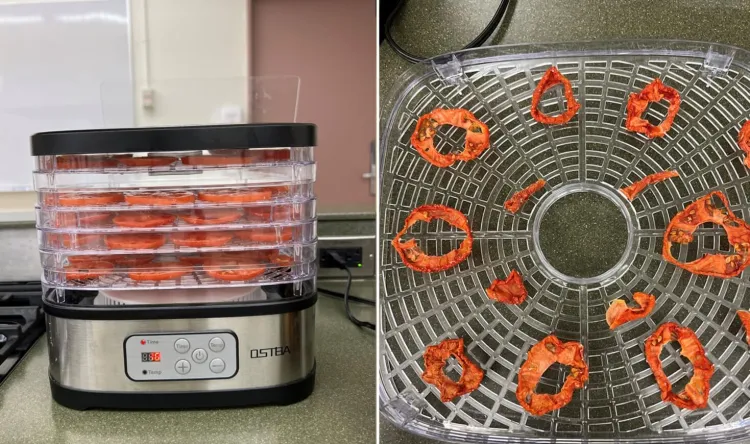
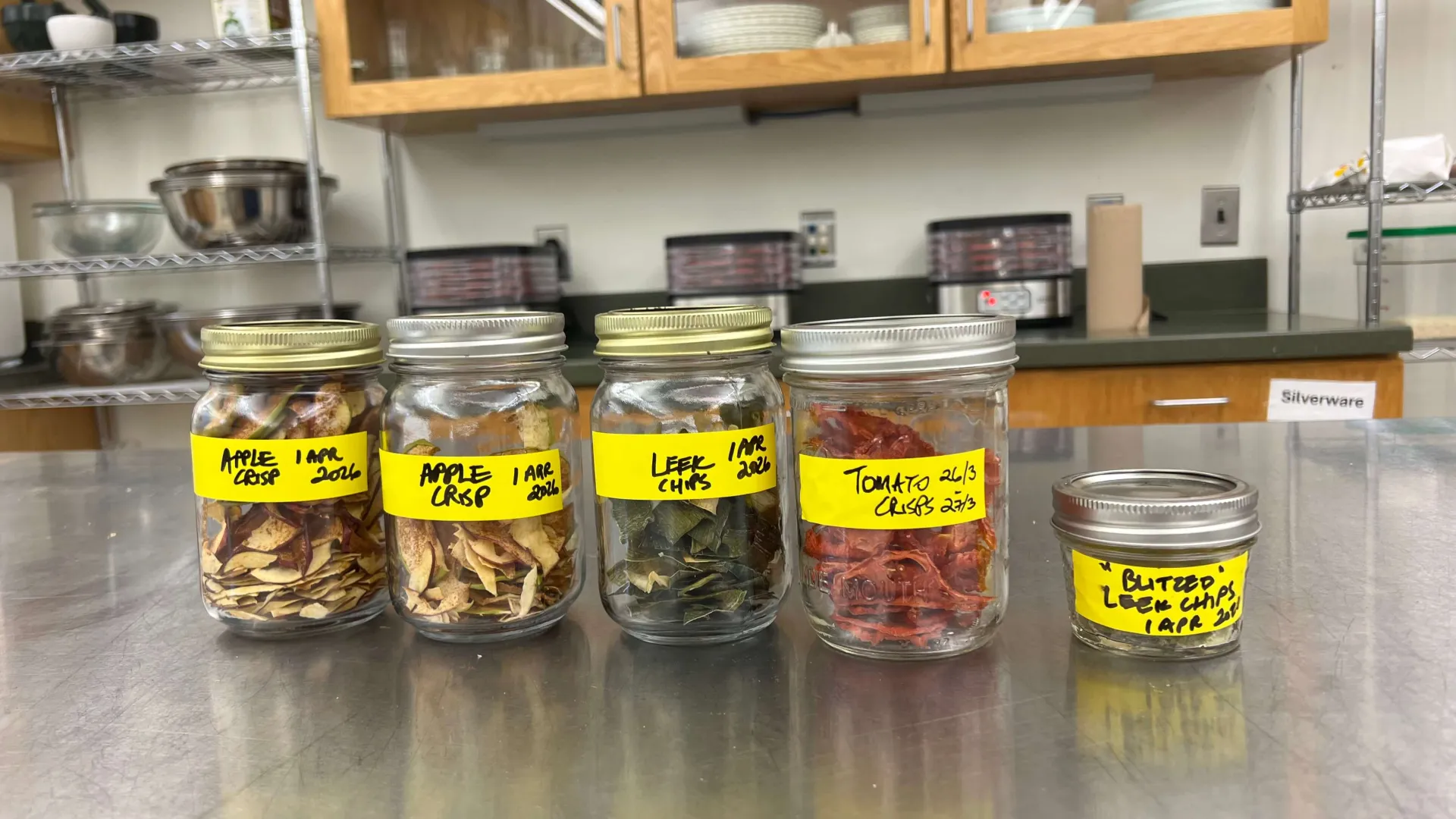
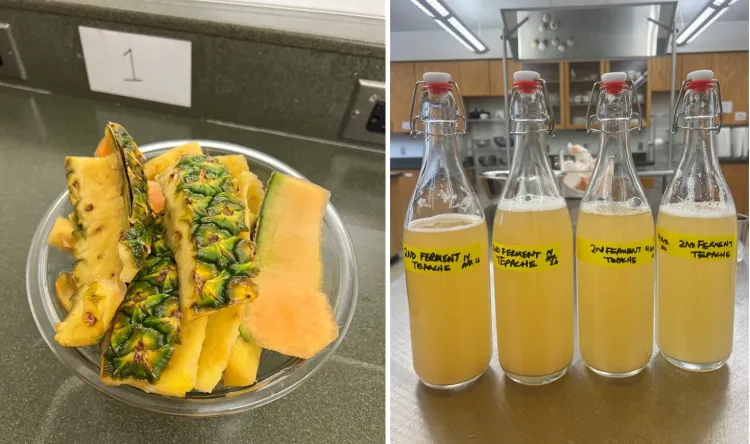
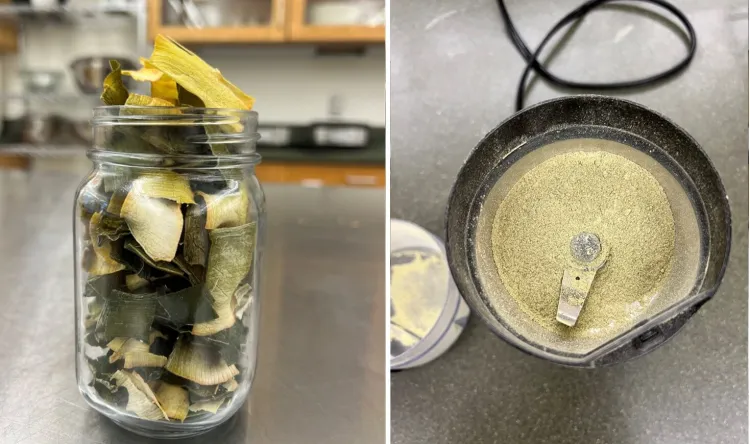
Recipes included tomato crisps (made with discarded tomato tops and bottoms), leek top chips, a "blitzed" leek-top powder used for seasoning, cinnamon apple crisps (made with storage apples past their prime), apple and aronia berry fruit leathers, and tepache, a traditional Mexican sparkling fermented drink made from discarded pineapple skins.
Some recipes proved more time-intensive than expected. Producing apple crisps, for example, required carefully slicing fruit to achieve the right texture after dehydration. Others were remarkably straightforward; tomato trimmings simply needed seasoning and time in a dehydrator to become a flavorful snack.
The project also provided an opportunity to gather feedback from a wide range of community members. Volunteer taste testers included UVM Dining's catering chefs, attendees at the Gund Institute for Environment’s Research Slam 2026, members of the Food Systems Research Institute, Nutrition and Food Science undergraduates, and members of the UVM Climate Kitchen team. Participates expressed enthusiasm for more waste-conscious recipes, perhaps a sign that the demand for circular menu design is on the rise! The long-term vision is a Climate Kitchen–inspired UVM Catering menu that incorporates rescued and valorized ingredients, turning them into delicious menu items before they enter the composting cycle—a win-win for both people and the planet.