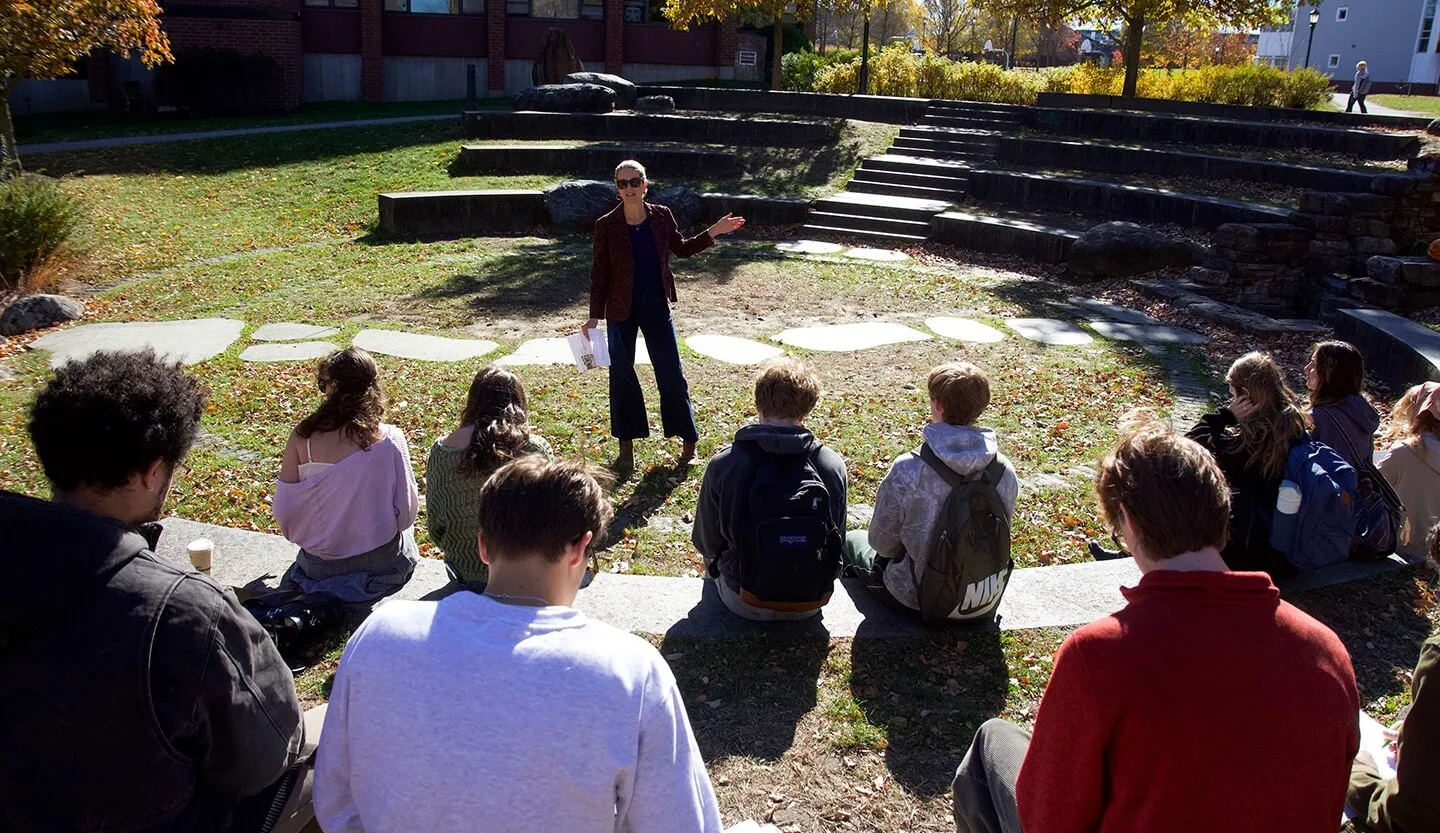
Hurley, a professor in the Department of Agriculture, Landscape, and Environment (ALE) in the UVM College of Agriculture and Life Sciences, served on a National Academies of Sciences, Engineering, and Medicine consensus committee that examined how states monitor and manage pollution from highways and major roadways. The committee's work culminated in a newly released report evaluating current practices and identifying what is and isn’t working to protect water quality nationwide.
For Hurley, the appointment was both a professional honor and a direct extension of the work she does every day as a researcher and an educator. The National Academies’ study was commissioned by Congress to evaluate how existing policies and emerging science address stormwater pollution that is carried from federal and state highways into lakes, rivers, streams, bays, and estuaries. Committee members included transportation officials, academics, engineers, and practitioners from across the country. Over nearly two years, they reviewed data and heard from experts representing diverse regions and climates across the United States.
Hurley's expertise was especially relevant to the committee's work. Much of her research focuses on green stormwater infrastructure, systems that use plants, soils, and carefully designed landscapes to capture and filter polluted runoff from developed areas before it reaches waterways.
"The intersection of landscape design and engineering is where I've done a lot of my own research and design work, focused on nature-based solutions," Hurley said.
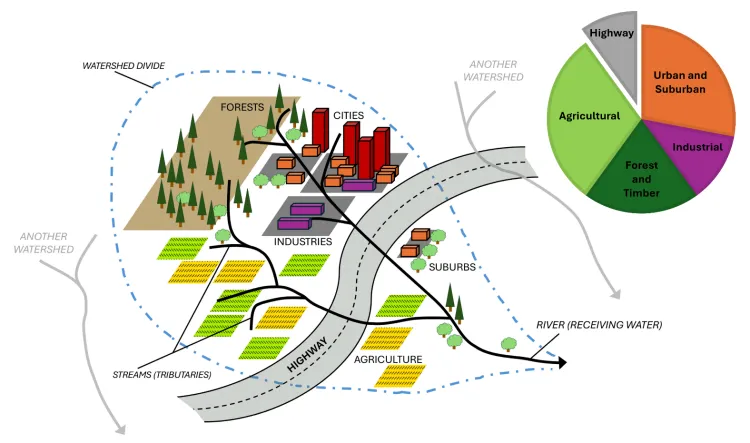
She brought both scientific and design perspectives to committee discussions, targeting how and where green infrastructure can be integrated into transportation corridors. Her landscape design skillset also contributed to the report itself. Hurley helped create illustrations and graphics that translated complex processes about pollution sources, watershed dynamics, and land uses into graphic visuals accessible to policymakers.
The fusion of scientific analysis and creative, place-based problem-solving also underpins UVM's new Ecological Landscape Planning and Design major, a program Hurley helped develop. Created within ALE, the program trains students to analyze and design landscapes at multiple scales, from entire regions and watersheds down to individual sites and neighborhoods. Students learn how to assess and enhance environmental factors while also designing places that work better for people.
"The Ecological Landscape Planning and Design major program looks at landscape design with an ecological focus, but that also necessarily includes a human focus."
Within the broader fields of landscape design and environmental planning, students explore topics ranging from horticulture and soil science to drawing and drafting, construction technologies, and urban and rural development. Along the way, they learn to think about how the built environment interacts with natural systems, and how thoughtful design and planning can help communities become more livable and more resilient.
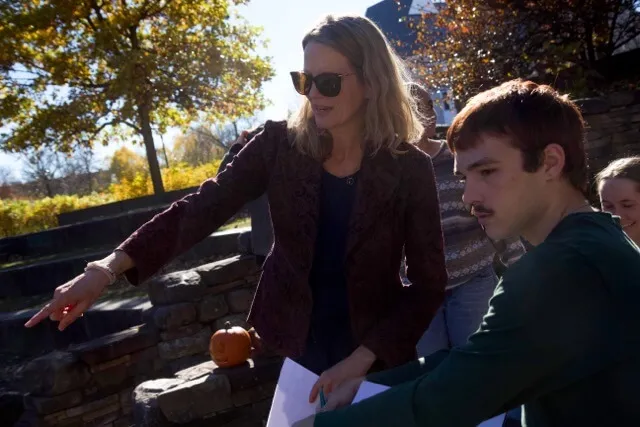
Whether students are reimagining a neighborhood streetscape, designing raingardens for stormwater management, proposing pollinator gardens, wildlife habitat, or community parks, they use comprehensive approaches that consider ecological and cultural factors. These design topics, at the intersection between human development and the natural world, can translate to local impacts on the landscape or inform national policy discussions like the one Hurley participated in through the National Academies.
Study What Matters
Hands-on, experiential learning is a hallmark of the new Ecological Landscape Planning and Design (ELPD) major. Students work with community partners throughout Vermont, including municipalities, schools, nonprofit organizations, and state agencies. Studio courses give students opportunities to iterate their conceptual approaches, receive feedback from instructors and stakeholders, and refine their ideas through an ongoing process that is both creative and practical.
The challenges students must grapple with are real and increasingly urgent: climate change, floods and drought, water quality, habitat fragmentation, transportation accessibility, food-system resilience, and environmental inequities.
"In ELPD there is an opportunity to tackle these enormous challenges through exploring solutions for specific places," Hurley said. "And to cultivate creativity and new ideas in a supportive academic environment."
For students interested in protecting natural resources, strengthening communities, and enhancing how humans interact with the landscape, the Ecological Landscape Planning and Design major offers a chance to do all three.
The program also appeals to students who don't want to choose between scientific inquiry and creative expression. Hurley herself followed that path. Originally trained in conservation and resource studies as an undergrad, she was drawn toward landscape architecture as a graduate student because it offered a way to move beyond studying environmental degradation and toward designing and building solutions.
“Using nature and culture as sources of inspiration, and design thinking as a skill, we can holistically shape spaces that make tangible and positive impacts in the world.”