The University of Vermont has been awarded the Association for the Advancement of Sustainability in Higher Education’s Gold Rating for Sustainability for the fifth time in a row.
“As our national reputation reflects, UVM continues to lead in sustainability,” says UVM President Marlene Tromp. “For us, sustainability is both a lens through which to pursue research, and a fundamental guiding principle for all of our operations, campus-wide. We are so pleased to see our commitment reflected by this upward trajectory in the STARS assessment."
The STARS assessment includes 45 different categories, across academics, engagement, policy, and operations. In some of these, Office of Sustainability Interim Director Caylin McCamp notes, UVM earned a perfect score.
“We are proud to again be recognized for our leadership in sustainability,” says McCamp. “This rating recognizes the work we’re doing every day to advance UVM’s Comprehensive Sustainability Plan.”
UVM is particularly strong in the academic and research category, McCamp adds, noting that 86% of UVM academic departments offer sustainability courses. Undergraduate students report feeling better prepared to tackle sustainability challenges in the world after taking these classes, she adds.
Sustainability is also deeply woven into university research with 93% of departments studying some facet of sustainability, including several new centers tackling pressing sustainability issues including waste, clean energy, food systems and agroecology.
Food recovery is an area of the assessment where UVM earned full points for strong donation and composting programs. In addition to regular donations to UVM’s on-campus food shelf, Rally Cat’s Cupboard, and local food shelves, a new text alert service notifies anyone who opts in when extra food is available following an on-campus event. And the campus has stepped up its composting efforts as well, with compost collection expanded to each floor of every residence hall this fall. The result has been a 76% increase in composting across on-campus housing.
UVM scores highest in the engagement category, reflecting a community that is all-in on sustainability. A survey of the UVM community indicated strong support for these efforts, with 87% of respondents noting that they take part in some type of sustainability-focused activity, and 95% naming sustainability as a responsibility that the university holds.
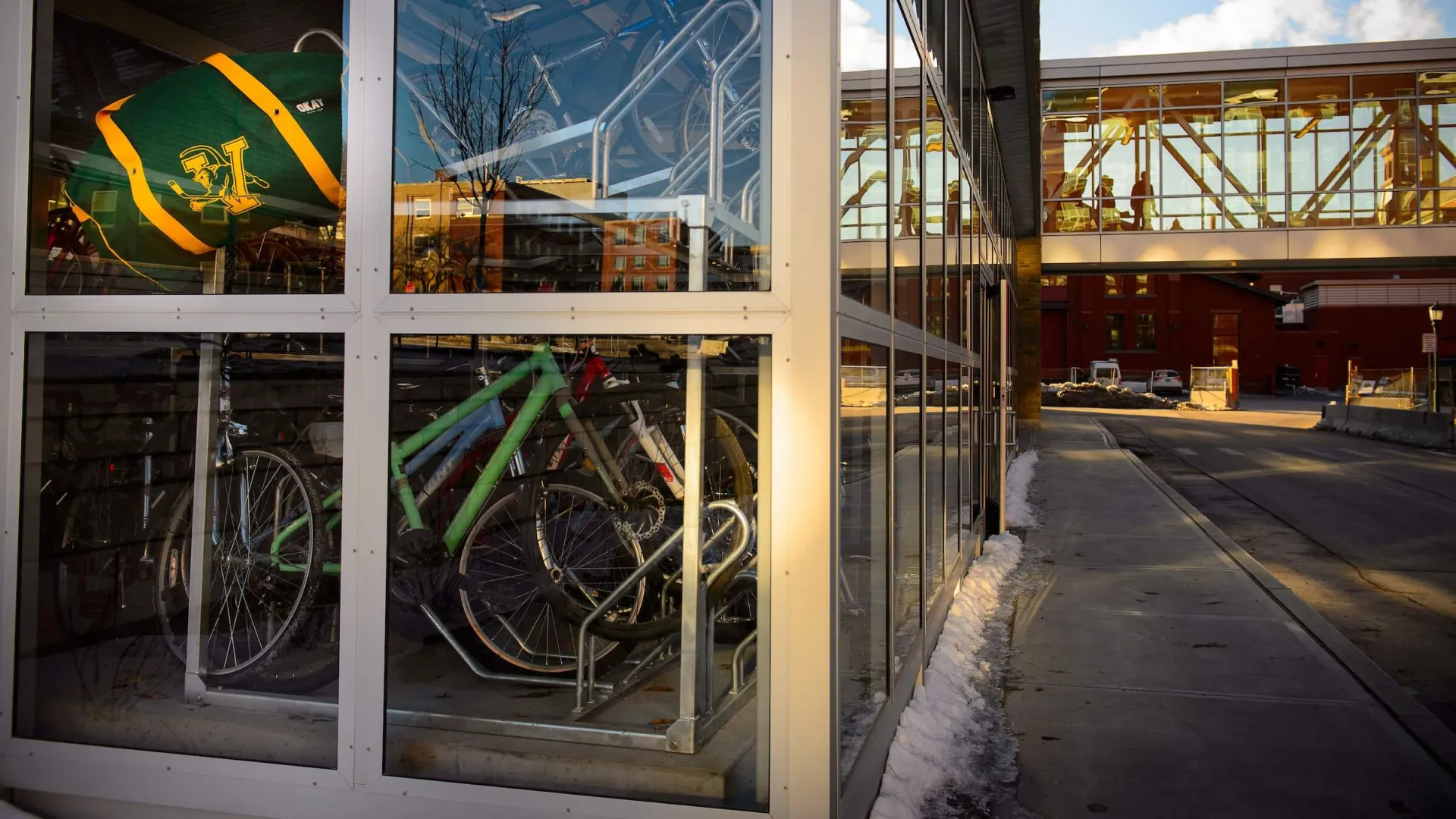
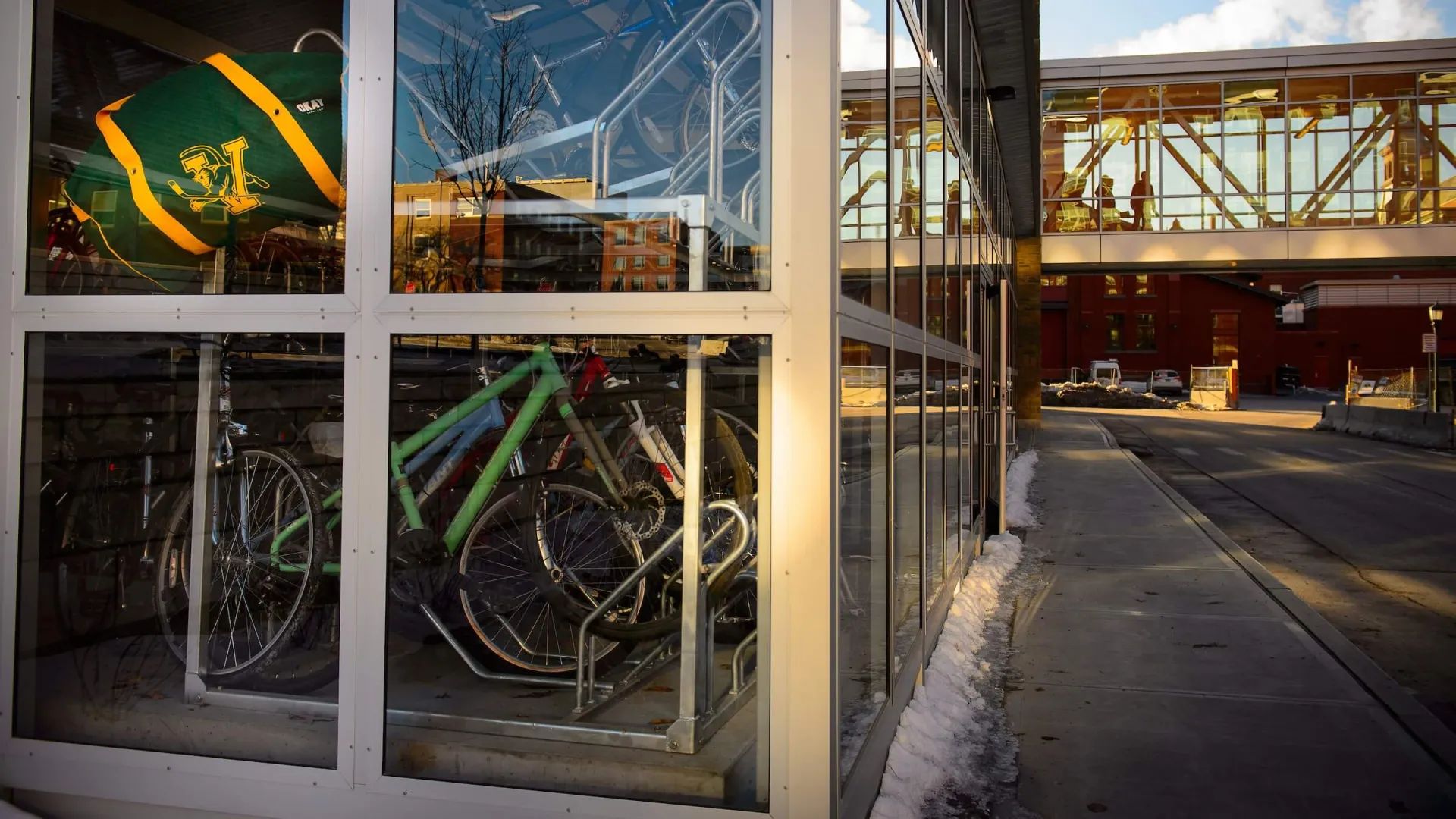
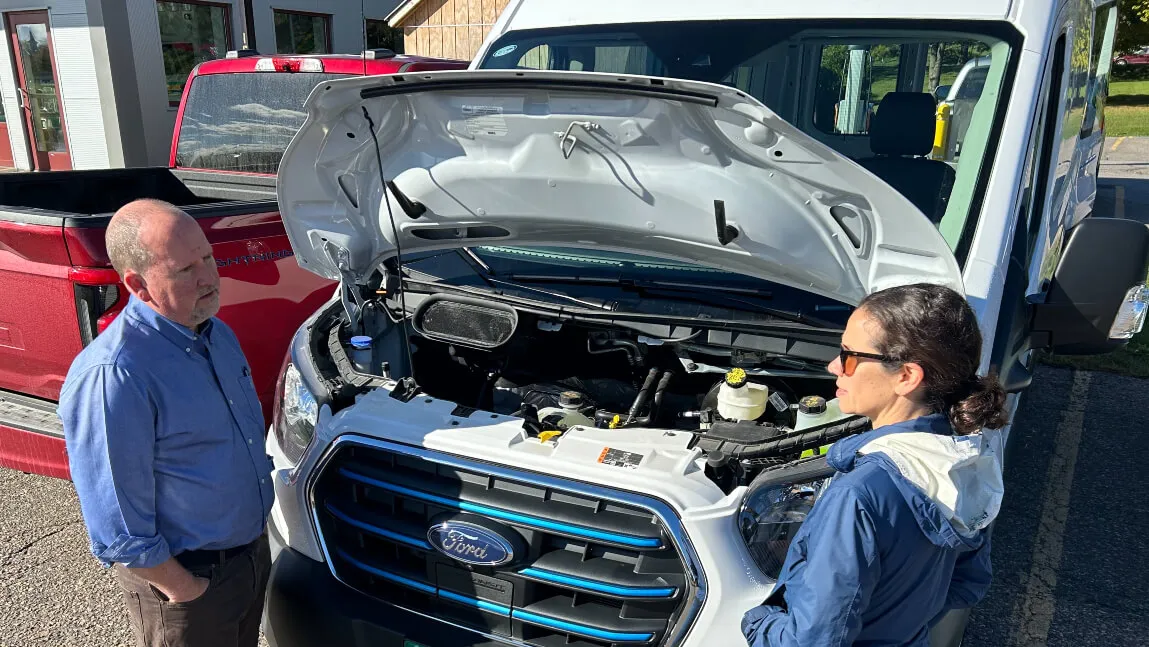
Students have access to a wide range of environmentally-focused and -friendly organizations, clubs, and events. The campus itself supports sustainable commuting with abundant bike parking, including spots equipped with charging outlets for e-micromobility devices, as well as numerous electric vehicle charging stations. In fact, with 101 public charging stations and an additional 54 dedicated to its own electric vehicle fleet, the UVM campus is the site of the largest charging installation in Vermont.
A data-driven process
The rating requires UVM to complete a self-evaluation every three years, McCamp says, and the process takes about a year. It’s an opportunity for units across the university to collaborate in ways they don’t otherwise, opening the door to a united approach to sustainability across campus, she says.
“It's so data-driven, it gives us clear metrics on where we fall within our own assessment,” McCamp says. “How much local food do we serve? What are our greenhouse gas emissions? What do we teach and research in terms of sustainability?”
McCamp notes that the rating framework is updated regularly and has become more rigorous over time, meaning that the university must meet higher standards each cycle to maintain its gold status. AASHE reviews each assessment for accuracy before confirming the university’s rating.
And the work also encourages environmentally minded prospective students to take a look at UVM, McCamp says: the rating lands UVM on the Princeton Review’s Guide to Green Schools. UVM is currently ranked #11 in the nation and has maintained a spot on their top 50 list since its inception in 2017.
By providing clear, measurable benchmarks for the university to meet, the AASHE rating offers not just standards but also motivation, McCamp says.
“Sometimes I think sustainability can sound a bit amorphous,” she says, “but this assessment gets really specific, providing both external validation of our efforts and identifying where we can push further.” McCamp adds that the work will continue to expand.
“The university is committed to maintaining our gold status, and our sustainability efforts are externally validated,” McCamp adds. “We're a leader in this work at a national level.”