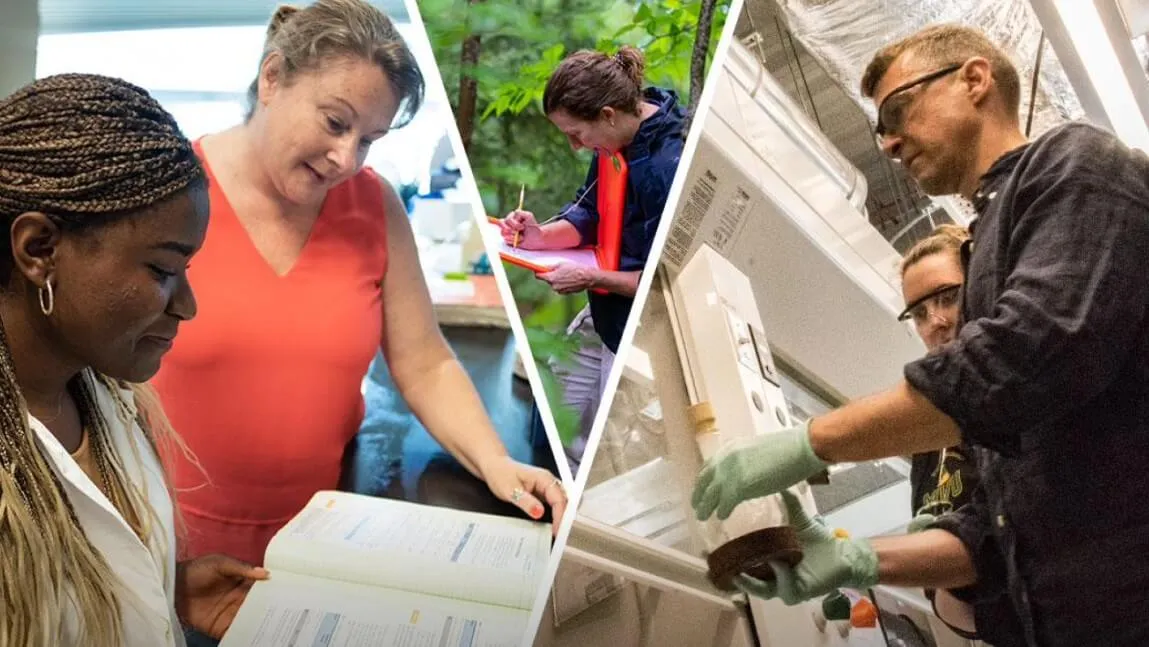
Just this month, national and international media outlets reported on research ranging from the creation of Xenobots, the world’s first biological robots; use of light therapy as a treatment to combat Seasonal Affective Disorder (SAD); and a promising new therapy for an aggressive form of lung cancer.
All this research happened at the University of Vermont. In fact, UVM attracted $227 million in grant awards last year, which topped the previous year’s record of $181.7 million.
Kirk Dombrowski, vice-president for UVM Research, believes there is potential for more growth and awareness by helping researchers with great ideas to identify funding sources and partners in the state.
Dombrowski recently announced the launch of UVM Research Impacts to assist researchers in extending the reach of their discoveries, and connecting regional community and industry members with academic research partners.
“Together, these objectives enrich our research, broaden our understanding, and strengthen UVM connections with our Vermont community,” Dombrowski said.
UVM Research Impacts is a collaborative effort between the Research and Development Office, the UVM Office of Engagement, and Professional and Continuing Education (PACE, formerly CDE). UVM Research Impacts will offer consultations with research impact professionals from each office, seminars and workshops, and actively match researchers with partner organizations throughout the state.
Heidi Malaby, Grant Proposal Developer at UVM, says assisting faculty members in developing successful grant proposals includes thinking about the relevance of their research outcomes beyond individual fields of study. A vital but difficult piece to incorporate, clearly conveying why and how their research will be relevant can make the difference for a proposal’s successful funding.
“We’re really trying to be a service for faculty to help them develop activities and connections to strengthen the impact of their research, and make that clear to funding agencies up front,” she says.
In this work, three heads are better than one. The role of the Office of Engagement, established last year to build partnerships with Vermont enterprises, is to connect with industry, government and non-profits around the state with UVM resources and expertise that might be useful in economic development and workforce training.
“Researchers at UVM are working every day to provide solutions to contemporary challenges Vermonters are facing,” said Office of Engagement Director Kevin Chu. “We see ourselves as the university’s ‘front door’ for private, public and non-profit entities looking to access our many strengths and capabilities.”
PACE, the third partner, also brings a distinct expertise to the table.
“We often hear from faculty members and deans about educational proposals they have for either enhancing existing programs or developing new ones to meet a specific need,” says PACE senior program developer Matt Sayre. “So we help them write and create proposals for educational offerings.”
The UVM Research Impacts group was competitively selected for participation in a national program to build research and innovation capacity (Program to Enhance Organization Research Impact Capacity, or ORIC) run by ARIS (Advancing Research in Society).
The Research Impacts team is now offering consultations to university researchers, and Chu and Malaby will be presenting the first in a series of seminars entitled How to Amplify Your Research Impact, aimed at UVM researchers this Friday, November 19, at 2 p.m. on MS Teams. Join them to learn more about Research Impacts at UVM.