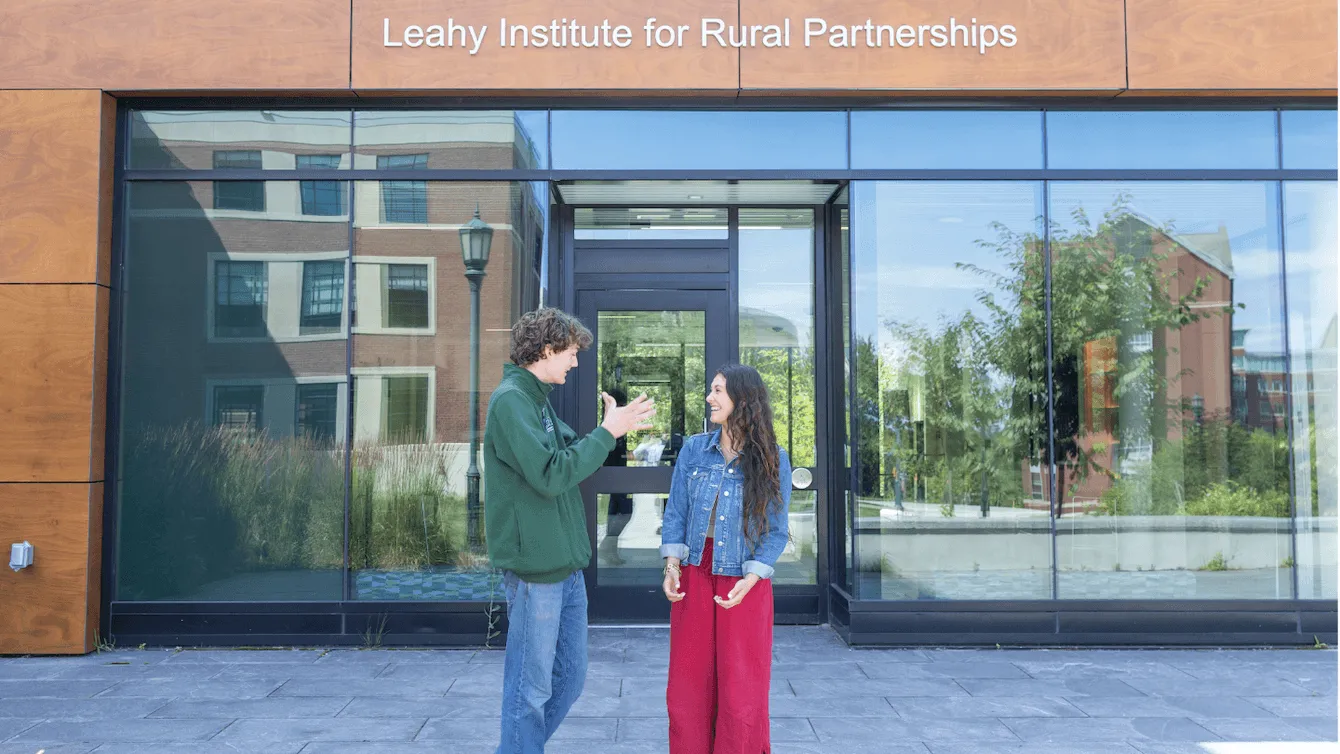
Leaders in rural communities need better data to strengthen rural communities, improve policies, and guide planning and decision-making.
Across the country, rural places share three major problems with using data in their planning, policymaking and practice:
- Rural places are characterized by small populations, which make traditional survey methods yield wide margins of error, making it difficult to understand the true context in rural communities.
- Governments and organizations tasked with solving problems often lack the capacity to leverage data to its full potential.
- The data infrastructure that houses federal, state and municipal data were not designed to be explicitly integrated with one another, making it hard to use data to solve complex problems. Especially when you consider problems 1 and 2!
The University of Vermont wants to help Vermonters better integrate data to help their communities thrive. We’ve heard from folks across the state that accessing and using data is a key barrier to progress and success, and we want to help. That’s where the Vermont Data Collaborative (VDC) comes in.
The VDC leverages partnerships within and beyond the University of Vermont to create accessible data tools and visualizations that can support data-informed planning and decision making in Vermont communities. Rooted in community engagement, we are building a platform that makes the integration of data in public problem solving easy for folks across the state.
Read on to learn more about the challenges of using data in rural communities, including Vermont, and the ways UVM is responding to these challenges with new opportunities.
The challenge of federal data in rural communities
Rural areas are often vast and sparsely populated, meaning that traditional data collection practices like by the Census Bureau’s American Community Survey (ACS) program may face challenges when collecting data on rural communities. In rural areas, datasets are more prone to significant margins of error and their usability suffers from capacity challenges within local governments. Because of small population sizes, slight changes in collection or organization practices can affect important data like town population sizes that impact congressional spending. In 2020, the U.S. Census Bureau revised their disclosure policies in turn creating discrepancies across sectors in reports for rural and non-white populations. As of 2024, the ACS saw response rates decline from 97% to 83% over a single decade. Fewer responses create more of a challenge for smaller localities, as it widens the margins of error for estimates that allocate services and prove compliance with federal programs.
The challenges presented by federal data for rural communities do not mean that this data is not useful. Regardless of how accurate its portrayal of rural areas is, it is one of the most consistent streams of data that is used to develop policy. Importantly, federal data is also used to guide the building of critical infrastructure. In 2021 alone, Census data alone was used to distribute funds for over 350 federal grant programs.
The challenge of state data in rural communities
Leveraging state-level data resources is critically important to crafting a more holistic understanding of the challenges faced by rural communities. In states with higher proportions of rural communities, state governments set the parameters of their local jurisdictions’ taxing and legal authorities, provide revenue, and often make decisions on how federal funds are spent. Additionally, the capacity of rural local governments is significantly constrained, with many governments being led by volunteer, part-time elected officials and thinly staffed town halls.
Recently, Vermont lawmakers have expressed difficulties in using available data, describing what’s available as “frequently incomplete or inaccurate,” according to Seven Days. Senator Martine Gulick described the data as “all over the map,” and when emphasizing the importance of data to lawmaking, noting that “if we don’t have the right data, the consequences could be devastating.”
States managing their own data face their own isolated problems. Their data is often not standardized in format or quality, and rarely do avenues exist for agencies to collaborate and share data with others. Additionally, state-produced data are integrated into federal statistics, meaning that any inaccurate data in a state’s analysis has the potential to scale when used.
Data for things like policymaking, development, public services, agriculture, and distribution of state funds are difficult to access and utilize in their current format without capacity and technical expertise, something that Vermont’s rural communities often lack.
The most prominent barriers to leveraging state-level data are capacity-based, and have to do with policy compliance, collection practices, and structural issues with smaller datasets. State Chief Information Officers report that state budgets have not kept up with the increasing demand for digital government services, including those that would collect and leverage data. Budgetary and regulatory pressures limit states’ ability to experiment with new methodologies, data, and information technology that would allow the data we have to create value for Vermont.
Vermont’s Agency of Digital Service’s One ADS strategy is built on the understanding that Vermont’s technical systems are “fragmented, isolated, and increasingly difficult to maintain.” Digital infrastructure lays the foundation for the utilization of data. If government officials and community leaders face difficulty accessing digital services that provide access to and visualization of open government data, it reduces the potential of this critical resource.
How UVM fits in
Rural areas face a strain on public resources. Common issues like smaller tax bases, limited staffing, less access to flexible funding, and higher per-capita public spending construct barriers to evaluating and supporting basic public services, rural resources are stretched thin, and people are directly affected.
When a town can’t tell whether a policy or program worked, it can’t make the case to its people to continue, expand, or replace it, and it certainly can’t make that case to another funder or the federal government. Over time, communities that can measure their results adapt faster than communities that cannot.
The University of Vermont is exploring ways to bolster capacity and make data more accessible and useful for communities across the state. The Vermont Data Collaborative is an open-source data access and visualization platform that seeks to serve Vermont, enabling community leaders to make more informed decisions for their community.
This article is the first in a series of articles that spell out the impetus behind the creation of the Vermont Data Collaborative, and how we’re supporting a more holistic and accessible data ecosystem for Vermont.
To learn more about the Vermont Data Collaborative and how your community or organization might benefit from its use, please contact Emma Spett (emma.spett@uvm.edu) to schedule a presentation about the Vermont Data Collaborative and curate its tools for your specific needs.
If rural data presents so many challenges, where do we go from here? Read about what rural data infrastructure needs to look like to deliver data tools and resources effectively to Vermont communities.