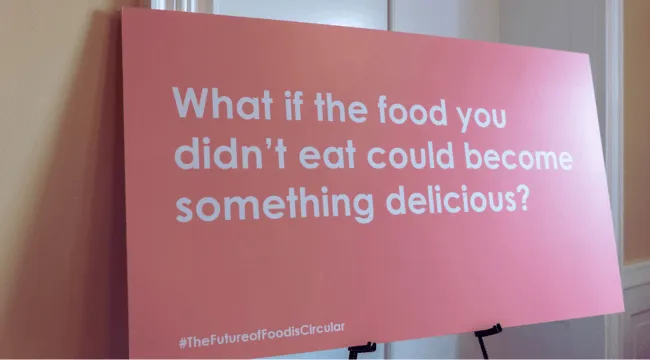
When it comes to preparing carrots for dinner, do you, like most home cooks, toss the peels and greens into the compost? But what if you saw those “scraps” on the menu next time you dine at a restaurant? If you had a delicious, chef-prepared carrot-top pesto pasta, would you try to recreate it at home? For Dr. Sarra Talib, these questions present an exciting research area to see how chefs can influence consumers to waste less food.
Dr. Talib is a Food Systems Research Institute PhD Fellow who graduates this spring from the University of Vermont Food Systems PhD program and is a founding scholar at the UVM Climate Kitchen and a fellow at the Gund Institute for Environment. Her research focuses on what she calls the “ridiculous” problem of food waste; roughly 40% of food produced for human consumption is never eaten, even as nearly two billion people experience moderate to severe food insecurity. She believes a transition to a circular model of food systems is the answer.
“Waste is ultimately a human design flaw. Waste doesn’t exist in nature,” Talib says. “It's not just food that's getting wasted, it's all the resources that go into it, into producing, harvesting, transporting, consuming water, energy, labor, money, time... It's a lot of waste.”
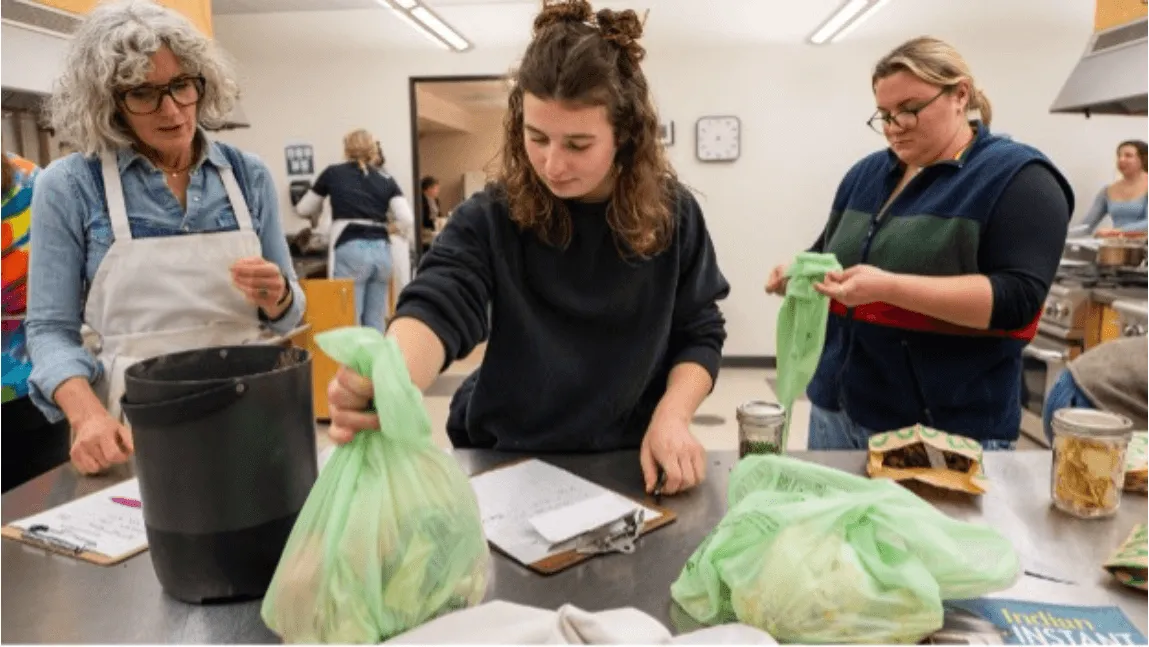
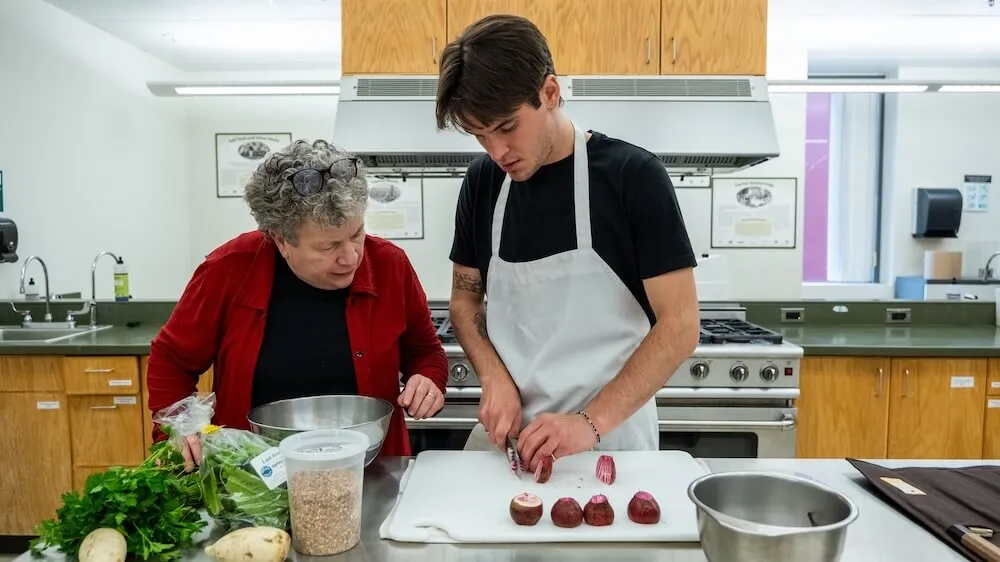
Talib specifically focuses on how the role of chefs can influence a transition to circular economy for food, a systems-based framework that aims to design waste out entirely by reframing “waste” as a resource. She describes the current food system as a linear model of “take, make, waste” wherein we extract resources, produce food, consume some of it, and discard the rest. A circular food system, by contrast, designs waste out by emphasizing regenerative production and sourcing, whole ingredient utilization, and extending the life of food - through techniques such as fermenting, preserving, and curing - so that it is safe to eat by humans for as long as possible.Talib partnered with UVM Dining last year to host a circular gastronomy pop-up at the Waterman Manor, which put this concept into action.
In her research, Talib studies how chefs, who influence our dining and eating culture, can catalyze the transition to a circular food system. From a systems perspective, chefs sit at a critical junction: they source directly from producers upstream and shape norms and expectations for consumers downstream.
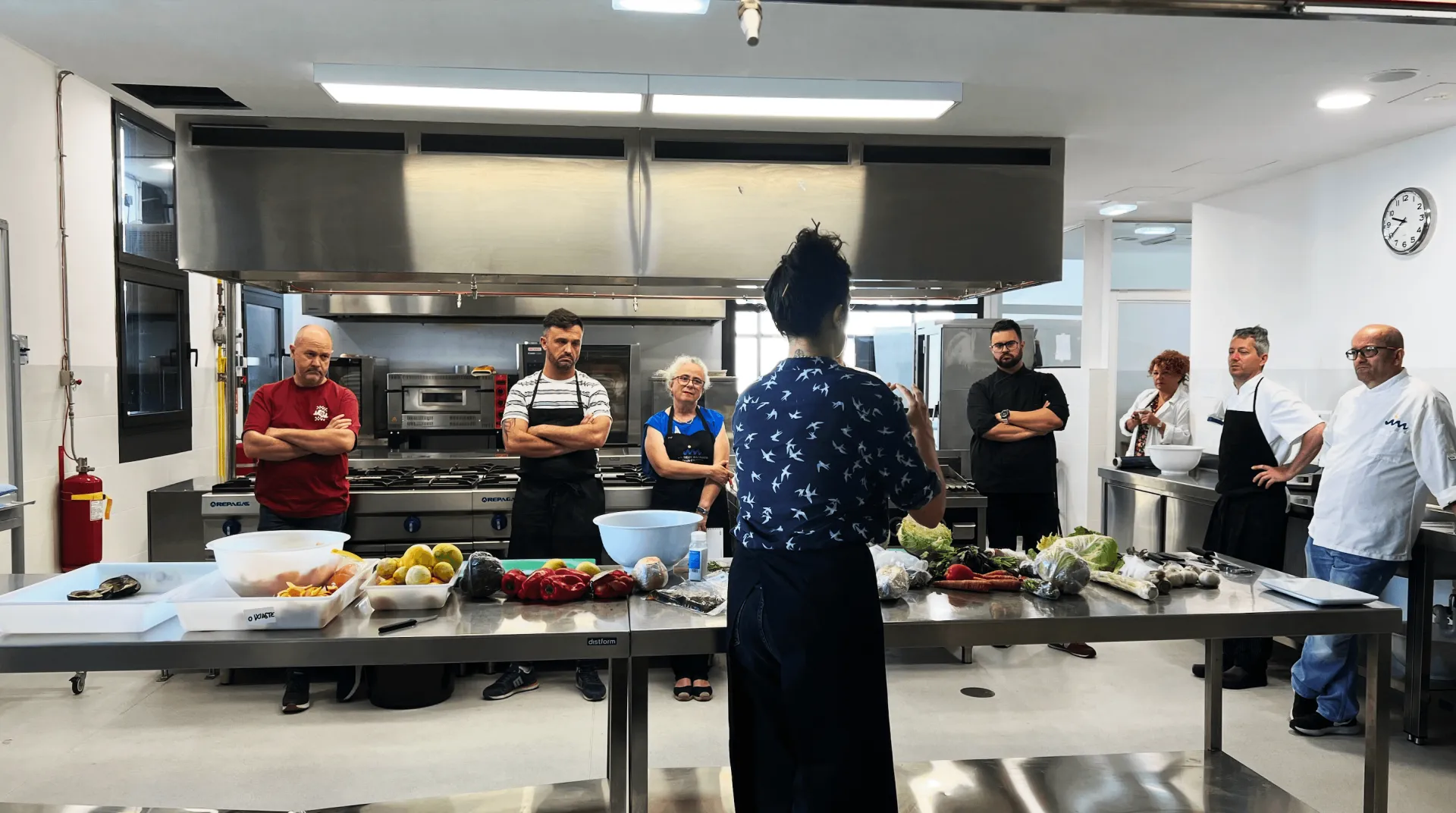
Talib has seen this influence play out in tangible ways through her research in Vermont and Ibiza, Spain. In one case, multiple chefs made it clear they wanted to continue buying from a farmer only if synthetic pesticides and herbicides were phased out. That collective demand helped shift the farmer’s practices toward more regenerative production.
On the consumer side, chefs influence culture through taste, creativity, and storytelling. By transforming parts of plants and animals that typically get discarded, like vegetable scraps and offal (animal organs), into dishes that are delicious, chefs subtly reframe ideas of what counts as edible. Diners may not come in thinking about food waste at all, but they leave having encountered it differently. Over time, those moments accumulate into broader cultural change. Talib points to kale as an example: once overlooked, now ubiquitous, largely because chefs made it desirable.
In an era of food social media and television, there is a heightened interest in chefs, which makes their influence of the culture of consuming and producing food undeniable. Many of the chefs Talib has interviewed for her research don’t necessarily see themselves as activists, but they do feel a responsibility to model better ways of cooking, sourcing, and thinking about food. For many of them, a circular food system is just good business.
From a systems perspective, that influence matters. And sometimes, it starts with something small, like a carrot top, rescued from the compost bin and reintroduced back onto the plate and our palettes.
About the Food Systems Research Institute:
The Food Systems Research Institute (FSRI) at the University of Vermont (UVM) funds collaborative research that puts people and the planet first, unites disciplines and communities, and answers complex questions about food systems.
The FSRI gives researchers the freedom, resources, and time to engage community stakeholders, including decision-makers, farmers, and food systems actors, about issues and opportunities across our food system. This results in relevant, widely disseminated research that informs policies, practices, and programs locally and regionally for a more resilient and accessible food future for all.