Leigh Knodler
Professor, Microbiology & Molecular Genetics
Director, MMG Master's and Accelerated Master's Programs
PRONOUNS she/her

- Ph.D. Biochemistry and Molecular Genetics, University of New South Wales, Australia
- B.S., First Class Honors, University of New South Wales
Department of Microbiology and Molecular Genetics
Areas of expertise
Bacteria-host cell interactions in the gut, enteric bacteria, host-pathogen interactions, type III secretion systems, Salmonella enterica.
BIO
Leigh Knodler received her PhD in Biochemistry and Molecular Genetics from the University of New South Wales, Australia, studying novel metabolic pathways in the protozoan parasite, Giardia lamblia. For postdoctoral research she studied developmental gene regulation in Giardia lamblia at the University of California, San Diego and Salmonella enterica-host interactions at the University of British Columbia, Canada. She started her independent research group at Washington State University in 2012, received tenure and promotion to Associate Professor in 2019, and joined the Department of Microbiology and Molecular Genetics in 2023. Her research focuses on pathogenic bacteria of the gut.
Courses
- MMG6990: Host-Microbe Interactions
Publications
Awards and Achievements
- Postdoctoral training in bacterial pathogenesis, University of British Columbia, Canada
- Postdoctoral training in differential gene regulation in protozoan parasites, University of California at San Diego
- Awarded tenure and promoted to Associate Professor, 2019
- Recipient of Burroughs Wellcome Fund PATH award, 2019
- Promoted to Full Professor, 2026
Bio
Leigh Knodler received her PhD in Biochemistry and Molecular Genetics from the University of New South Wales, Australia, studying novel metabolic pathways in the protozoan parasite, Giardia lamblia. For postdoctoral research she studied developmental gene regulation in Giardia lamblia at the University of California, San Diego and Salmonella enterica-host interactions at the University of British Columbia, Canada. She started her independent research group at Washington State University in 2012, received tenure and promotion to Associate Professor in 2019, and joined the Department of Microbiology and Molecular Genetics in 2023. Her research focuses on pathogenic bacteria of the gut.
Courses
- MMG6990: Host-Microbe Interactions
Publications
Awards and Achievements
- Postdoctoral training in bacterial pathogenesis, University of British Columbia, Canada
- Postdoctoral training in differential gene regulation in protozoan parasites, University of California at San Diego
- Awarded tenure and promoted to Associate Professor, 2019
- Recipient of Burroughs Wellcome Fund PATH award, 2019
- Promoted to Full Professor, 2026
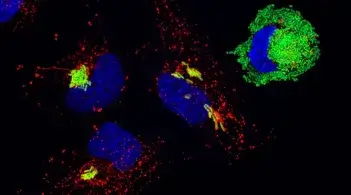
Salmonella-Intestinal Epithelial Cell Interactions
Lab Team
Geneva Jewett, undergraduate
Aspen Mrak, undergraduate
Emma Danza, Research Technician