Dr. Calabresi, who has been studying multiple sclerosis for more than 30 years, says he decided to specialize in the autoimmune condition because it struck him as a “particularly cruel disease.”
People usually receive their diagnosis when they’re young adults. A healthy lifestyle can help with symptoms, but won’t prevent the disease. And it’s incurable.
There have been significant advancements in treatments to help patients manage the disorder in recent years, particularly when it comes to relapsing-remitting MS, the form of the disease that involves symptom flare-ups followed by periods of remission. But one iteration of the disease—progressive MS, which is characterized by a steady decline in function—has proved particularly stubborn to find therapies for.
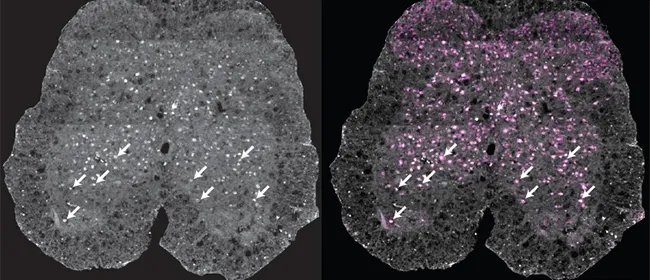
Calabresi cautions that he is not “on the brink of a cure.” But he said the five-year research effort, which studied how brain cells die in response to MS-induced inflammation, is nevertheless “really exciting.”
“It addresses this huge need in the field to understand the mechanisms that underlie progressive MS,” he said.
There’s still a lot of work to do before this can result in real-world treatments, said Calabresi. His lab will have to replicate their findings at different points in disease progression and work with chemists to develop compounds that can both cross the blood-brain barrier and be safe for long-term use. If they find such compounds, they’ll then have to run clinical trials. But he’s optimistic.
“I hope someday from now, we'll look back and say that maybe this was a pivotal moment,” he said.