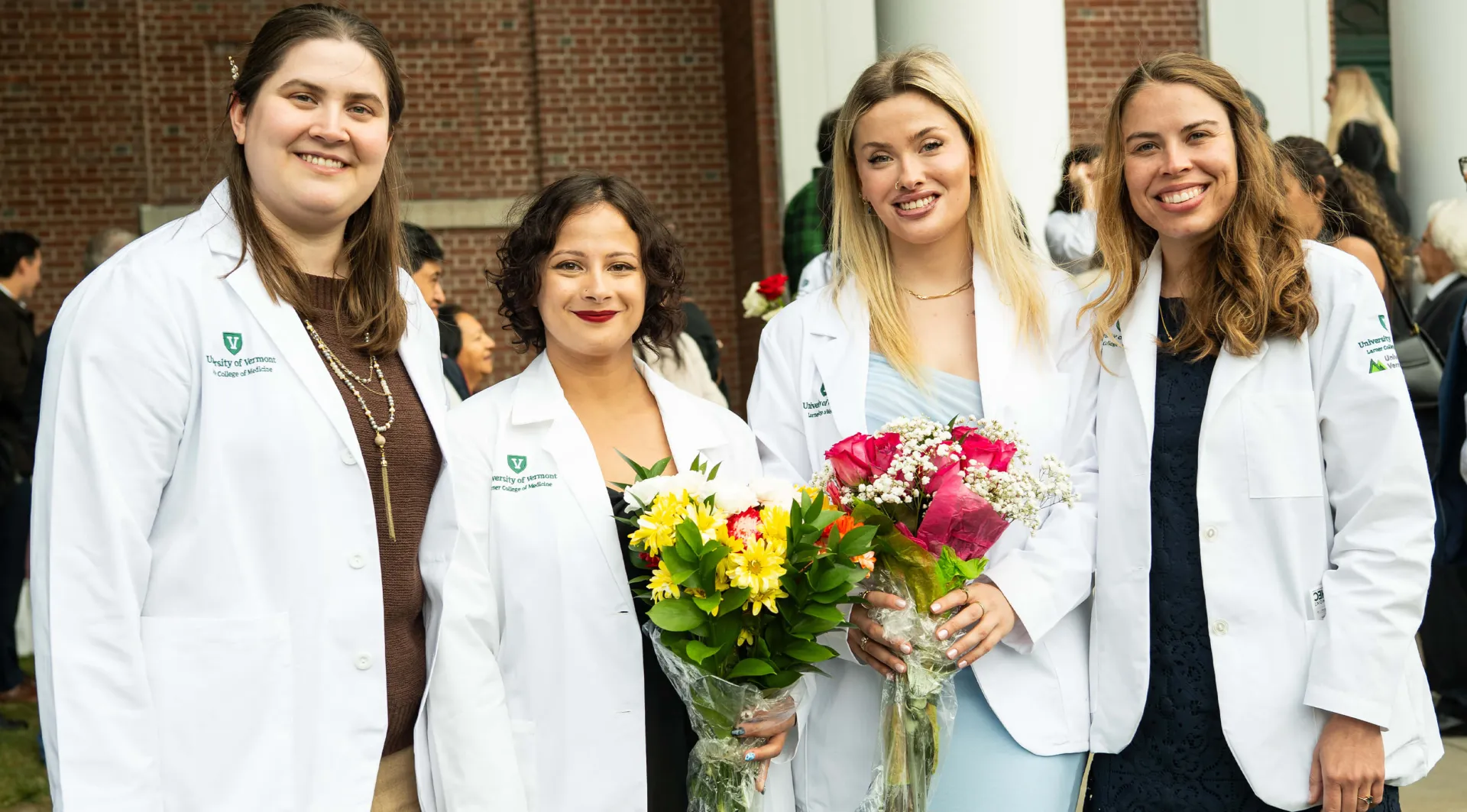
The Class of 2030 is no different, but one thing about this new class is unique: This class features four nurses.
The transition from a career in nursing to medical school is not as common as one might think, but these four (plus a nurse who is now in the Larner Medical Class of 2029) have made the leap to Larner and are excited to begin their next journey. Having worked in various hospitals across the U.S. and Canada, they told us what that transition has been like and what they hope to accomplish during their time here.
Madeline Harmon, RN, CCRN, TCRN
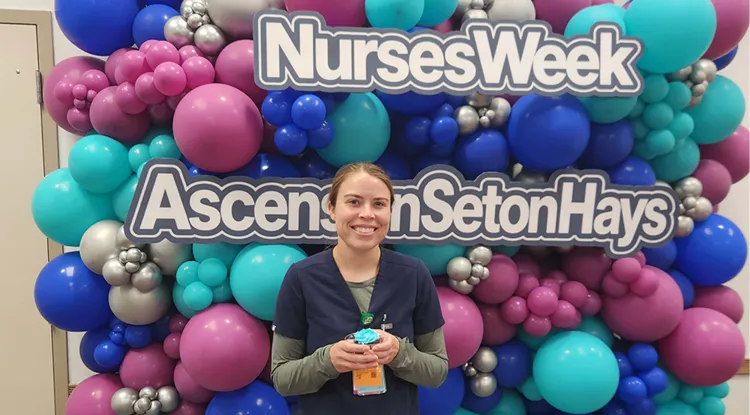
Originally from Austin, Texas, Madeline Harmon is excited to experience Vermont and the Larner College of Medicine. Having worked as a nurse for nine years, she noticed that she wanted to transition into being the one to answer the medical questions her patients were asking that she couldn’t yet answer. As she realized she wanted to go back to school, she considered being a nurse practitioner as well but realized that if she was going to go back, she might as well go for the big one. Harmon says she “was looking for schools that were more focused on non-traditional students, so that maybe [she] wouldn’t feel quite as much like an outsider.”
Harmon’s health care experience began at UT Southwestern Medical Center in Dallas, Texas, where she was in a pulmonary step-down unit from 2017 to 2019 before moving to a surgical/trauma ICU at Dell Seton Medical Center in Austin from 2019 to 2021. Most recently she worked two ICU contracts, at Overlake Hospital in Bellevue, Washington, and at Medical City Dallas Hospital serving Dallas–Fort Worth. From getting her start in pulmonary critical care, she feels as though she is ready to move into a more longitudinal specialty, such as family medicine. She values creating long-term connections and bonds with her patients, and family medicine will be an area where she can do just that.
“Everyone is so supportive!” — Madeline Harmon, RN, CCRN, TCRN
One advantage of her nursing background, she has found, is that many of her interpersonal skills have translated well. Despite having scripts for the Standardized Patient course, she is glad to come in already well equipped to talk to patients in the clinical setting. Harmon admits that at the start of her career she was known to be shy, but she has since become an extrovert, chatting with patients and making them feel as comfortable as possible.
So far, Larner has been great, she reflects, “but it still sometimes feels like a bit of imposter syndrome. There are lots of other people like other nurses and me, which I did not expect, but I was super excited when I found out!” For Harmon, having a community of people from the get-go has allowed her to feel comfortable settling into this new environment with people who share similar experiences—especially as “everyone is so supportive [at Larner].” Additionally, she is relieved that Vermonters have welcomed her with open arms, inviting her to ski swaps and telling her all the best places to be outdoors come winter.
Noor Moussa, RN
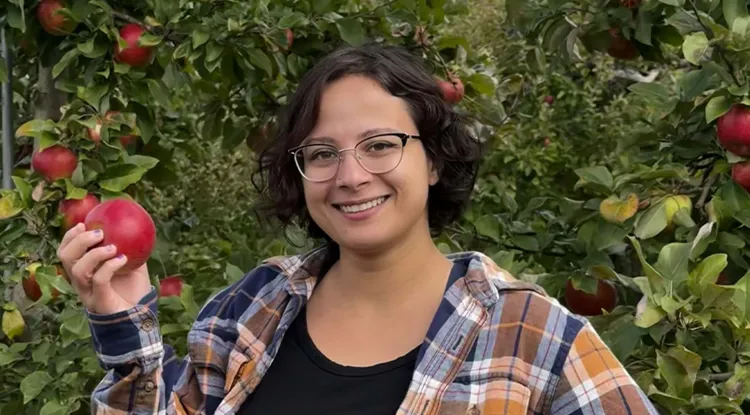
Childhood experiences often strike the initial spark for medical interests, and that was the case for Noor Moussa. After Moussa’s grandfather passed away, their grandmother, who had been diagnosed with Alzheimer’s disease, came to live with their family. With this came assuming the role of primary caretaker, and Moussa quickly gained experience with giving medication and assisting with daily routines that allowed them to not only care for their grandmother but also practice some nursing skills.
Originally hailing from Bedford, Massachusetts, Moussa worked as a nurse in Nashua, New Hampshire, at St. Joseph’s Hospital. At St. Joseph’s, one could find Moussa caring for patients on the medical-surgical floor or in the acute rehabilitation unit. During their work there, they valued being on an interdisciplinary team and learned the importance of teamwork in a health care setting; hence Moussa’s interest in choosing Larner is driven by this shared value of collaboration. They also cite how much they enjoy nature and being outside, and Vermont certainly does not disappoint in this regard.
“I love how diverse my class is ... It’s just so cool to have so many people from different walks of life.” — Noor Moussa, RN
When asked about their decision to pursue an M.D., they stated that their journey has not been linear. Moussa started working about six months before the COVID-19 pandemic hit. Not only were they navigating their new life as a nurse, but they were also adjusting to a world of unprecedented change. Despite this, their curiosity was at an all-time high, from hypothesizing the results of imaging, to understanding what was going on in the minds of the doctors they worked with addressing acute traumas. They reflect on having had “a lot of empathy for [their] patients, because everyone was so isolated. It was hard because we couldn’t have visitors, and there were people who weren’t super tech-savvy, or hard of hearing, or with different abilities, and it affected their overall care. Families are such an important part of the team as well.” All in all, they worked as a nurse for seven years before starting this past August at Larner.
Moussa is still contemplating which residency specialty to choose, keeping an open mind. From dermatology, to physical medicine and rehabilitation, to surgery, Moussa could see themselves in a wide range of fields and is looking forward to learning more about each. Not only is Moussa excited to learn more about medicine, but they are also looking forward to connecting with their colleagues.
“I love how diverse my class is. There are people who are fresh out of college, and then there are some people who have done Ph.D.s, or have families, and it’s just so cool to have so many people from different walks of life.”
Moussa also shared that they have a mentor who also happens to be a nurse in the Larner Class of 2029, Sakile Stephenson.
Annalise Patzer, RN, CCRN
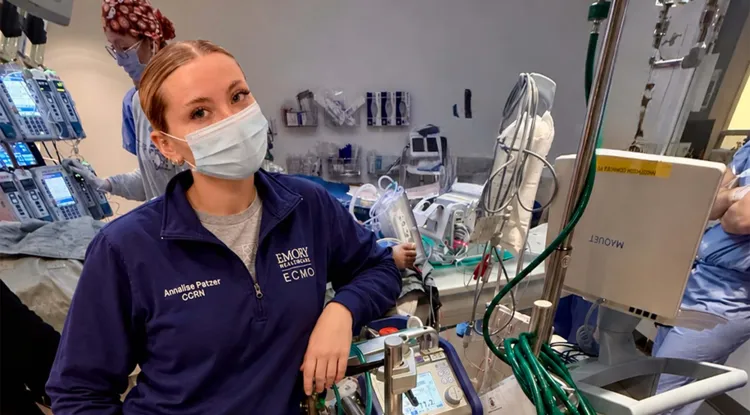
When your mother is a nurse practitioner, a career in health care feels inevitable. For Annalise Patzer, her mom had always encouraged her to try science, and one day Patzer said to herself, “Let me try this out; if I don’t like it, I don’t like it.” (Spoiler alert: she liked it.) Patzer loves the ability to make a profound impact on people and the opportunity to develop close relationships, and nursing provided that for her. With five and a half years total as a nurse, Patzer spent time working at Emory University Hospital’s Cardiothoracic-Transplant Surgical ICU in Atlanta, Georgia, and Toronto General Hospital’s Cardiovascular Surgical Intensive Care Unit in Toronto, Canada, as well as a role in flight nursing in Thunder Bay, Canada, for the Thunder Bay Rural Cardiovascular Surgery Program. As she worked alongside attending and resident physicians, she would see them sketch out physiology and even why one circuit configuration for extracorporeal membrane oxygenation (ECMO) worked better than another. She reflects, “While I understand this generally, I want to be the one that’s writing these things or learning these things and be able to explain why changing a couple of numbers on the ventilator is going to improve their pH or things like that.”
Forming connections and understanding people and science to be able to explain in detail and with a sense of calmness what is going on with a particular patient ... It was this value of care that drew Patzer to the Larner College of Medicine.
Furthermore, working alongside anesthesiologists with cardiac surgery patients, she would watch as they managed complex pulmonary physiology and navigated crash-outs during surgery, as well as blood transfusions. The more she worked with these doctors, the more she realized that was what she wanted to be trained to do. Inspired by this experience, Patzer is currently aiming for anesthesiology.
It wasn’t just the science behind doctoring that drew Patzer in, however; it was also the families she spent time with during one-on-one care in the ICU. Having end-of-life discussions and watching as physicians talked families down from screaming and crying was a monumental part of why she wanted to make the switch from nursing to doctoring. Forming connections and understanding people and science to be able to explain in detail and with a sense of calmness what is going on with a particular patient is what Patzer truly wishes to immerse herself in. It was this value of care that drew Patzer to the Larner College of Medicine.
While working at Emory, she met Larner alumnus Adam Fakhri, M.D.’22, during his psychiatry residency at Emory, and Patzer appreciated how much he cared for his work and the patients. She chatted with Dr. Fakhri about their backgrounds and learned that Larner was accepting of many non-traditional students. She was so excited at the Closer Look Day she went to when she saw that at her table there was a Ph.D. student, a lawyer, and another person in the midst of shifting careers late in life. Patzer wanted to be part of that feeling of community that transcends age and brings together such unique backgrounds. She was also moved by one of the deans here at Larner reciting a line from her personal statement back to her. This personal sentiment was what gave her the confidence to say “yes” to Larner.
Sarah Woods, RN, SCRN
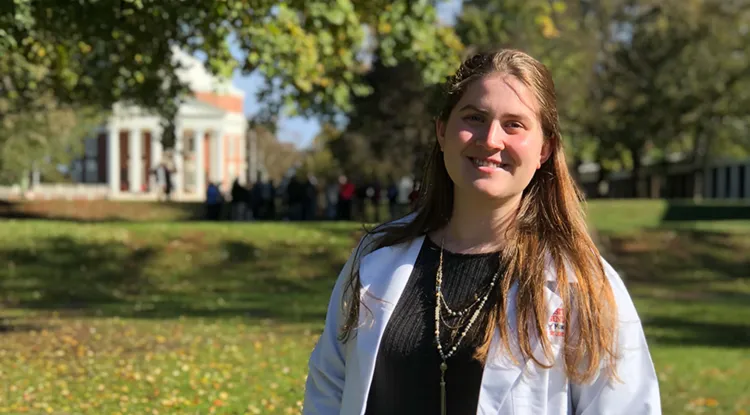
For Sarah Woods, working in health care was a no-brainer. From a young age, she knew that based on her own positive experiences with nurses, this was the path for her. She attended the University of Virginia’s College of Nursing, graduated in 2021, and started her nursing career on the stroke medical-surgical floor at UMC Mercy in Pittsburgh, Pennsylvania. While the world came to a halt in 2020 due to COVID-19, Sarah marched on in her pursuit of nursing for about a year in Pittsburgh before returning to her hometown of Springfield, Virginia.
In the largest hospital in Northern Virginia, Innova Fairfax, Woods dedicated the next four years to learning how to be the best nurse she could be. Wearing many hats, she worked in the neuroscience intensive care unit as a preceptor, a charge nurse, a bedside nurse, and she could even be found in the outpatient clinic, where she notes she “did a little stint in cardiology, but nothing too crazy.”
When asked about the switch to medical school, Woods noted that her time in the ICU working alongside the physicians was eye opening. “I found myself fascinated with the puzzle behind the diagnosis, like the why, and what’s behind what’s going on.”
“I found myself fascinated with the puzzle behind the diagnosis, like the why, and what’s behind what’s going on.” — Sarah Woods, RN, SCRN
Little by little, as she continued her day-to-day patient care, she found herself looking with a new point of view that revolved around pathology. Woods felt as though she had a solid grasp on her role in the ICU and wanted to expand her scope a bit, so she followed her inclination toward pathology. Originally, she looked into seeing if being a nurse practitioner pathologist was an option, but to no avail. The pathology interest came about after one patient in particular came in with encephalitis (a serious brain condition in which sudden swelling occurs in the active tissues in the brain). This patient was one that Woods cared for regularly over a few weeks, and she made a point to work closely with the doctor to learn more about the “detective work” that goes into a diagnosis. During this impactful experience, Woods went ahead and applied for a post-bac program to earn the remaining credits she needed to create her final medical school application. She completed the post-bac program within a year and continued working per diem throughout her coursework. “You learn a lot in the classroom, but really you’re learning when you’re in the hospital with a patient,” Woods reflects.
Woods initially found out about Larner through one of the doctors in her hometown ICU who had worked with an infectious disease doctor here at UVM Medical Center, and it piqued her interest. Woods noted, “It was very important to [that doctor] that whatever school [Woods] went to really cared about interprofessional teamwork.” She credits the best doctors with having exemplified this teamwork and having included everyone’s perspective to create collaborative and supportive environments. “[Larner] puts a really big emphasis on that!” she states.
For rotations at Larner, Woods hopes to follow her interest in pathology with her experience in the neuroscience ICU to do neuropathology; however, for now she is keeping an open mind.
Bonus: Sakile Stephenson, RN, M.M.S., Class of 2029
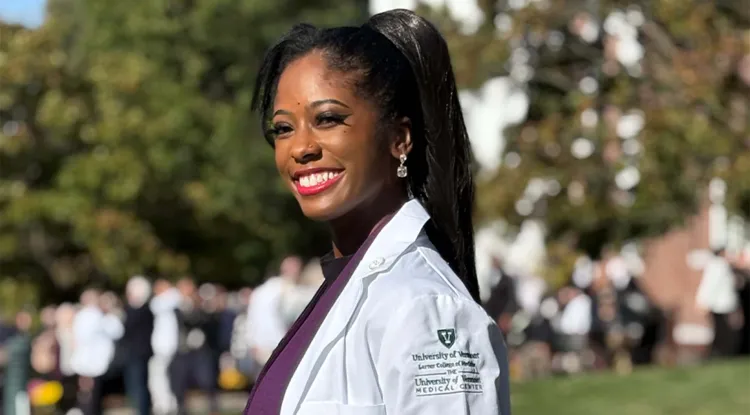
As an M2 (second-year medical student) and the only nurse-to-M.D. in her class, Sakile Stephenson was excited to learn about four nurses in this year’s incoming class. She initially met Patzer, and as she learned more, she wanted to establish a group to carry them all together through the years to come. Stephenson says that there is a “reorientation” when coming from nursing, and as she is still navigating this, she finds it helpful to have found others who understand this unique perspective.
“Here’s what I do, and here’s how you can connect it to nursing things.” — Sakile Stephenson, RN, M.M.S.
Stephenson was matched with Moussa in the Larner Connect program (formerly known as the Big/Little Sib program), in which each first-year medical student is matched with a student from the second-year class who serves as a friend, mentor, information source, and support system. Moussa has been very happy with the pairing, saying, “It has been really, really helpful. I was a bit stressed at the beginning because I haven’t had to intensely study for a long time, so Sakile met with me for several hours and was like, ‘Here’s what I do’ and ‘Here’s how you can connect it to nursing things.’”
Stephenson has stated that the partnership is not a mentorship; it’s “bidirectional learning”—she learns just as much from the M1s as they do from her, she says.
Read about the White Coat Ceremony for the Larner Medical Class of 2030