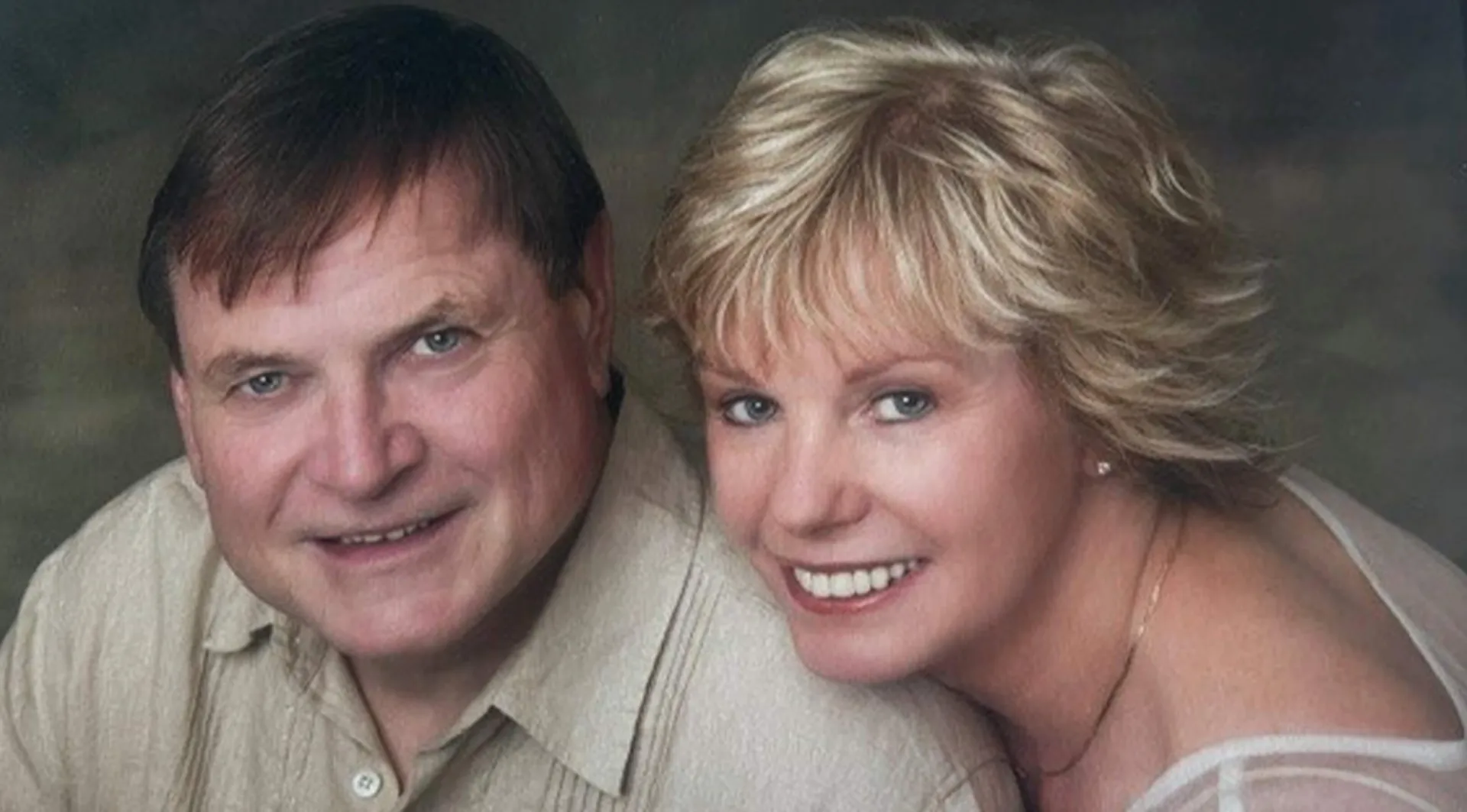
University of Vermont Larner College of Medicine alumni make charitable gifts to their medical alma mater for myriad reasons. Richard Gendron, M.D.’70’s motivation is deeply personal: His gift seeks to advance the college’s research on the fatal, progressive, and currently untreatable neurodegenerative disease that ails his beloved wife.
Dr. Gendron, of the Maine twin cities area of Biddeford and Saco, graduated with a biology degree from Rhode Island’s Providence College in 1965, a year after his soon-to-be wife, Lucy Tardif, graduated from Mercy Hospital School of Nursing in Portland, Maine. The two met on a blind date, and went on to marry on Independence Day in 1966. While Gendron attended medical school at UVM, Lucy worked in obstetrics and surgery at Mary Fletcher Hospital (now UVM Medical Center).
Gendron arrived at his specialty after his rotation in pediatrics with pioneering UVM physicians, innovators, and mentors Jerold Lucey, M.D., and R. James McKay, M.D., and later, as a rotating intern at the U.S. Naval Hospital in Portsmouth, Virginia.
“I was called to the high-risk obstetrics floor where patients were on prolonged bed rest in hospital hallways,” recalls Gendron. “A nurse and I were transporting a patient when she delivered mid-hallway. I caught the premature infant, asked the nurse if she had the mother covered and sprinted down the hall to the NICU. In that moment, my specialty was decided.”
Gendron’s Naval residency offered an additional year for external rotations, so he pursued a mini-rotation with UVM’s Larry Weed, M.D., pioneer of the problem-oriented medical record and advocate for problem-solving (as opposed to memory-based) medical education.
The Gendrons settled in Kingsport, Tennessee. Throughout his career, Gendron impacted patient care directly as a general pediatrician and a pediatric hospitalist, and indirectly as chair of the Medical Records Committee at Holston Valley Hospital and vice president of HR, quality assurance, and compliance at Holston Medical Group. “Lucy managed the Cardiac Catheterization Lab for many years, then stepped down from management to build and maintain the hospital’s cardiology database, working with unmatched efficiency,” says Gendron.
In May 2020, after a 50-year medical career highlighted by his leadership in quality assurance and compliance, Gendron retired and he and Lucy resettled in Maine. Three years later, Lucy developed atypical Parkinsonian symptoms.
“We established the Richard Gendron, M.D.’70, and Lucille Gendron Research Fund in UVM’s Department of Neurological Sciences because we believe in their ability to advance research and clinical focus in under-recognized neurodegenerative conditions that lack effective treatments and sufficient public awareness.” — Richard Gendron, M.D.’70
“Lucy and I have seen a long line of specialists and neurologists, with her diagnostic consensus shifting from Akinesia with Severe Gait Hesitation (AWS) to Progressive Supranuclear Palsy (PSP), and now to Corticobasal Degeneration (CBD),” says Gendron. “We established the Richard Gendron, M.D.’70, and Lucille Gendron Research Fund in UVM’s Department of Neurological Sciences because we believe in their ability to advance research and clinical focus in under-recognized neurodegenerative conditions that lack effective treatments and sufficient public awareness.”
“The diagnostic journey Richard and Lucy are navigating highlights one of neurology’s most challenging frontiers: distinguishing idiopathic Parkinson’s disease from Parkinsonism-Plus syndromes (tauopathies such as CBD and PSP in which abnormal accumulation of tau protein is the main pathological driver of the disease),” says Peter Calabresi, M.D., Larner College of Medicine Department of Neurological Sciences chair and professor, and UVM Health Neurology Department chair. “Their generous philanthropic investment in our research targets a critical gap in neurodegenerative medicine. Lucy’s remarkable background—from her decades in surgery and the cath lab to pioneering cardiology database management—and Richard’s distinguished 50-year medical career and joint advocacy bring both clinical insight and urgency to conditions that require targeted biomarker research and specialized care models. Our entire neurological sciences stem cell research team is honored and inspired by the Gendrons’ generosity and confidence in us.”
To join efforts to address some of today’s most pressing health issues through medical research, contact Lindsay Budnik ’05, Lindsay.Budnik@med.uvm.edu, 802-233-1206.