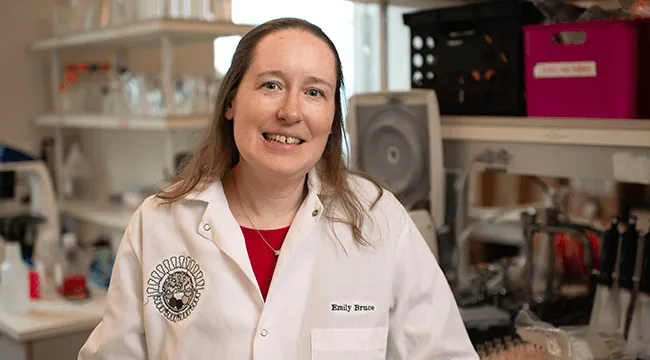
Since joining the University of Vermont five years ago, Dr. Bruce has applied for 40 grants and received three small ones. She is still waiting to hear about the status of 11. That strikes her as unusual.
Her experience is a local manifestation of a trend in federal funding for research that scientists across the U.S. are facing: Robust research dollars from the National Institutes of Health are not reaching scientists on the timeline or at the scale researchers have come to expect. Halfway into the 2026 fiscal year, Vermont has received $10.3 million for 23 projects. Throughout the 2025 fiscal year, Vermont received $41 million for 74 projects, an NIH database shows. UVM received the lion’s share of the money the state receives from the NIH.
Bruce described trying to procure funding like an increasingly crowded game of Whac-A-Mole, as more researchers are competing for a smaller yearly pool of grants and trying to dodge the changing federal rules and preferences. She’s frustrated that she’s spending so much time on writing grant application after grant application, rather than doing the science itself.
“That’s not the way to get the most bang for our buck, having all these people that we’ve invested a lot of money in training and so on, spending most of their time writing,” Bruce said.
She also feels this same resource drain in the rest of her lab, where she has not been able to keep talented researchers because she simply cannot commit to hiring them.
This topic was also covered in the (West Lebanon, N.H.) Valley News