From the iconic landscape of northern Vermont’s Lake Willoughby to the rolling hills of the Mad River Valley down to the hardwood forests of Bennington County, Vermont has no shortage of natural beauty. And scattered throughout the sea of autumn leaves are the rural communities that make up 65 percent of the state’s overall population.
In a post-pandemic society, health access is more important than ever, and the University of Vermont, the Larner College of Medicine, UVM Health, and their partners are facing this issue head-on, working toward a healthier future for rural populations.
Thursday, November 19, officially marks National Rural Health Day, but the Larner College of Medicine will spend the entire week highlighting the numerous ways Larner faculty and students are working toward a healthier and more connected Vermont. From expanding access to biomedical research careers for rural youth and using telehealth initiatives for cancer patients at Brattleboro Memorial Hospital, to advancing rural health policy research and bringing education and screenings directly to rural communities across Vermont and upstate New York, Larner has rural health covered.
“National Rural Health Day is an opportunity to recognize both the strengths of our rural communities, and the very real challenges people can face in accessing cancer care.” — Randall Holcombe, M.D., M.B.A.
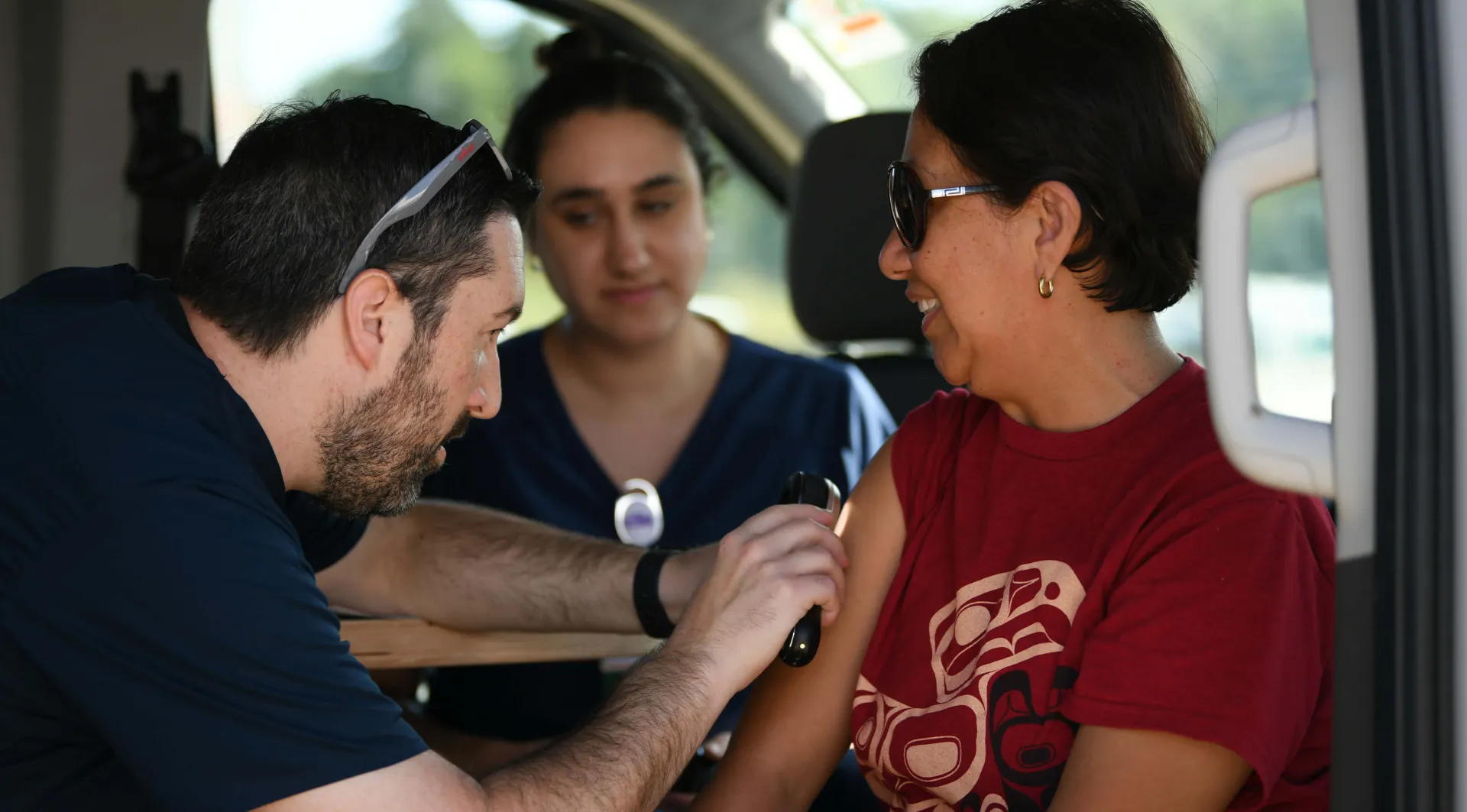
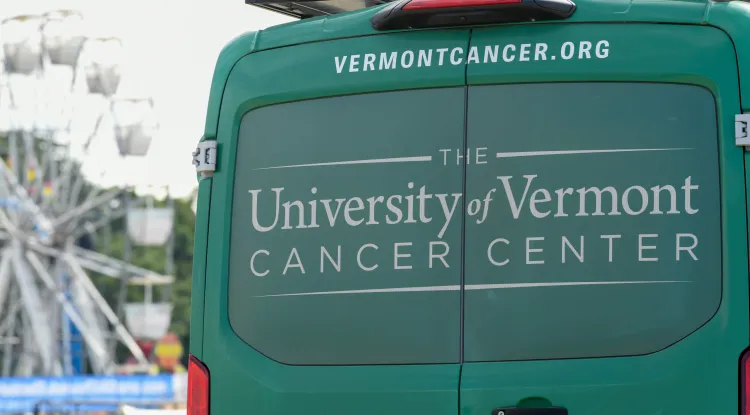
“National Rural Health Day is an opportunity to recognize both the strengths of our rural communities, and the very real challenges people can face in accessing cancer care,” says UVM Cancer Center Director Randall Holcombe, M.D., M.B.A. “Our mission is to close those gaps at every step, and we’re doing that by taking prevention and screening on the road with our mobile van, by creating treatment programs that reduce patients’ travel time, and by building a pipeline of cancer specialists committed to serving Vermont and northern New York.”
Public Health Projects
Rural health is a frequent focus of Larner’s Public Health Projects course, a required second-year course in the Vermont Integrated Curriculum (VIC) that teaches students to apply public health principles and science to improve community health. One current project, conducted through the Area Health Education Center (AHEC) in partnership with the local non-profit Feeding Champlain Valley (FCV), explores the distinction between access to food and access to medically appropriate food. The group hopes its findings will identify gaps in nutrition resources and help FCV better meet community needs.
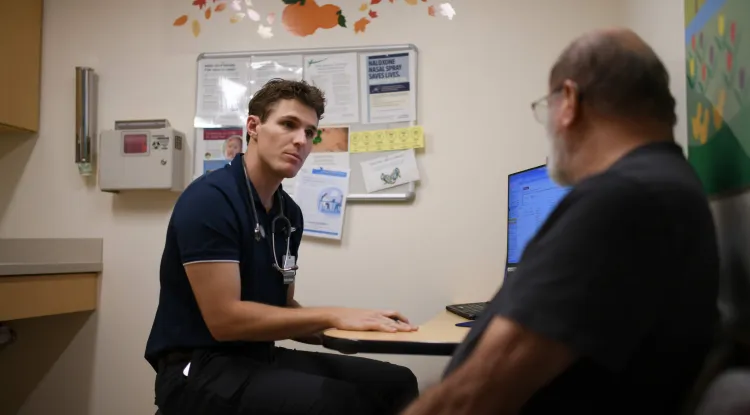
Larner medical student Tariq Qayum ’29, one of eight students working on the project, says, “As a future physician, I’m extremely grateful to work with an organization like Feeding Champlain Valley … I feel that this experience will help me become a more thoughtful and compassionate doctor through taking the time to understand the circumstances some patients face, meeting them outside the clinics, and doing our best to build sustainable approaches to improving their health.”
Rural Health Partnerships
The Office of Primary Care / AHEC brings together community and academic partners to help build a well-trained workforce that serves all Vermonters. Medical students are encouraged to participate in the program, which offers incentives to stay in Vermont for residency. Recent Larner graduate Tucker Angier, M.D.’26, participated in AHEC and is now completing his family medicine residency at the University of Vermont Medical Center. Dr. Angier stated, “My goal is to become a rural family medicine physician, a ‘Swiss Army knife,’ a one-stop shop for my community.”
“My goal is to become a rural family medicine physician, a ‘Swiss Army knife,’ a one-stop shop for my community.” –Tucker Angier, M.D.’26
Larner’s Doctoring in Vermont course gives medical students early exposure to rural health care by pairing them with physicians practicing in communities within an hour of Burlington. During eight sessions spanning the first two years of the Vermont Integrated Curriculum, students observe and participate in patient care while developing history-taking and examination skills.
The annual Rural Health and Cancer Conference is another key initiative, bringing together national and international participants each summer for forward-thinking, cross-disciplinary programs aimed at improving cancer care in rural communities. Next year’s conference will be held June 9–11 in Burlington, Vermont.
Every Day Is Rural Health Day
National Rural Health Day is a time to celebrate the hard work of those confronting health inequity; however, rural health is an ever-evolving public health issue that requires year-round attention. The programs listed above are paramount to the overall success of outreach to rural communities.
As Vermont’s only medical school, the Larner College of Medicine plays a vital role in advancing the health of rural communities. Through education, research, and partnerships, the college continues to work toward a healthier future for all Vermonters.