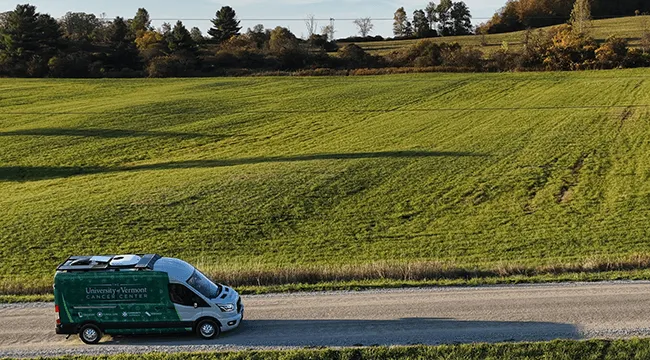
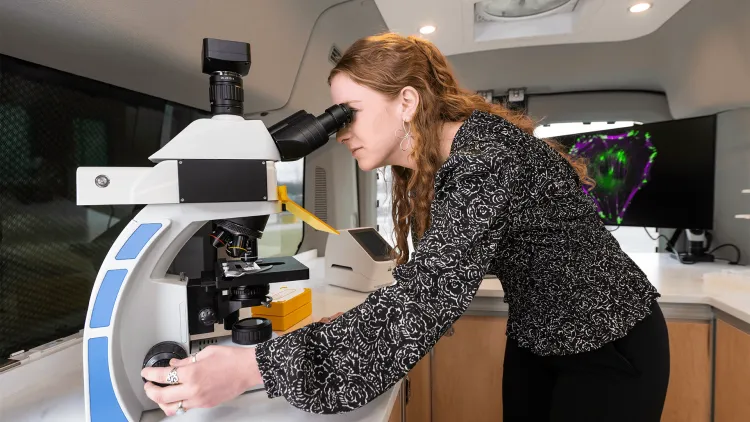
On March 6, the University of Vermont Cancer Center’s new Outreach and Education Van, with its onboard BioMobile Research Lab, visited the Lyndon Institute, where high school students in honors biology partnered with UVM researchers to study how chemotherapy affects cells, according to the Caledonian Record. Each group selected a part of the cell, such as DNA or microtubules, to investigate more closely. The BioMobile team visited for an initial consultation and will return later this month with fluorescent microscopes, giving students the opportunity to study rare cancer cells. Partnerships like this help connect students with real-world research and expand opportunities to explore careers in science.
Read full story at the (Northeastern Vermont / Northern New Hampshire) Caledonian Record