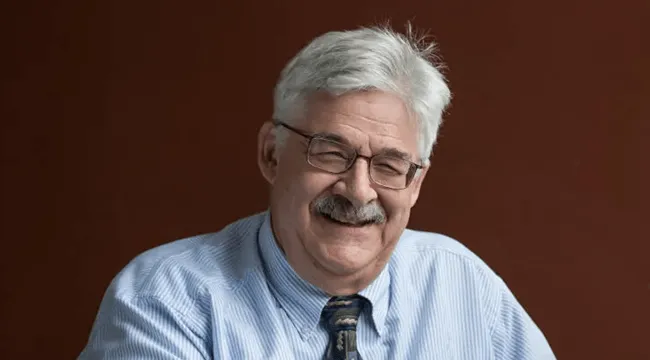
Dr. Irvin vividly recalls the first time he saw the inside of living human airways, the story begins. He was a grad student in the 1970s at the University of Wisconsin and heard the doctors buzzing with excitement because they had just received their clinic’s first flexible bronchoscope. For the first time, and under better conditions for the patients, they were able to improve lung assessments compared with the old fixed bronchoscopes.
“I had asked if I could hang out the next time that they used it and one of the docs said, ‘Absolutely!’ So, that afternoon I’m looking inside the airways of a patient in total amazement,” Dr. Irvin recounts from his office at the University of Vermont as his hands mimic the motions of the airways dilating and constricting with each breath, “You could even see the pulsations of the structures due to the heart beating—very cool! And then, since we were looking into the airways of a patient with asthma, there were bubbles, there was mucus, there was all this stuff in the airways. It was a total mess!”
That day didn’t define the career of the future Dr. Irvin, but remains a thrilling memory and fed a sense of curiosity and amazement, along with a respect for the actual, living patient on the other end of the bronchoscope, which has characterized a long, productive career that led to receiving the ATS Edward Livingston Trudeau Medal of Honor—the society’s highest honor—on Saturday, May 16, during the Opening Ceremony of the ATS 2026 International Conference.