
Surprising new evidence reveals that H1N1 and H3N2 influenza viruses penetrate human lung cells in very different ways, and that it is possible to target specific molecules to prevent the viruses from entering lung cells altogether. This novel insight paves the way for scientists to develop better methods for preventing and treating different strains of flu.
Scientists in the Emily Bruce, Ph.D., Lab were investigating how influenza viruses replicate within cells when they “accidentally” discovered that different flu viruses use distinct strategies to infiltrate cells in the first place. They also found that it is possible to target specific molecules to prevent the viruses from entering new cells, thereby stopping their replication. This discovery, published in the Journal of Virology on June 2, 2026, provides fundamental insights into how seasonal influenza viruses infect people and illuminates a path for developing better medications to prevent infections in the future.
“The hope is that fundamental, curiosity-based research like this helps to pave the way for novel strategies to treat and prevent influenza infections,” says principal investigator Emily Bruce, Ph.D., assistant professor of microbiology and molecular genetics at the Larner College of Medicine at the University of Vermont.
Additional authors of the publication include Allyson Turner, B.S.’25, and Sara Jaffrani, M.S.’25 (joint first authors), and Jessica Crothers, M.D., assistant professor of pathology and laboratory medicine. The team also included five additional current and previous UVM undergraduates and four UVM graduate students, in a testament to the role and contributions that early-career trainees play in conducting discovery-based research at Larner.
“Viruses are like pirates from different countries hijacking someone’s ship. Different viruses, like different types of pirates, use different methods to get on board.” — Emily Bruce, Ph.D.
Various flu strains can cause illness, with H1N1 and H3N2 influenza A viruses being the most common. Current flu tests do not differentiate between the two viruses, and clinical treatments are the same for both. While flu vaccines can help prevent infection, and antiviral drugs can shorten the illness and prevent complications in high-risk individuals, there is a dire need for better medications to prevent flu viruses from replicating and infiltrating new cells in the human body.
The research team examined H1N1 and H3N2 viruses isolated from the nasal passages of people who tested positive for the flu in 2022. This study initially aimed to learn how viral proteins move within cells and enable viruses to replicate themselves, which is what causes people to become ill.
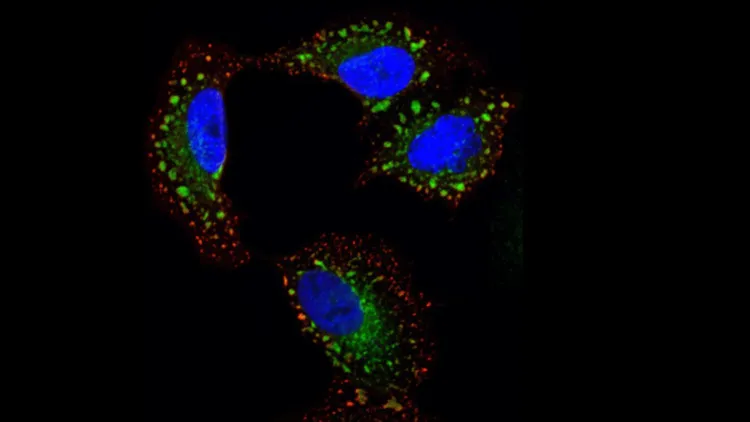
“You don’t get sick when a virus is in one cell. You get sick because a virus replicates itself and goes into many more cells,” explains Dr. Bruce. “We were looking at how influenza virus RNA segments are transported within cells to the right place at the right time to make new virus particles.”
During this investigation, Bruce’s team unexpectedly discovered a cellular pathway that blocked the viruses from entering lung cells. The data revealed that H3N2, but not H1N1 viruses, failed to enter human lung cells when a particular protein called Rab11B was depleted. Using reverse genetics, the team mapped this Rab11B-dependent defect and found a novel and H3N2-specific role for Rab11B during viral entry into a lung cell. This fortuitous discovery suggests that H1N1 and H3N2 viruses enter lung cells via different routes, and it can inform therapeutic targets to prevent viral entry.
“Viruses are like pirates from different countries hijacking someone’s ship. Different viruses, like different types of pirates, use different methods to get onboard,” Bruce says. “We had previously thought that all flu viruses used the same way to get into a cell, but we discovered that this is not true. H1N1 and H3N2 need different proteins to get in, and if you get rid of the right protein, a specific virus can’t get in.”
This discovery can help scientists think about new ways to prevent distinct flu viruses from entering cells. The next steps will seek to determine whether Rab11B-dependency is a fundamental property of H3N2 that no one realized previously, or whether it is new to currently circulating H3N2, in addition to understanding the precise role Rab11B plays during H3N2 viral infection at the molecular level.
Read the study in the Journal of Virology
Read media coverage of this research.
Read more about the Bruce Lab at the Larner College of Medicine.
Research like this has contributed to the University of Vermont’s designation by the Carnegie Classification of Institutions of Higher Education as an R1 institution, placing it in the top tier of research universities in the U.S.