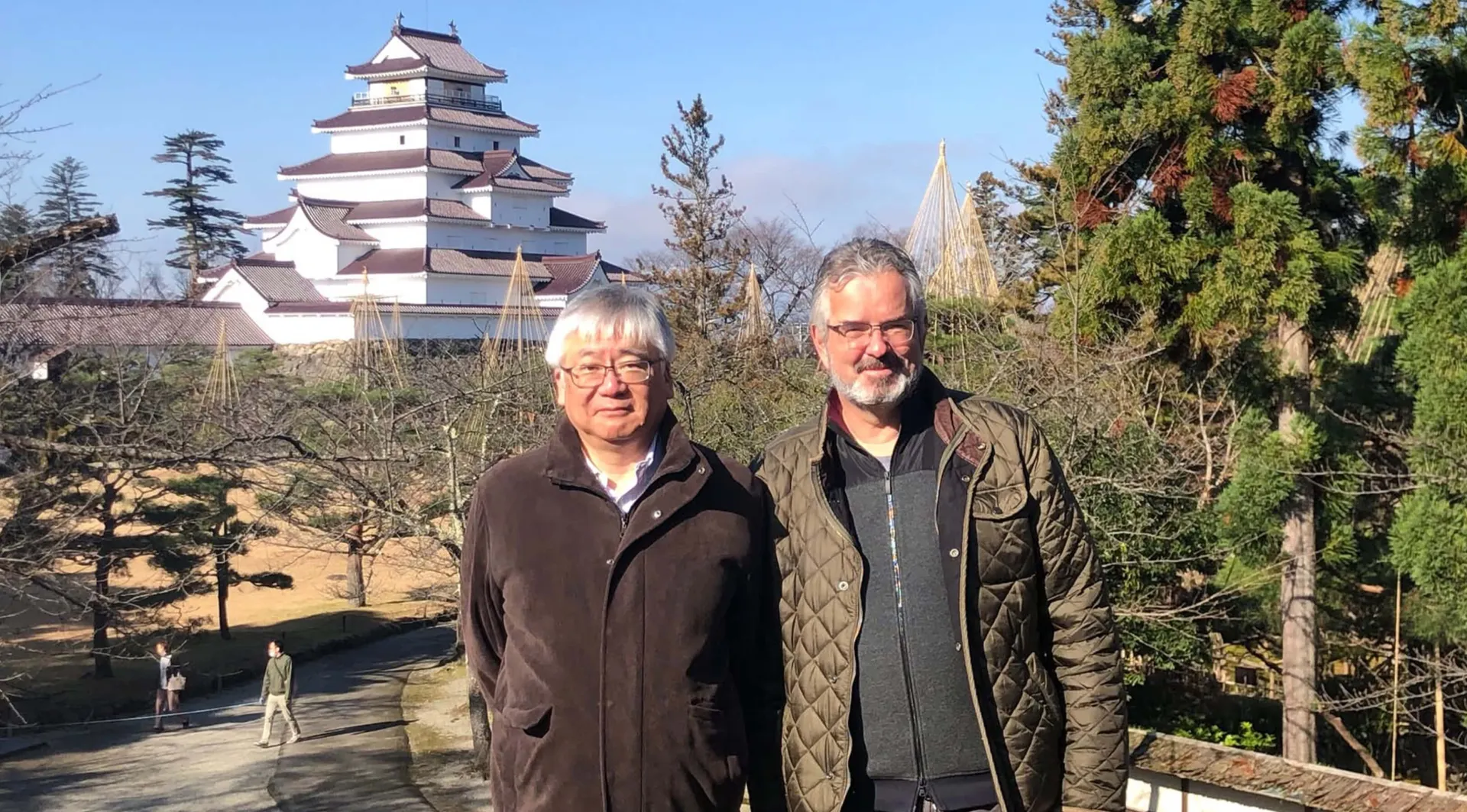
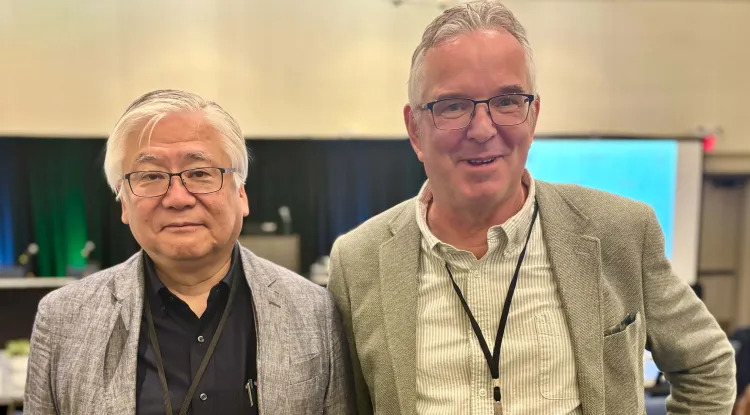
When Takaaki Akaike, M.D., Ph.D., traveled from Tohoku University in Japan earlier this month to present new findings at this year’s North American Redox Symposium in Burlington, he was among longtime collaborators. One was Albert van der Vliet, Ph.D., UVM Cancer Center member and professor of pathology and laboratory medicine at the Larner College of Medicine.
Both Dr. van der Vliet and Dr. Akaike are members of the Society for Redox Biology in Medicine (SfRBM), which runs the conference. Van der Vliet is also a co-author on Akaike’s groundbreaking new paper revealing an unexpected role of sulfur in regulating cellular metabolism and responses to oxidative stress.
Published in Science, this paper is the latest product of a scientific partnership between researchers at UVM and Tohoku University that began more than 25 years ago. Through faculty exchanges, research visits, and collaborative projects, scientists at the two institutions have helped advance the growing field of redox biology, which explores how the chemical reactions that sustain life also influence health and disease.
The findings suggest that a form of elemental sulfur known as cyclo-octasulfur, or S8, once thought to serve mainly as an inert storage molecule, plays a much more active role in helping cells respond to metabolic and oxidative stress. This discovery may also have implications for cancer research—a finding of particular interest to UVM Cancer Center investigators.
A Different Way of Thinking About Sulfur
Much of modern redox biology has focused on oxygen and the reactive molecules it generates. Sulfur, although essential to life, tends to receive less attention in this field. Over the past two decades, Akaike and collaborators, including van der Vliet, have helped advance the concept of “supersulfides,”" a diverse family of sulfur-containing molecules that appear to play important roles in metabolism and protection against oxidative stress.
Their latest study focuses on cyclo-octasulfur, or S8, the most common form of elemental sulfur. Best known for its presence in volcanic regions, hydrothermal vents, and certain sulfur-metabolizing bacteria, S8 has generally not been viewed as an important component of mammalian biology. Because it is insoluble in water, studying its role in mammalian tissues has been challenging; however, it may accumulate in lipid-rich environments within tissues and cells.
The researchers found that substantial amounts of S8 are present in mammalian cells and tissues, where it may serve as a reservoir for biologically active supersulfides that help cells respond to metabolic and oxidative stress. They also observed elevated levels of S8 and sulfur-related compounds in breast cancer tissue compared with normal breast tissue, raising new questions about how sulfur metabolism may contribute to cancer biology.
A Partnership Decades in the Making
The publication represents the latest chapter in a collaboration that has connected scientists in Vermont and Japan for more than a quarter-century.
It started even earlier, in the 1990s, when van der Vliet recruited a junior faculty member from Akaike’s laboratory to join his research group at the University of California–Davis as a postdoctoral researcher. The exchange evolved into a long-standing partnership marked by faculty visits, joint projects, and collaborative publications that continued when van der Vliet joined the Department of Pathology and Laboratory Medicine at UVM’s Robert Larner, M.D. School of Medicine in 2002.
In 2022, van der Vliet spent two months in Akaike’s laboratory at Tohoku University as an invited fellow, through a program designed to strengthen international research collaborations. In early 2026, he was appointed as a visiting professor at the university. The partnership reached another milestone on September 14, 2026, when Akaike presented the study’s findings at SfRBM’s North American Redox Symposium in Burlington, hosted by UVM Cancer Center and Larner College of Medicine faculty.
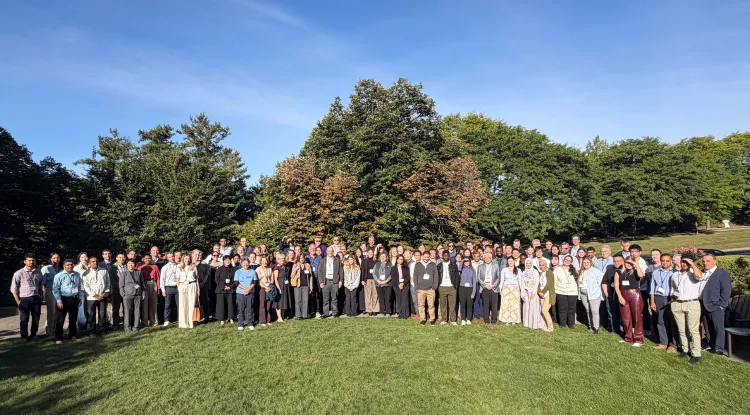
The meeting brought leading scientists from around the world to Vermont and highlighted UVM’s longstanding strength in redox biology. For researchers at both institutions, the new publication reflects more than a scientific discovery—it is also a testament to the power of enduring international collaborations to advance understanding of fundamental biology and open new avenues for studying diseases such as cancer.
Research like this has contributed to the University of Vermont’s designation by the Carnegie Classification of Institutions of Higher Education as an R1 institution, placing it in the top tier of research universities in the U.S.